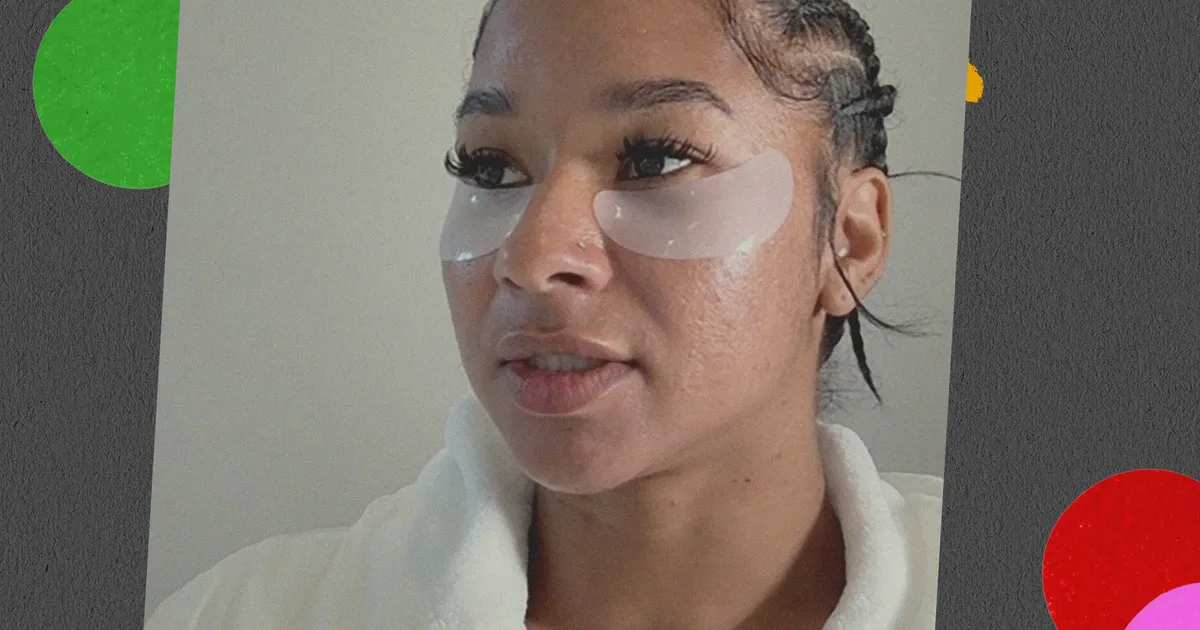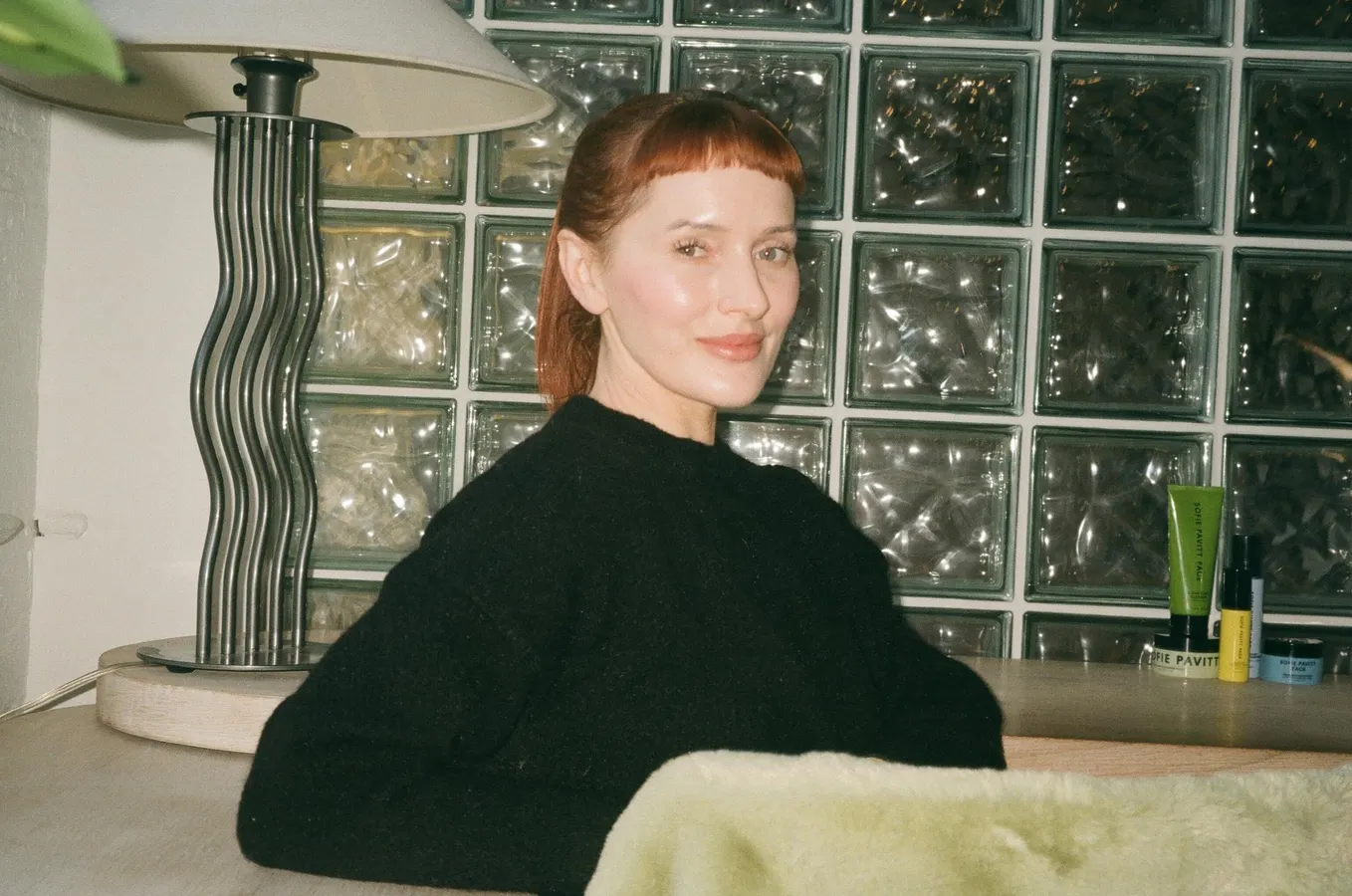
Sofie Pavitt, Photo Credit: Courtesy of Sofie Pavitt FacePhoto Credit: Courtesy of Sofie Pavitt FaceThere’s a version of Sofie Pavitt’s story that could be told as an overnight success.Her products are stocked in Sephora stores and carried by Violet Grey, one of beauty’s most curated retail platforms. Her bright yellow “Mandelic Serum” appears in top-shelf selfies, instantly recognizable among a sea of neutrals. Her waitlisted client roster includes names like Zendaya. And along the way, the industry began referring to her as “The Acne Whisperer.”But the reality is far less sudden, and driven by a loud, relentless determination.“Someone told me once that ‘overnight success’ takes 10 years, and it’s literally been that timing,” Pavitt shares over Zoom from her NYC facial studio. “It feels like forever for me, but it’s amazing when people are like, ‘Wow, I’m hearing your brand for the first time.’”What looks like momentum is, in fact, the result of more than a decade of work, and one that began in fashion, not in beauty.Before founding her namesake skincare brand, Sofie Pavitt Face, Pavitt was working on the handbag team at Michael Kors during a period of explosive growth.That role took her to Seoul every 12 weeks, trips that would ultimately reshape her career.“What I had loved doing in New York was going for a facial… they were relaxing, sensorial,” she explains. “In Seoul, facials were the exact opposite. They were about maintenance – real results and talking through your home care.”That became the first unlock for Pavitt.At the time, Korean skincare was not widely available in the U.S., and skincare itself was still secondary in retail.MORE FOR YOU“You’d go to Sephora and skincare was an afterthought,” she says. “There wasn’t really this middle ground.”Rather than immediately leaving fashion, Pavitt trained as an aesthetician on weekends—“just nerding out about skin”—while continuing her corporate role.That overlap proved critical.The transition from one of New York’s most in-demand facialists to founder wasn’t a branding exercise: it was a response to a clear product gap.“Acne is a deeply unsexy topic,” she says. “A lot of facialists didn’t want to specialize in it… but if you’re dealing with cystic, painful breakouts, you can’t go for that type of facial. Specializing in something deeply unsexy was the best thing I ever did.”Yet it’s also one of the most universal. Acne affects roughly 9.4% of the global population, making it one of the most prevalent conditions worldwide, and increasingly extends beyond adolescence, with adult acne on the rise.Demand for effective, expert-led solutions has followed, fueling a global acne skincare market projected to surpass $12 billion by 2026.“I got really obsessed with transformational skincare, particularly acne,” she says. “A lot of people were wearing makeup to cover breakouts. I got really good at this skin-clearing technique.”She eventually left fashion, working alongside a dermatologist to better understand the intersection between clinical treatment and skincare maintenance.When the pandemic forced her studio to shut down in 2020, Pavitt pivoted quickly.“I remember sitting at home—my son was six months old—thinking, ‘Oh my God, I don’t have a job anymore. What do I do?’” she says.It was her husband who pushed her to take the business online.“That’s when I started doing virtual consults and realized there was a real need for acne care. There was nothing like it.”Her first product, the Mandelic Serum, was bootstrapped, financially and operationally. “10,000 units… is not cheap,” she says. “I remember buying those and thinking, ‘I hope I sell them.’ I didn’t have any team. It was just me.” (Today the serum remains its hero product.)The brand doubled down on formulation, while continuously learning from its studio clients.“We see around 700 people a month at the NYC studio,” she says. “It’s an amazing R&D lab for us.”That feedback directly informed product development. When clients complained that gel moisturizers weren’t enough, Pavitt created a richer, acne-safe alternative.“70% of people who have acne are actually really dry and irritated,” she says. “That was proof our concept works.”Photo Credit: Courtesy of Sofie Pavitt FacePhoto Credit: Courtesy of Sofie Pavitt FaceWhile efficacy drives the product, Pavitt’s fashion background is unmistakable in the brand’s visual identity.“When we launched, everything on the shelf was really matte… really boring,” she says. “I was like, how can you tell the difference between products?”The solution was a color-coded system designed for clarity and ease.“All the cleansers are green. Treatment steps are warm tones. Hydrators are blue,” she explains. “It’s a system.”The packaging was designed to stand out.“When we launched with Mandelic — the yellow bottle — my biggest brief was that it needed to stand out on a shelf.”“You don’t need tons of products,” she adds. “You need a really pulled-back, simplified approach.”The result is a brand that feels editorial, yet remains highly functional.Pavitt’s breakthrough began with an email from a key brand builder at Sephora, initially requesting a facial.Within weeks, the relationship escalated into product requests, and ultimately, retail.The brand launched online on December 25, 2024, timed intentionally.“Everyone’s sat on the couch and they have gift cards,” she says.Within months, the brand expanded into hundreds of stores across North America.Scaling wasn’t without friction.“We had to redo all our packaging before launch,” she says. “It cost us a fortune—but it was the best thing we ever did.”That mindset—move fast, fix later—remains core to her approach.“I’m not afraid to start something and build it as we go,” she says. “If you wait for everything to be perfect, it never happens.”2026 has proven to be a defining year for the brand.With continued expansion within Sephora, Pavitt introduced “Screentime,” an SPF product launched in February, the first at the retailer to carry an “acne-safe” claim backed by testing.More recently, the brand expanded with “Skin Jelly,” a lightweight, oil-free moisturizer designed for acne-prone skin.But even as the brand scales, the foundation remains unchanged.“It’s not just me doing this,” she says. “It’s multiple teams and clients telling us what they actually need.”For founders looking to follow a similar path, Pavitt is clear: don’t romanticize the leap.“Don’t quit your job before you know what’s going on,” she says. She continued consulting in fashion to “keep the electric on” while building her brand.Her journey included years of unpaid work.“I did a lot of free facials. I still do,” she says. “It’s not overnight. It’s going to take a long time.”Her guiding principle is simple.“I just say yes, a lot,” she says. “And be nice.”“When things feel uncomfortable, that’s usually when I know I’m on the right path,” she adds. “Growth lives on the other side of that.”She pauses.“That was needed,” she says. “Here we are.”
Inside Sofie Pavitt’s Rise From Fashion To ‘The Acne Whisperer’
A former fashion executive turned aesthetician, Sofie Pavitt built a skincare brand grounded in results, not hype. Learn more about “The Acne Whisperer."
1,095 words~5 min read