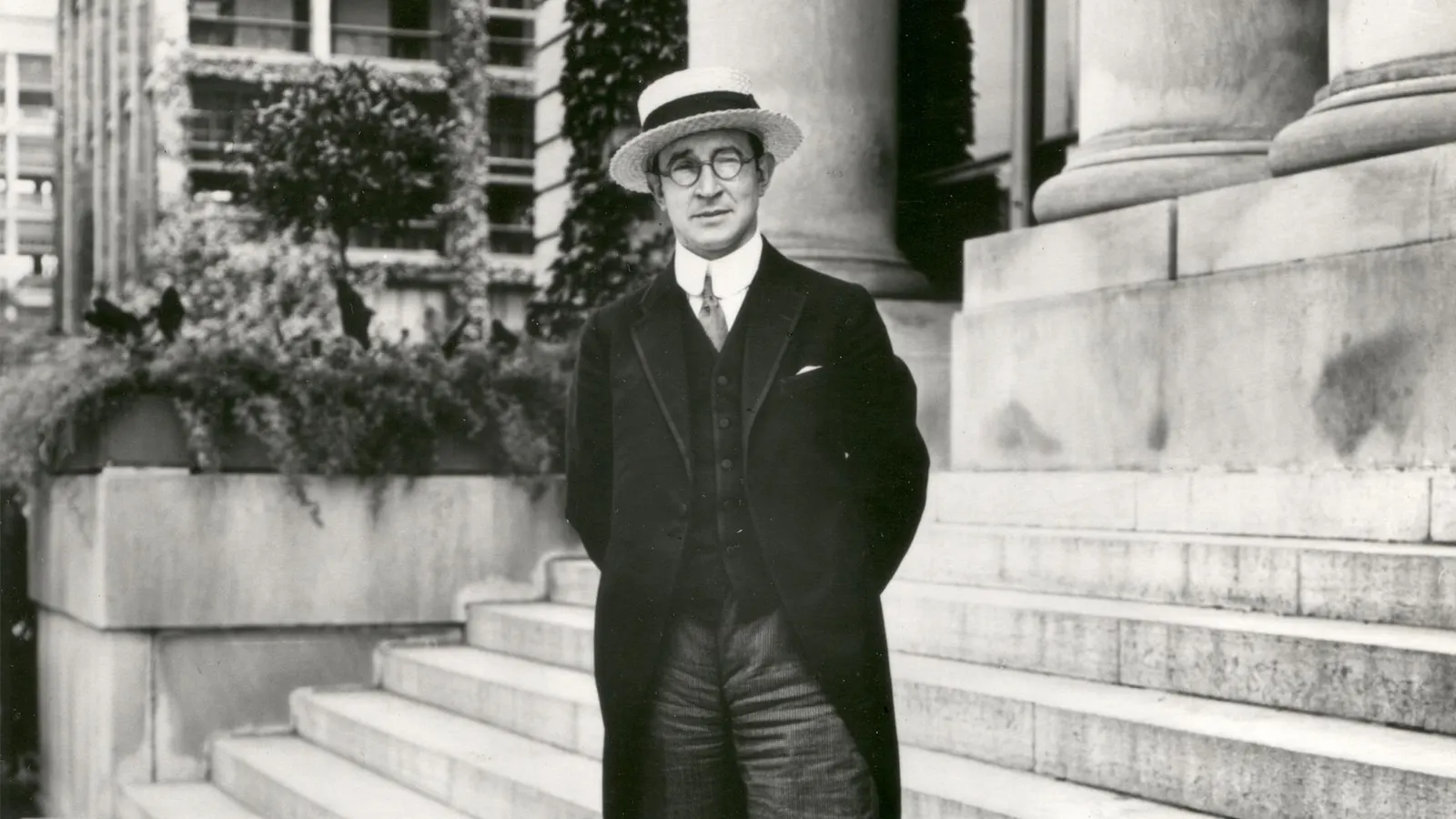
Our founder, my grandfather B.C. Forbes, was both an entrepreneur and a prolific writer about entrepreneurs. The sixth of ten children of a Scottish tailor, he had long burned with ambition to become a business writer and, ultimately, his own boss, even though his formal education ended with the eighth grade.Steve Forbes, Chairman and Editor-in-Chief of Forbes Mediamatt furman for forbesB.C. first went to South Africa at age 24, where he worked for the editor of the new Rand Daily Mail, Edgar Wallace, who later achieved fame in Britain and the U.S. as a novelist. Many a time B.C. found himself writing editorials for his oft-inebriated boss. But itching to work on a larger canvas, B.C. immigrated to the U.S. in 1904.America was not only a larger stage but also was a magnet for entrepreneurially minded people with fewer barriers to the ambitious than anywhere else in the world. Landing in New York City, B.C. demonstrated the kind of drive and ingenuity that had already made the U.S. the largest and most dynamic country in history. He had a hard time getting a job, but instead of going home he decided to offer his services to an editor for free for several weeks to “prove my worth.” He had no idea whether he’d be tossed out when, after the allotted time, he asked for a salary, but like any entrepreneur, he knew that doing things the “normal” way would get him nowhere. He got the job. Full of energy, B.C. assumed a nom de plume and, at the same time, obtained a job with another publication, also as a business writer. Legend has it that the two editors later got into an argument over who had the better business reporter—it was B.C. in both cases.B.C. became a nationally renowned financial writer, reporting news, turning out a syndicated column and authoring best-selling books. He had a knack for getting revealing interviews with the makers and shakers of his day. Yet, instead of just writing about individuals who started their own firms, he yearned to start one himself. What made his magazine—which he launched in the midst of World War I, hardly the most propitious of times—so different from other business publications was B.C.’s focus on people. He believed you learned more about a company’s prospects by focusing on what he called the “head knocker,” his appellation for a CEO, than on its balance sheet.He deeply believed in what we today call entrepreneurial capitalism. He stated in the first issue of Forbes, “Business was originated to produce happiness, not to pile up millions.” He was no apologist, however. He railed against those he felt were abusing employees or incompetently managing their firms. Forbes boomed during the 1920s, but it was hit hard by the Depression. By 1932, the company was bankrupt in all but name. But like a true entrepreneur, B.C. persevered, and he engineered an impressive recovery. Forbes today vibrantly and successfully reflects his belief in free enterprise.More From ForbesForbesOnce Homeless, They Are Now Among The Nation’s Most Successful Self-Made AmericansBy Jessica JacolbeForbesForbes 250: The Greatest Self-Made AmericansBy Alex KnappForbesForbes 250: America’s Greatest Historic InnovatorsBy Alex KnappForbesForbes 250: America’s Greatest InnovatorsBy Alex Knapp
Meet The Self-Made American Who Founded Forbes
The Scottish immigrant didn’t just want to write about entrepreneurs. He wanted to be one. So, he started Forbes in the middle of World War I, intent on showcasing the people behind the numbers.
532 words~2 min read