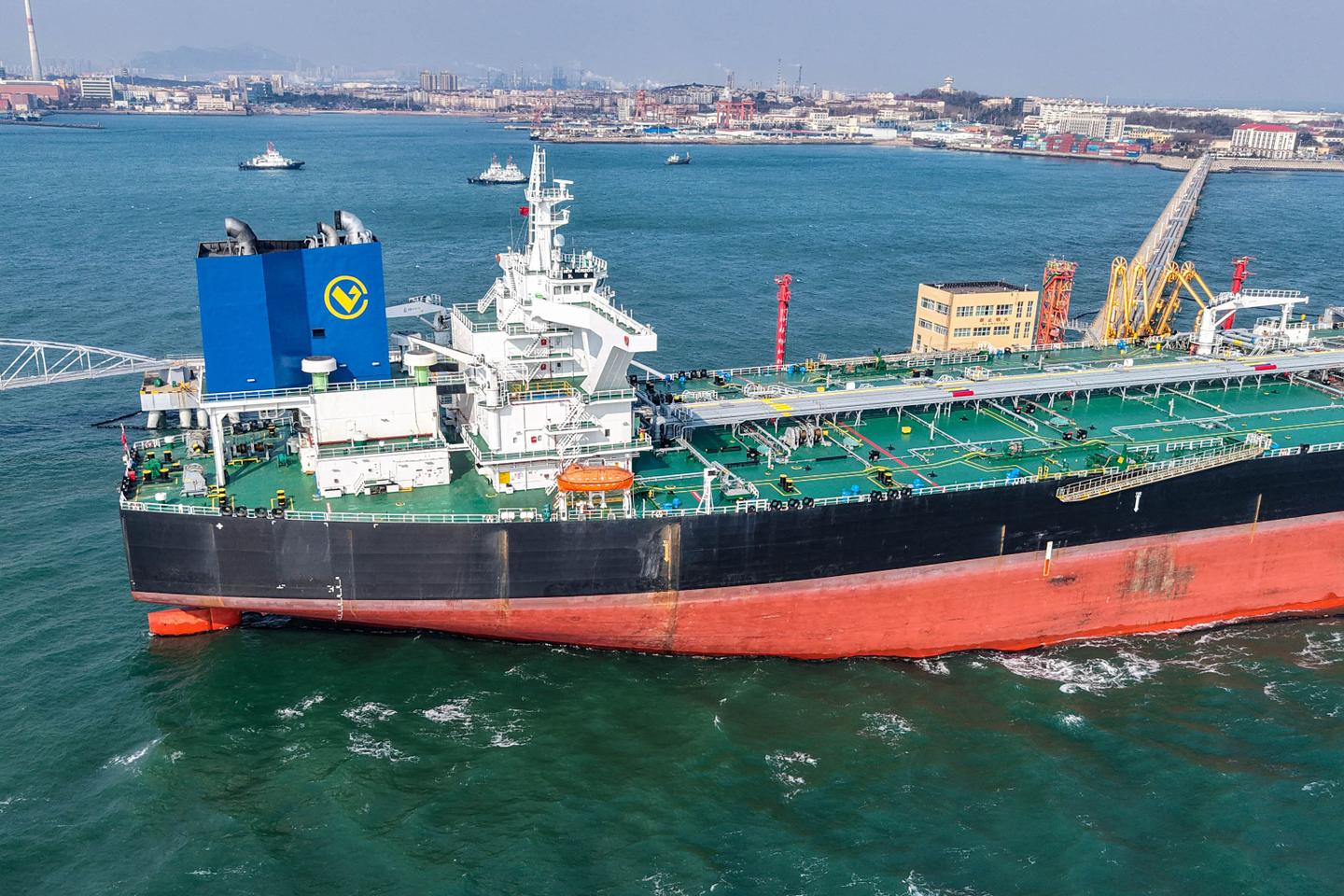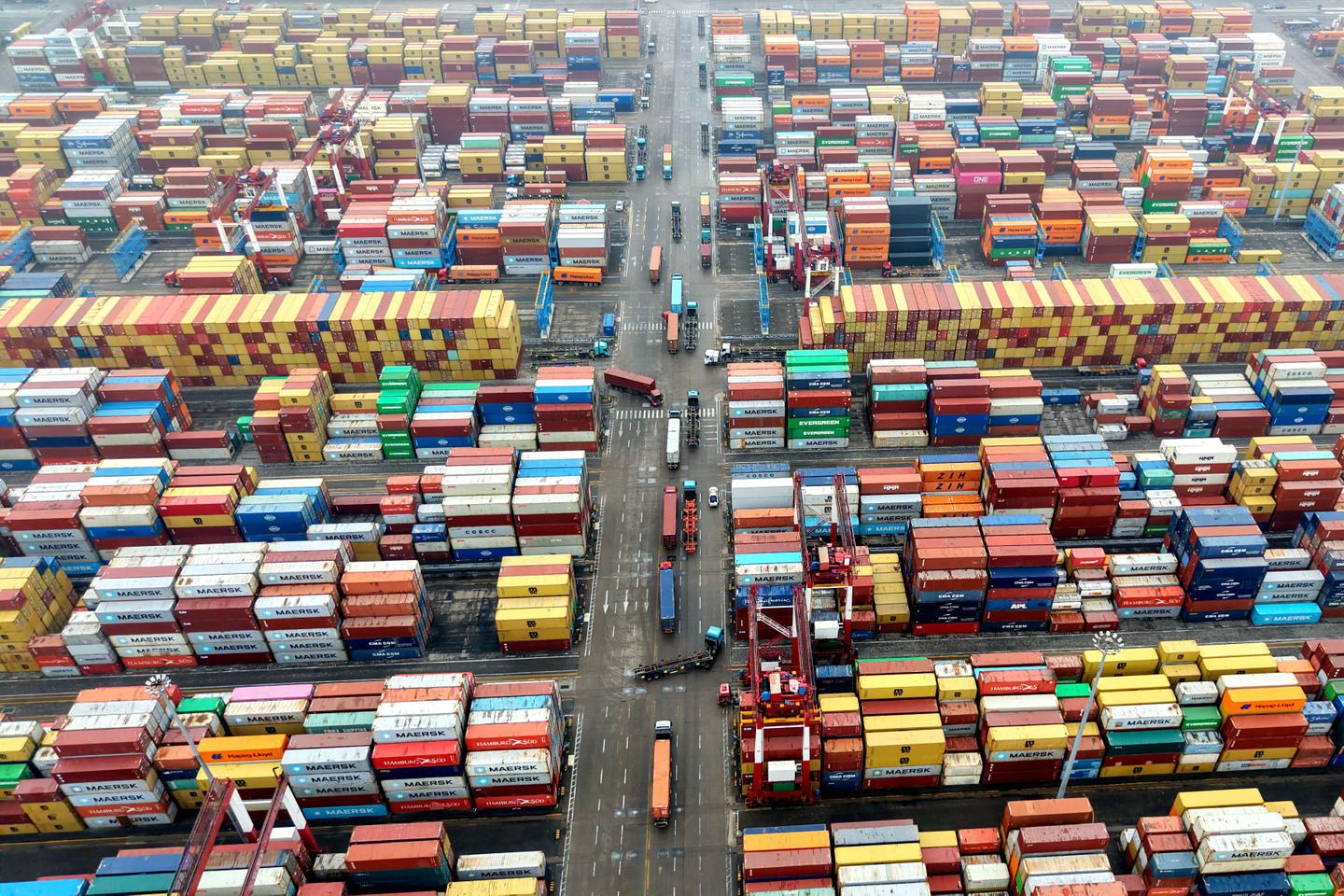
At a container terminal in Qingdao, China, March 5, 2026. YU FANGPING/FEATURECHINA/MAXPPP
After their lunch break, Yang Dong and Yu Qiuxiao had just one more hour left on the road. The couple, both truck drivers, were hauling a load of chemicals from central to southwest China: from Xi'an, in the arid Shaanxi province, to Leshan, in the lush Sichuan province. They had already covered the bulk of the route – almost 900 kilometers – split over two days to comply with regulated driving times. He was behind the wheel, she handled everything else, including meals, and kept him company. Many Chinese truck drivers work as couples in this way.
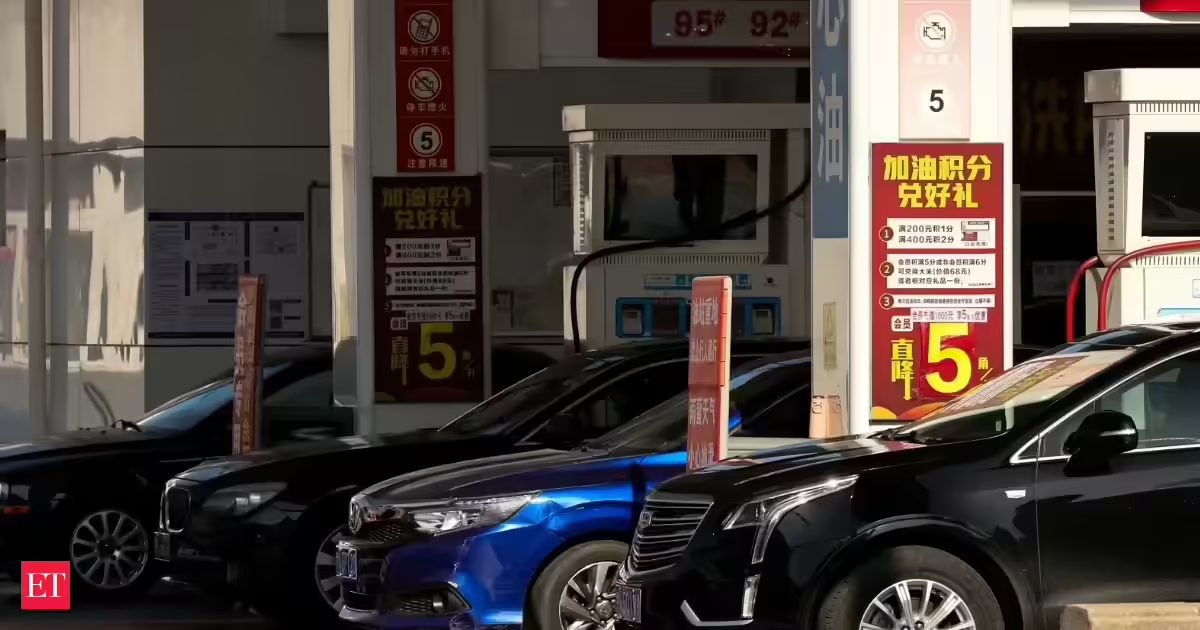
Before setting off again from the Sinopec gas station in Meishan (Sichuan province), Yang and Yu took a breath of fresh air in front of the red cab of their large truck, its gray tank filled with liquefied natural gas. They did not hide their worries about what lay ahead; after this trip, the transport company that uses them as semi-independent workers has not scheduled any further jobs. New assignments have been halted for now; business is no longer profitable. The rapid rise in fuel prices has undermined the fragile economics of road transport, where margins are already extremely tight. Since the start of the year, gasoline prices have climbed by 30%. Prices remain much lower than in Europe – about 8.5 yuan per liter, a little over €1 – but average income is also much lower.