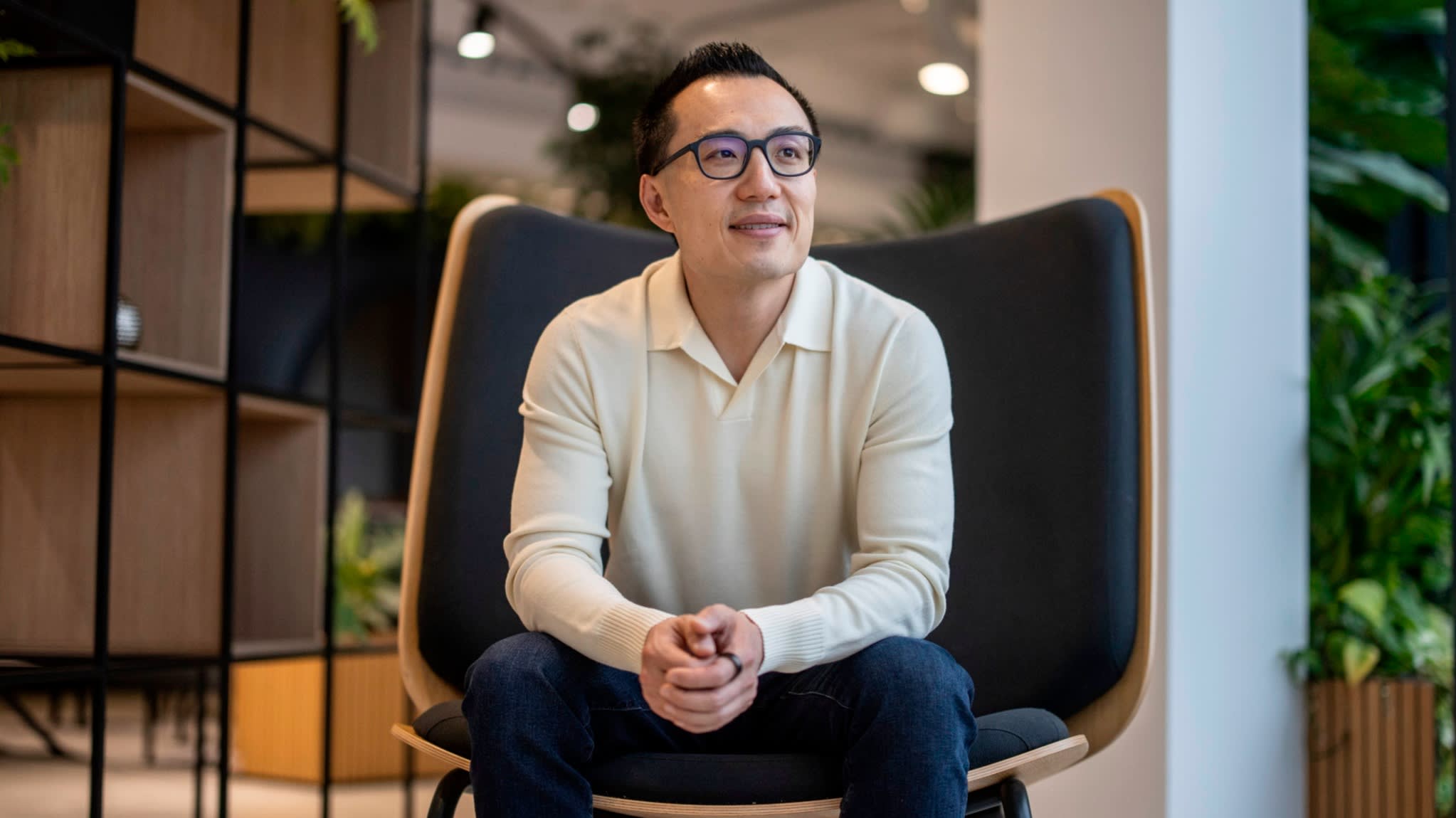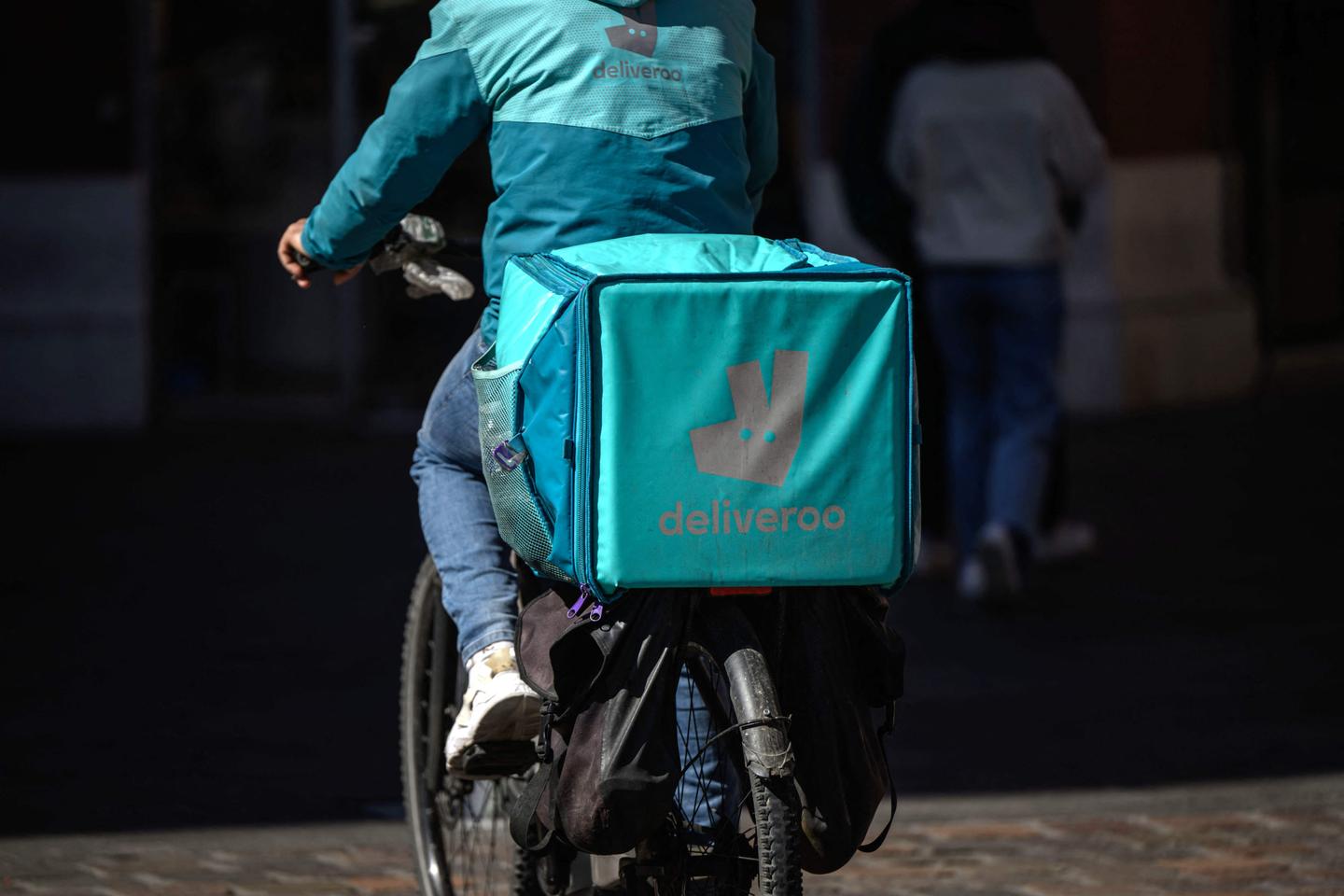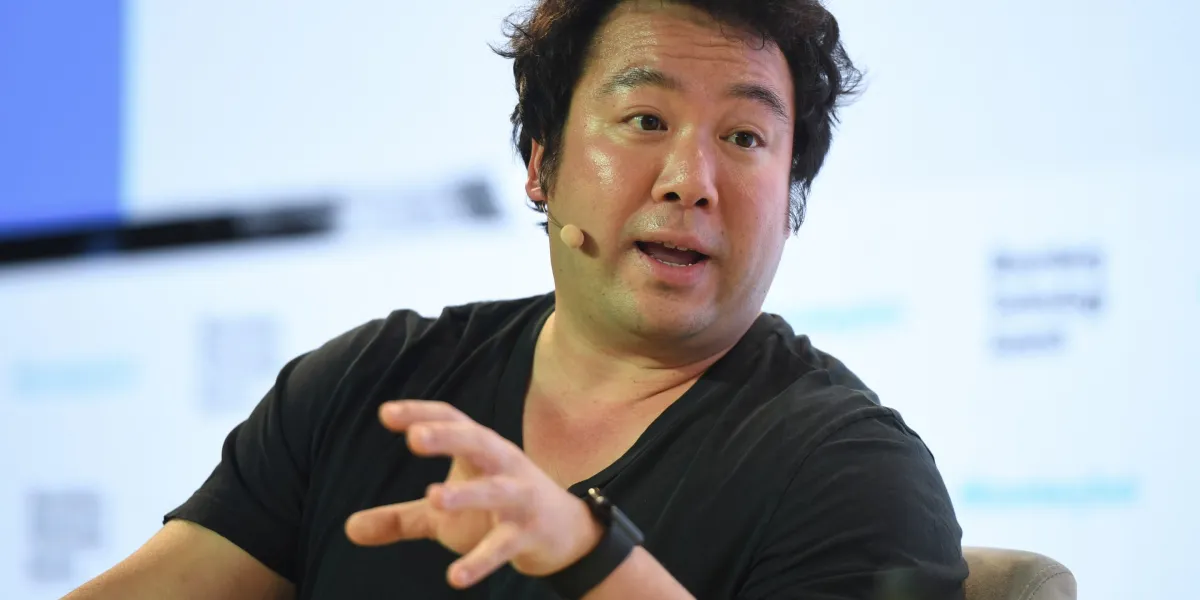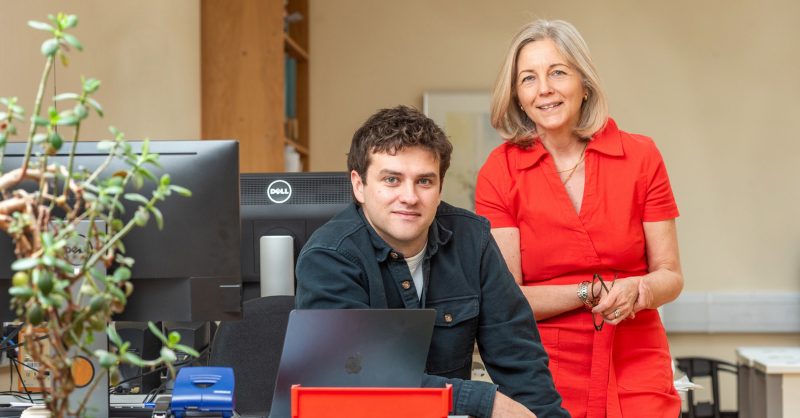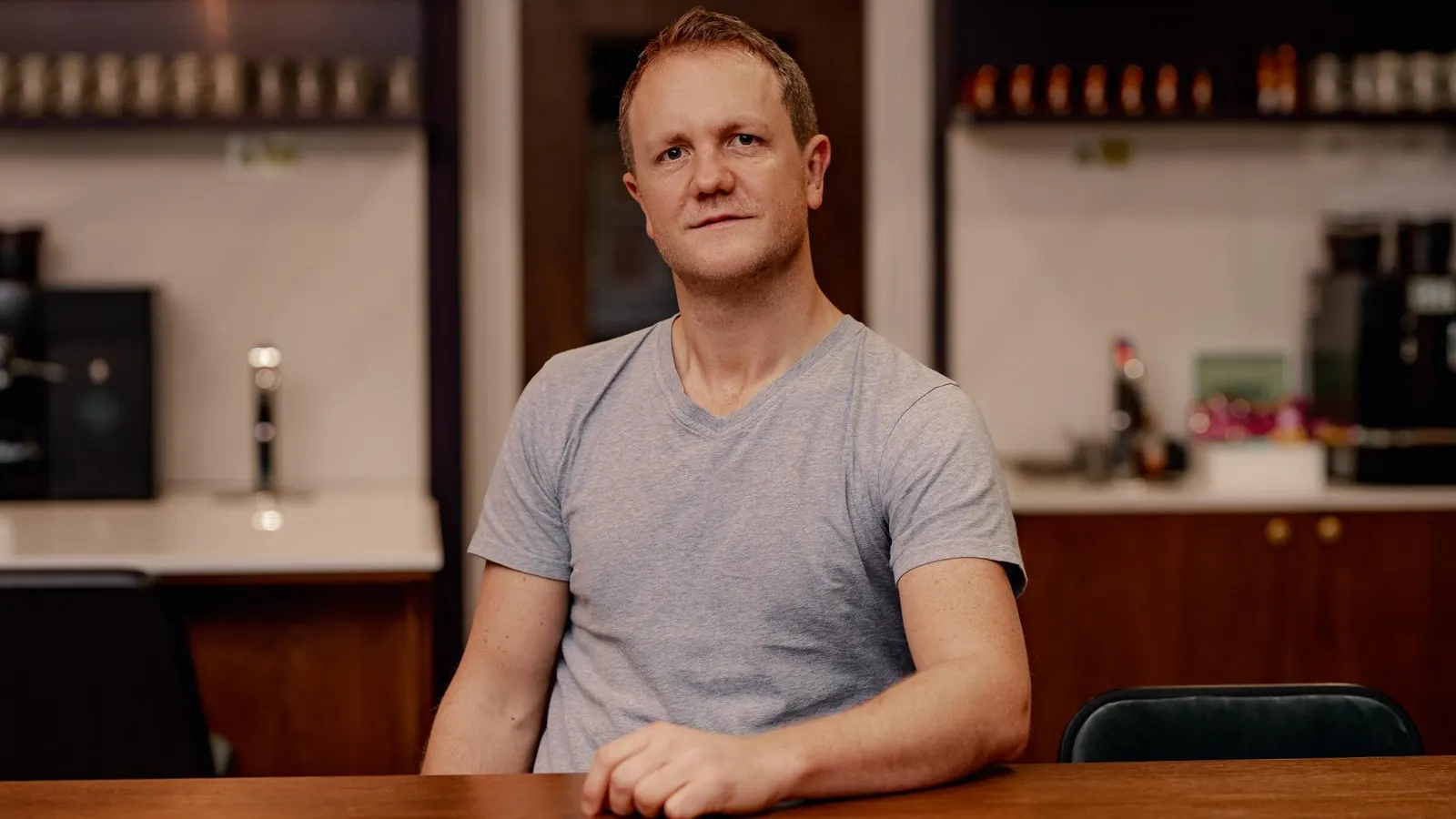
Dan Warne, founder and CEO of SessionsSessionsDan Warne has seen enough cycles of hospitality innovation to know when something is being dressed up as progress and when it actually, well, is progress. Sessions, the business he now leads, sits firmly in the latter camp: a company celebrating over £65 million [$87 million] in sales, profitable, growing at around 70% year-on-year, and operating across a network of more than 400 partners. On paper, it looks like a tech success story. In reality, it’s the result of a much longer observation—that for all its cultural cachet, the restaurant industry has struggled to evolve in step with how people actually eat.Warne’s vantage point is unusually close to the fault line. He joined Deliveroo as its 12th employee, and UK Managing Director, at a time when the business scaled at breakneck speed, culminating in a $500 million investment from Amazon in 2019. “The UK business was more than half of all of Deliveroo for the whole time I was there,” he says. His role spanned everything from negotiating global partnerships with brands like KFC to fielding questions from MPs and select committees on the realities of gig economy labour—“the kind of nuanced, interesting debate that I actually kind of enjoyed having,” he notes.But somewhere in that period of hyper-growth, a more structural issue began to surface; delivery was booming, with demand shifting decisively digital-first, yet the underlying economics of restaurants hadn’t followed.MORE FOR YOU“It became clear to me that the restaurant industry model was perhaps not broken, but it was struggling,” Warne says. The reason, as he frames it, is deceptively simple. “Consumption was moving increasingly online, but the driver of value for restaurants still sat within the physical site.” In other words, restaurants were being pulled into the infrastructure of the internet—logistics, commissions, digital acquisition—without benefiting from its core advantage: scale.“You’re taking on the cost of the online world, but not the scale of the online world,” he says. “So you’re getting the negative side of it, but not the positive.”Sessions partner SoBe BurgerSessionsIt’s a sharp diagnosis, and one that cuts through much of the noise that has surrounded “food tech” over the past decade. While retail businesses were able to shift inventory online and reconfigure their cost base accordingly, restaurants remained tethered to brick and mortar. “Restaurants have never really been able to take advantage of the growth of the internet,” he says, and as delivery demand accelerated, particularly post-pandemic, that imbalance only became more pronounced. And the industry’s first response was to build around the problem. At Deliveroo, that took the form of Editions—purpose-built kitchen spaces designed to help restaurants expand without opening new front-of-house sites. It worked, to a point. “It certainly does work for the right kind of brands,” Warne says, but the limitations were clear. Even without the costs of a full restaurant, operators still needed teams, infrastructure, and capital. “You’re still kind of loading the dice towards the better capitalised players.”The second wave—virtual brands—promised something more radical: food concepts built entirely for delivery, untethered from physical locations altogether. But here, too, the model proved fragile. “Without having any physicality or any authenticity in the real world, it would be very challenging,” Warne says. “If you are purely virtual, it is harder to get the cut through, to engage the customer.”Sessions, as it exists today, is an attempt to sit between those two approaches—retaining the credibility of real-world brands while removing the constraints that limit their growth. But it didn’t begin there.When Warne left Deliveroo, he initially moved into something far more tangible: a food hall on Brighton seafront. Sessions’ Shelter Hall, as it was known, housed seven different kitchens under one roof and gave him a more direct experience of operating in hospitality. “It was a good foray into running hospitality more directly,” he says, “and just understanding how the sector works.”The business was eventually sold to Market Halls in a multi-million pound deal, and the model Warne landed on next was markedly different. Far closer to his background, Sessions would now tap into what already existed. “There already exists a significant amount of underutilised kitchen real estate,” Warne says. “Why not use those as the opportunity to expand some of these brands that we know consumers already are looking for?”The comparison he reaches for is telling. “A little like Airbnb did in the travel industry… people already have houses. They already have space. Why build more hotels when you can leverage that?”In practice, that means identifying restaurant brands that have already proven themselves—typically through a handful of physical locations—and integrating them into Sessions’ network. From there, those brands can be rolled out across hundreds of delivery partner kitchens, reaching “more than half the UK population overnight,” as Warne puts it, without the need to open new sites themselves. Sessions handles the infrastructure; operators on the ground prepare the food; and the original brand receives a royalty. “That’s effectively a passive income,” he says.The effect is to shift where value sits. Instead of being tied to individual locations, it moves into the brand itself—something restaurants have historically struggled to monetise at scale. “You can run two or three sites to build a brand… and then through a channel like Sessions, you can expand that brand everywhere.”If that sounds neat in theory, the execution is deliberately less romantic. In its early stages, Sessions leaned heavily on instinct—choosing brands that felt “cool, exciting, sexy.” Over time, that approach has been replaced with something more systematic.Delivery apps, like Deliveroo, are key for Sessions and their partnered food brands (Photo by BEN STANSALL / AFP) (Photo by BEN STANSALL/AFP via Getty Images)AFP via Getty ImagesToday, brand selection is driven by a proprietary data tool which scans delivery platforms to identify concepts that are already gaining traction. Even then, nothing is scaled immediately. Each brand is rolled out across an initial group of sites—typically ten—before being evaluated. “If the 10 sites don’t deliver the requisite numbers, then that’s the end of it,” Warne says. “But if that period gives us the confidence we need… we’ll then go on to scale the brand.”It’s a model that borrows more from product development than traditional hospitality (iterative, evidence-led, structured around reducing risk) and the same logic applies to geographic expansion. Entering a new market doesn’t require building anything from scratch; instead, Sessions partners with existing operators. “The risk of them doing that is very low,” Warne says. “There’s not more CapEx or rent or even labour required.”Only once demand is proven does the business encourage a move into physical retail, with branded sites reinforcing consumer recognition. In that sense, the physical restaurant becomes less the foundation of a brand and more its expression.Sessions’ portfolio currently includes SoBe Burger, Ivan Ramen, as well as partnerships with Netflix to execute themed delivery menus linked to Squid Game and Stranger Things.Sessions partner Ivan RamenSessionsOf course, for all its emphasis on systems and scale, Sessions still operates within a category that has seen its share of overfunded, underperforming ventures, and Warne is acutely aware of that history. “There have been multiple players that have raised significant capital and have struggled to make the model work,” he says.That context has shaped how he thinks about growth. Despite strong unit economics (“the lifetime value that we create for every new site that we acquire is nine times that of the acquisition cost”), Sessions has deliberately avoided the kind of aggressive expansion that has defined much of food tech. “We are already EBITDA profitable,” he says. “Which for a business at 70% growth rates is unusual.With that said, the next phase is certainly in motion. The company is preparing to raise further capital to expand faster—a move that, given its metrics, he suggests is overdue. “If you have those kind of growth economic returns… you should be investing more.”Ultimately, what distinguishes Sessions from earlier marketplace models is its relative efficiency in reaching consumers. By working closely with delivery platforms, rather than building its own, it avoids the cost of acquiring demand directly—a challenge that has weighed heavily on other multi-sided marketplaces.It would be easy to group Sessions in with the wave of “dark kitchen” businesses that flooded the market over the past decade, but Warne is careful to draw a line between the two. “The restaurant industry model was perhaps not broken, but it was struggling,” he says. Dark kitchens responded by building new sites; Sessions builds reach.Should that distinction hold, it may well change the equation for restaurants far and wide.
From Deliveroo To Sessions: Meet The Man Rewiring How Food Brands Grow
How Sessions is turning restaurant brands into scalable platforms, as Deliveroo alum Dan Warne tackles the limits of the traditional model.
1,420 words~6 min read