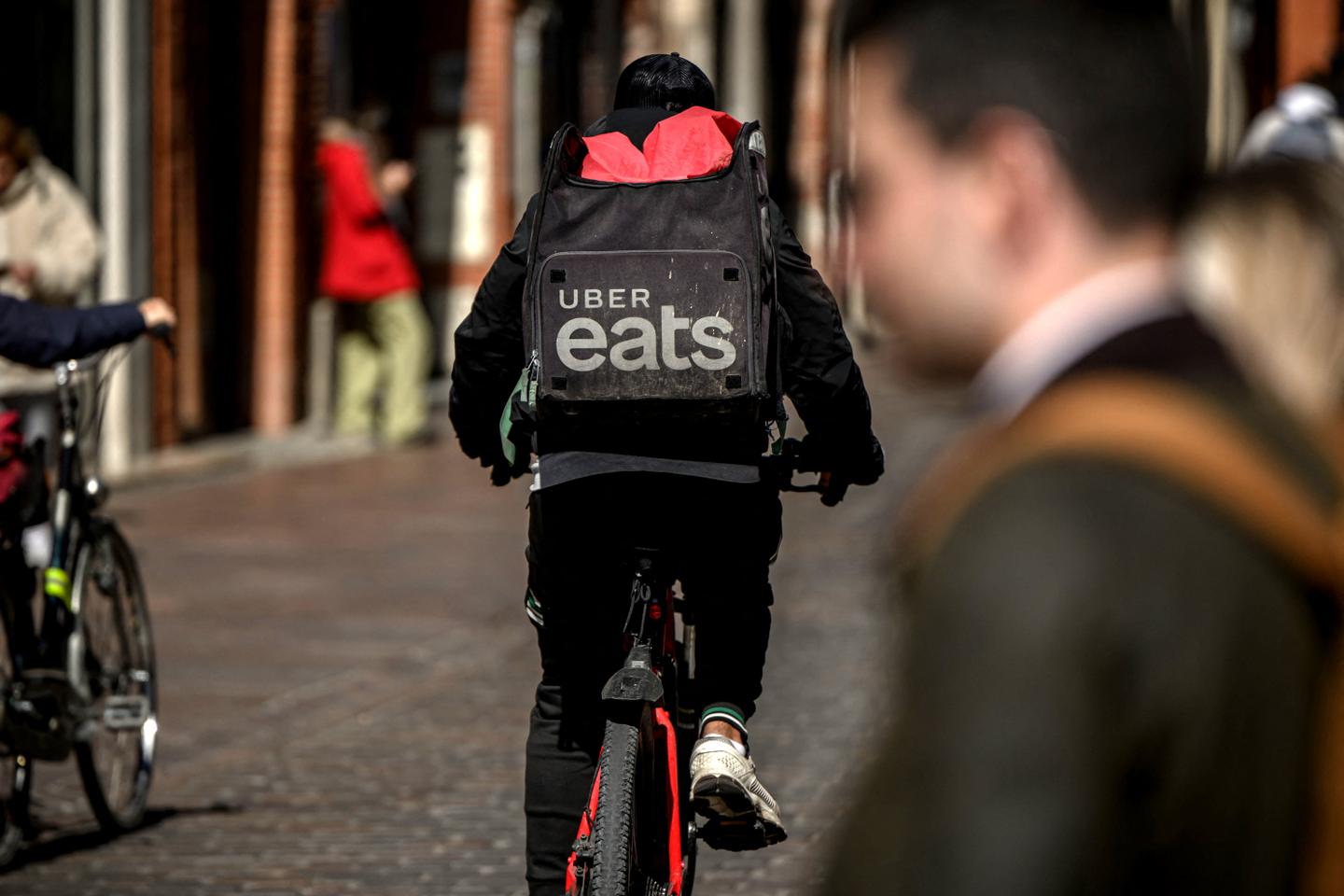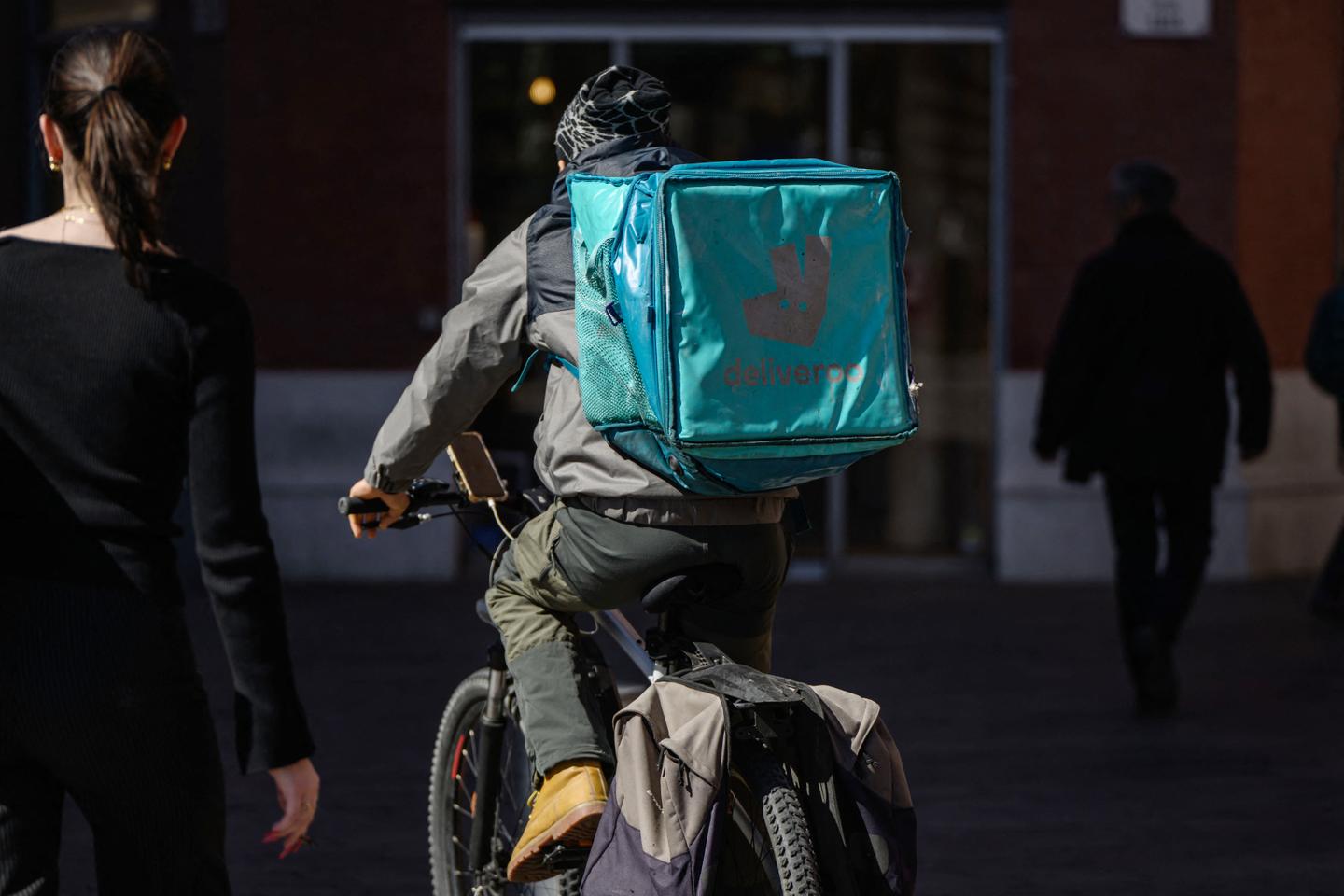
A Deliveroo rider in Toulouse, March 18, 2025. ED JONES/AFP
A large building in the heart of London, with typical "start-up" décor: a few oversized armchairs, brightly colored sofas, exposed brick walls. It is here, at Deliveroo's global headquarters, that "human trafficking" is allegedly being organized, according to a complaint filed on Wednesday, April 22, by four French non-profit organizations representing delivery workers. The accusation, which also targets Uber Eats, signals a further escalation in the long-running legal battle between meal delivery platforms and the cyclists who crisscross major cities around the world.
Subscribers only
Uber Eats and Deliveroo accused of human trafficking: 'The situation of delivery workers, the 21st-century proletarians, is outrageous'
The contrast between Uber and Deliveroo and the on-the-ground reality for their couriers is stark. Uber, listed on the New York Stock Exchange, has a market capitalization of $150 billion (€128.41 billion). Meanwhile, British company Deliveroo was acquired in 2025 for £2.9 billion (€3.3 billion) by DoorDash, which is listed on Nasdaq, the US tech stock exchange. DoorDash itself is valued at $79 billion. At the heart of their business models are hundreds of thousands of bicycle couriers, whom these companies refuse to recognize as employees.