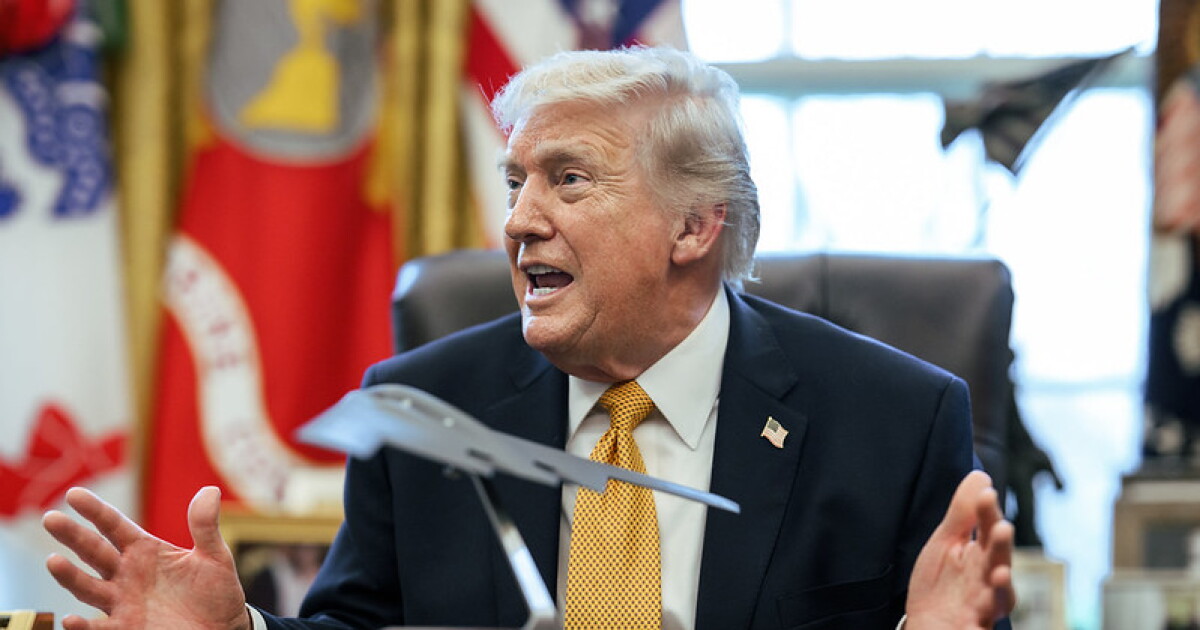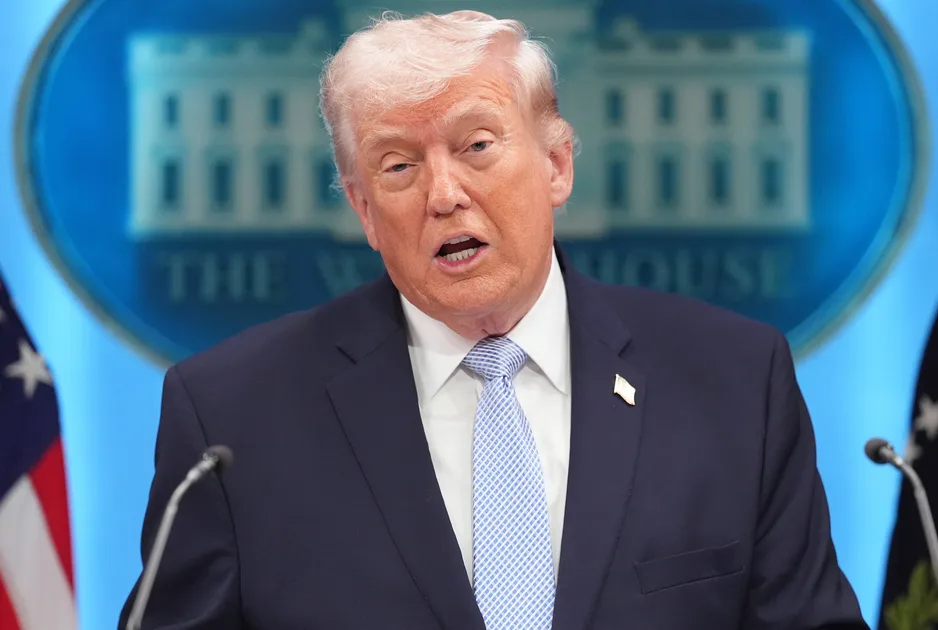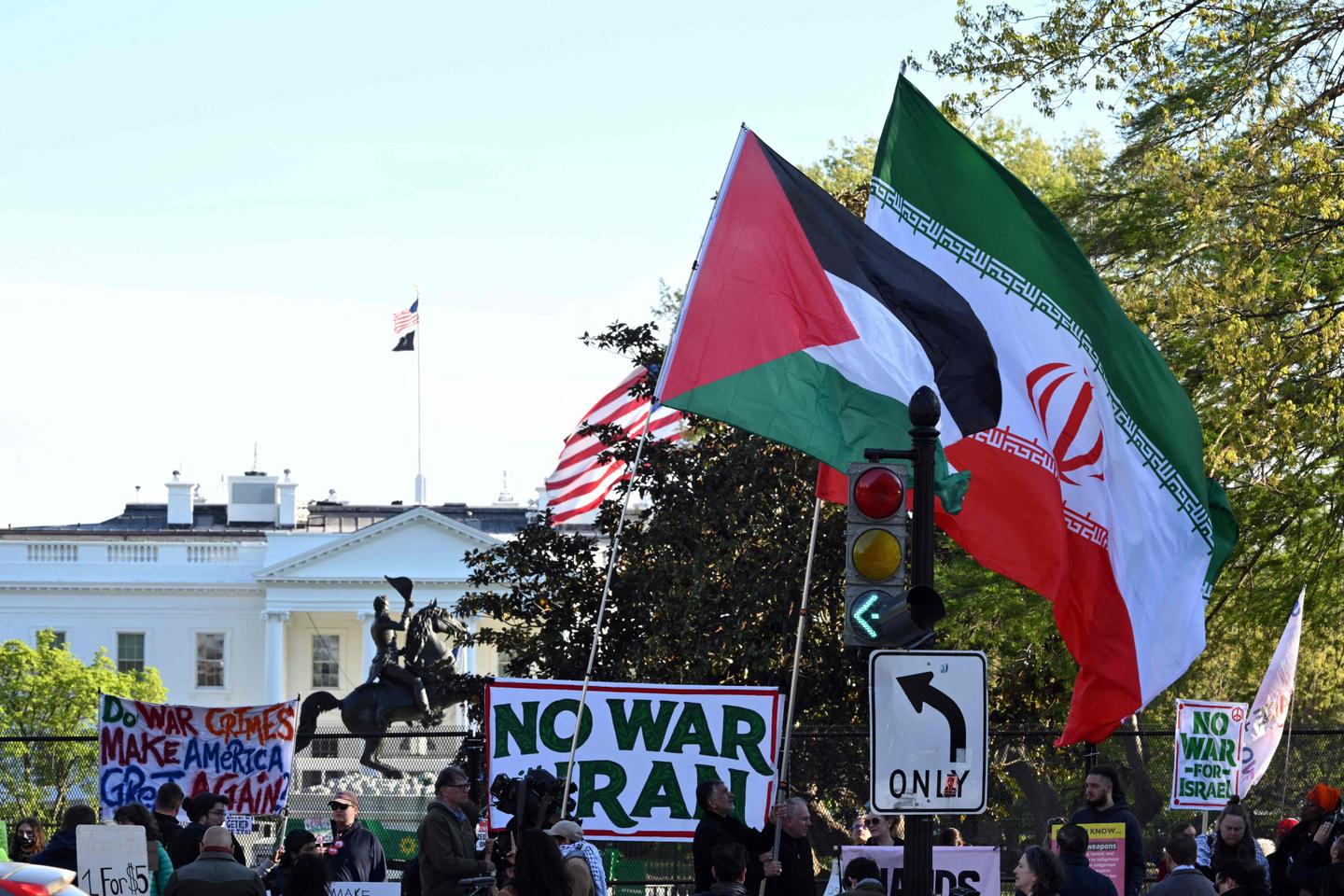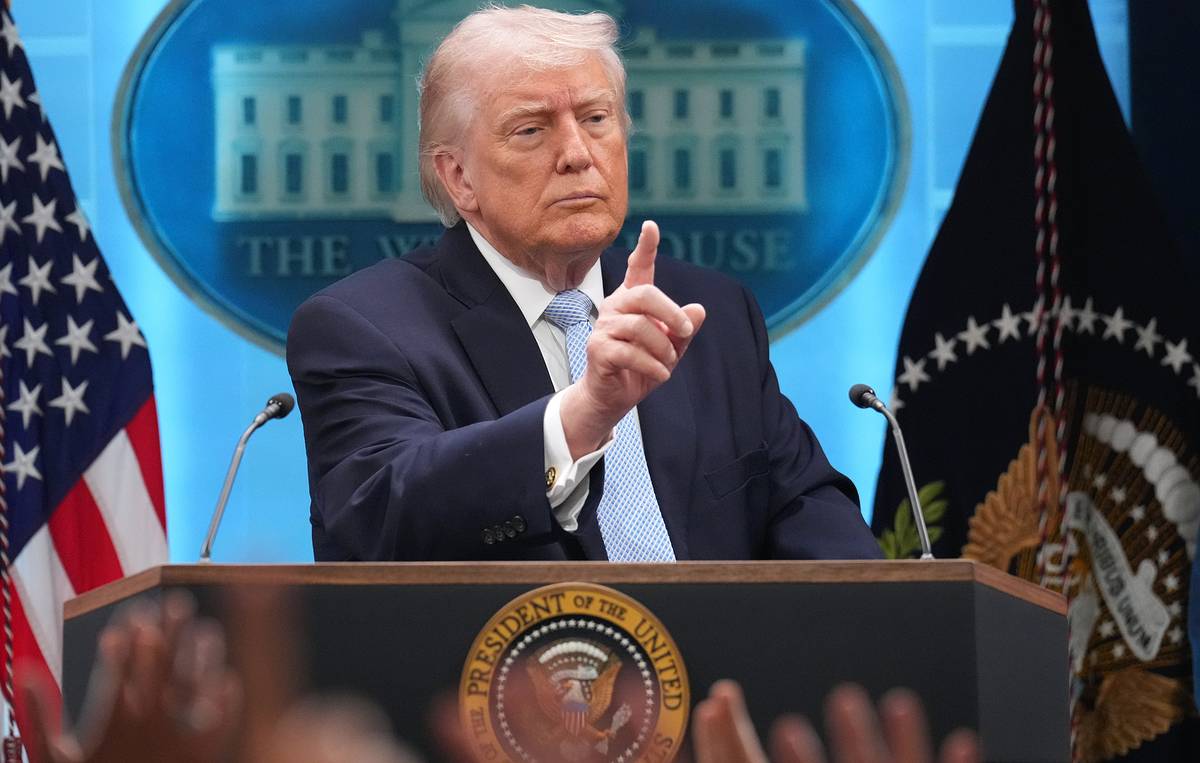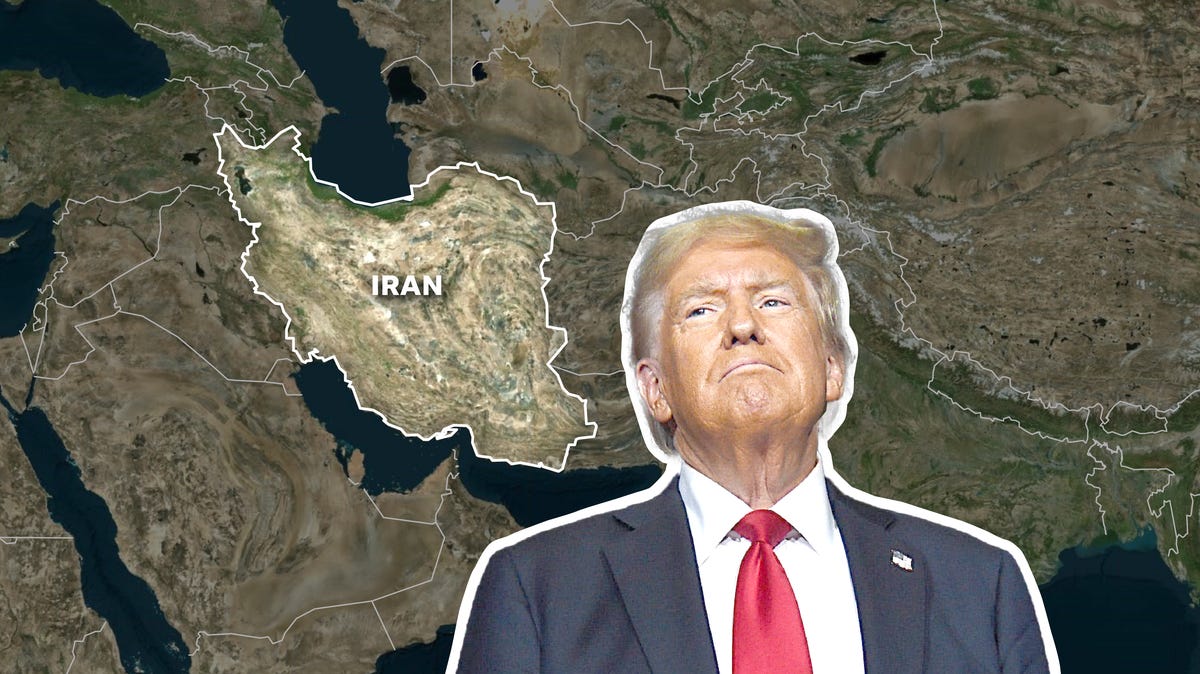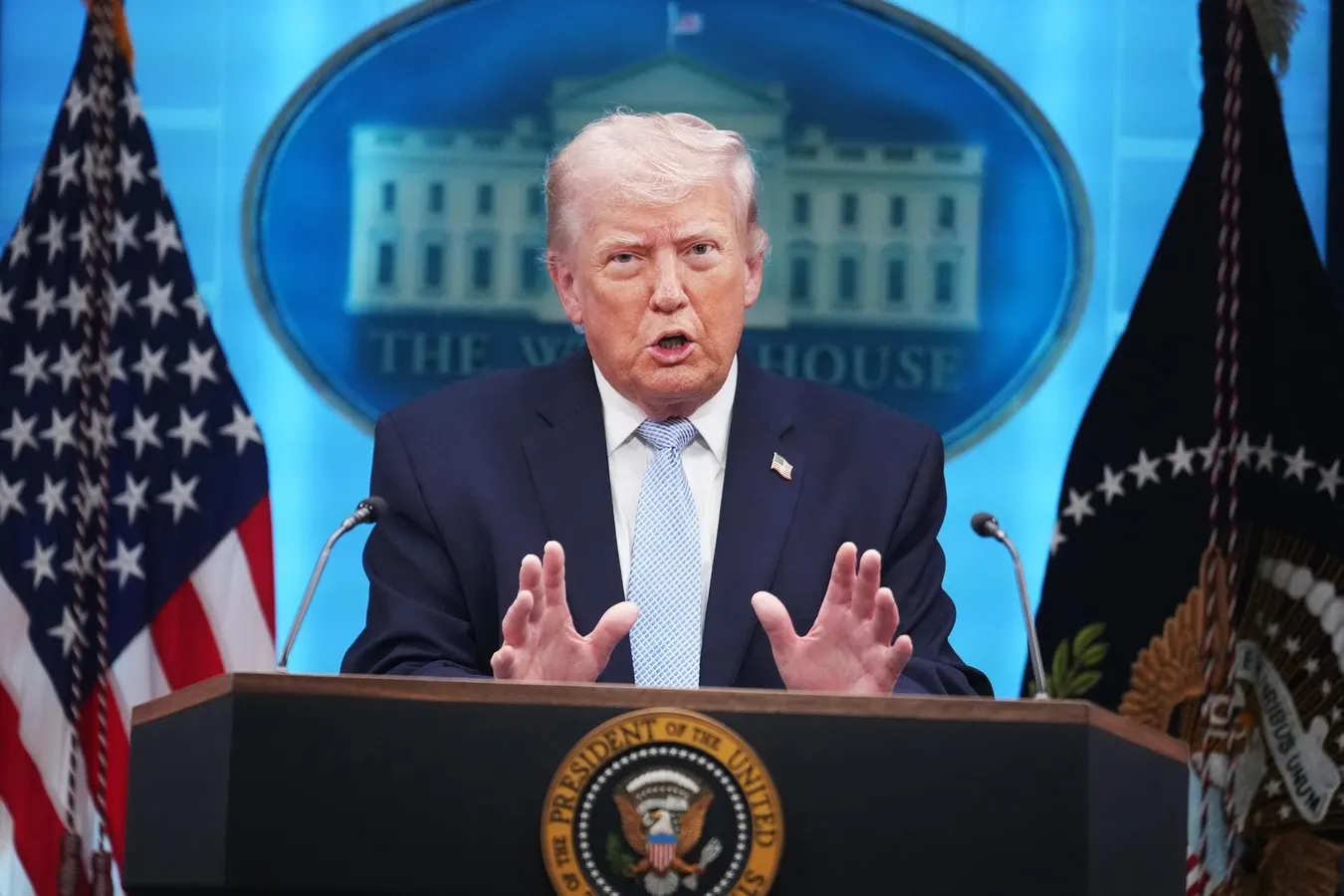
ToplinePresident Donald Trump said Wednesday the U.S. would “work closely” with Iran to implement regime change and remove nuclear materials, hours after reaching a two-week ceasefire agreement with Iran and calling off large-scale strikes on civilian infrastructure. President Donald Trump conducts a news conference in the White House briefing room about the war in Iran on Monday, April 6, 2026. (Tom Williams/CQ-Roll Call, Inc via Getty Images)CQ-Roll Call, Inc via Getty ImagesKey FactsTrump said the U.S. will “work closely with Iran, which we have determined has gone through what will be a very productive Regime Change!” he wrote on Truth Social Wednesday morning, adding “there will be no enrichment of Uranium, and the United States will, working with Iran, dig up and remove all of the deeply buried (B-2 Bombers) Nuclear ‘Dust.’”Trump said any country supplying military weapons to Iran will be subject to a 50% tariff “effective immediately.”Defense Secretary Pete Hegseth said Wednesday morning Iran “will either give [its enriched uranium] to us . . . or we’ll take it” (Iran has about 970 pounds of enriched uranium, enough to make some nuclear bombs, according to a February report from the International Atomic Energy Agency).When asked how the U.S. plans to obtain Iran’s uranium, he said, “that’s something the President is going to solve.”Hegseth said the U.S. would maintain its military presence in Iran “to ensure Iran upholds every reasonable term . . . we will be hanging around, not going anywhere, to make sure Iran complies with this ceasefire.” Hegseth said “Operation Epic Fury was a historic and overwhelming victory on the battlefield,” claiming Iran’s military had been decimated and all other objectives in the war had been met, but acknowledged “they can still shoot.”What To Watch ForThe Trump administration is expected to significantly reduce its request to Congress for Iran war funding in the wake of the ceasefire, The Washington Post reported Wednesday, citing unnamed sources who said the number would likely fall somewhere between $80 billion and $100 billion, down from the initial $200 billion request. TangentIran wants to collect tolling fees from shipping companies whose oil tankers pass through the Strait of Hormuz, Hamid Hosseini, a spokesperson for Iran’s Oil, Gas and Petrochemical Product Exporters’ Union told the Financial Times on Wednesday. Iran said Tuesday, as the ceasefire was called, that “for a period of two weeks, safe passage through the Strait of Hormuz will be possible via coordination with Iran’s Armed Forces and with due consideration of technical limitations.” Trump said early Wednesday shortly after announcing the ceasefire that the U.S. “will be helping with the traffic buildup in the Strait of Hormuz. There will be lots of positive action! Big money will be made,” he wrote on Truth Social. At least two vessels have passed through the strait as of Wednesday morning, multiple outlets reported. Key BackgroundTrump called off his planned attacks on Iran’s infrastructure, set for 8 p.m. Tuesday if Iran didn’t agree to reopen the Strait of Hormuz, shortly before they were set to take place, suddenly announcing the conflict was “close to resolution” and that a ceasefire had been reached on both sides. Iranian officials also said they had agreed to the ceasefire, requested by Pakistani Prime Minister Shehbaz Sharif. The ceasefire came after Trump sparked global, bipartisan criticism with a Truth Social post on Tuesday warning “a whole civilization will die tonight, never to be brought back again,” what some said amounted to threats to commit war crimes or genocide. Further ReadingTrump Calls Off Iran Attack—Suddenly Proclaims Conflict ‘Close To Resolution’ (Forbes)Pope Leo Tells Trump ‘Attacks On Civilian Infrastructure’ Unlawful Ahead Of Iran Deadline (Forbes)Pakistan’s Plea To Trump: Draft Of X Post Looks Scripted By Someone Else (Forbes)
Trump Says U.S. Will ‘Work Closely’ With Iran To Remove Nuclear Material
Trump called off an attack Tuesday and announced a two-week ceasefire.
619 words~3 min read