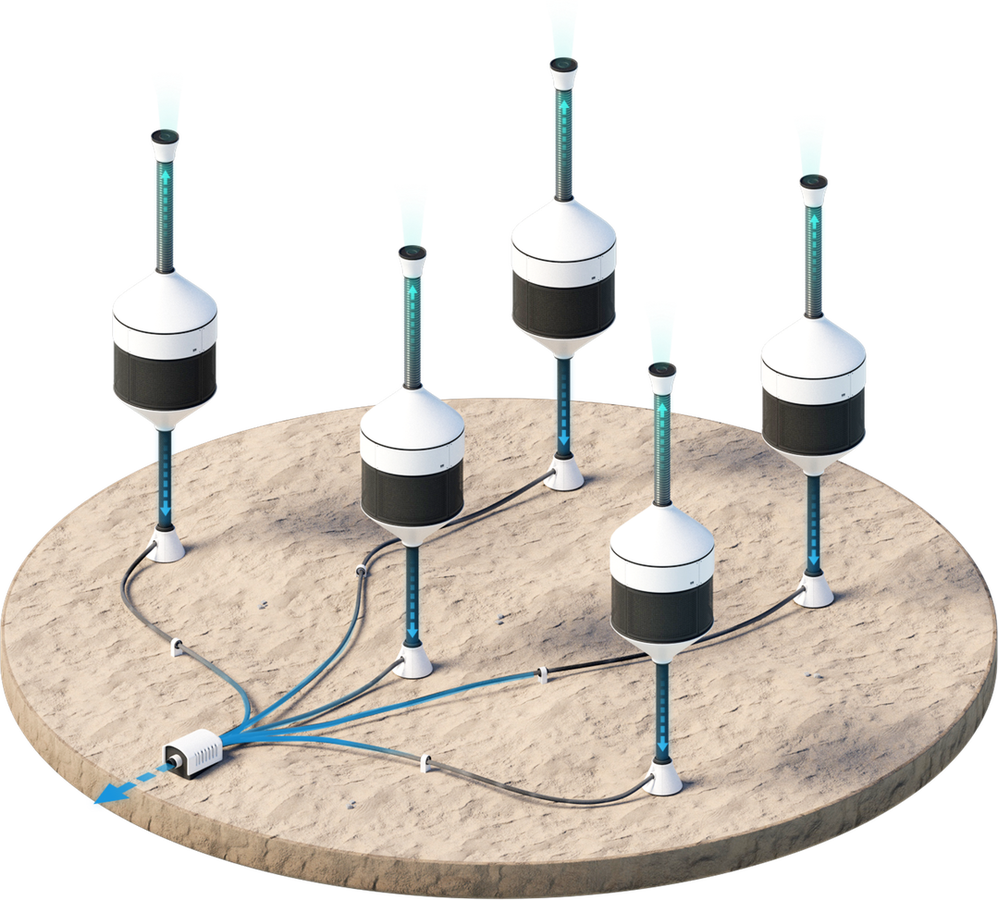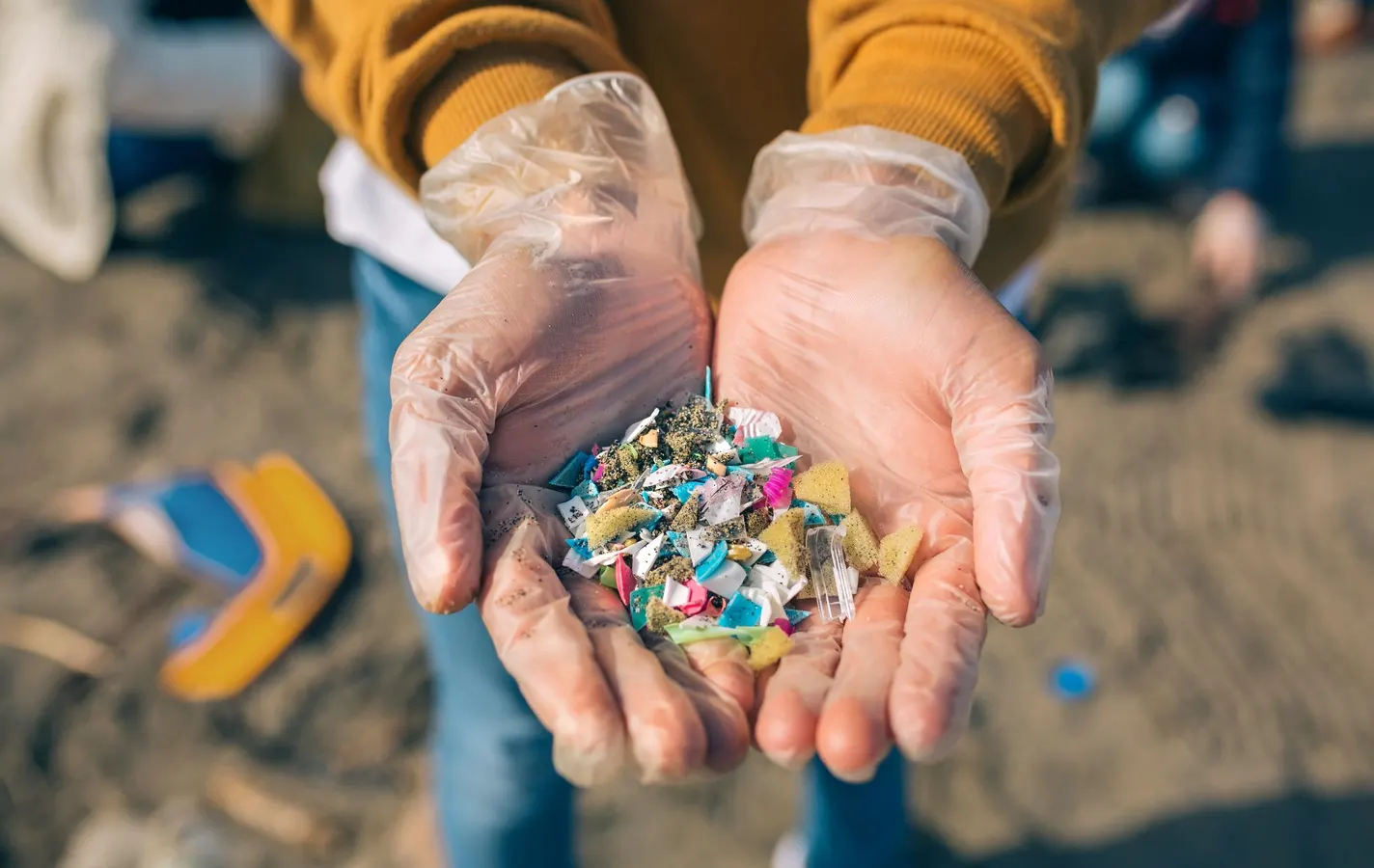
Current Climate brings you the latest news about the business of sustainability every Monday. Sign up to get it in your inbox.gettyFor the past 14 months, the Trump administration has focused on loosening federal regulations over air and water pollution, justifying such moves as being business friendly while seeming to ignore risks to human health. So it was surprising that the Environmental Protection Agency announced plans last week to designate microplastics and some pharmaceuticals as dangerous drinking water contaminants. “For too long, Americans have vocalized concerns about plastics and pharmaceuticals in their drinking water,” EPA Administrator Lee Zeldin said. “By placing microplastics and pharmaceuticals on the Contaminant Candidate List for the first time ever, EPA is sending a clear message: we will follow the science, we will pursue answers, and we will hold ourselves to the highest standards to protect the health of every American family.” And to get the ball rolling, EPA put 75 chemicals, four chemical groups – microplastics, pharmaceuticals, PFAS and disinfection byproducts (DBPs) – and nine microbes on a list of likely contaminants that aren’t regulated or restricted under the country’s Safe Drinking Water Act. There’s no immediate ban on the substances, but EPA is seeking public comments on the list and a review of the policy by a scientific advisory board that will take place over the next several months that will determine the next steps. It’s a welcome move, particularly since under Zeldin hasthe EPA focused on easing pollution rules to benefit U.S. oil and gas companies. Plastics and chemicals are a major source of revenue for oil companies, and they’ve worked to limit such regulations in the past. Meanwhile, last month EPA said it wasn’t issuing health guidelines for previously identified drinking water contaminants. Microplastics are growing health crisis and an inescapable one for a world in which plastics surround us, used in everything from the packaging of food, beverages and consumer products, to car tires, electronics and clothing made from synthetic materials. Exposure to them is linked to heart disease, reproductive health, dementia, and a host of health woes. They’re also harmful to aquatic life and can harm soil quality in agricultural areas. Environmental groups have long lobbied EPA to set restrictions on microplastics and harmful chemicals and pharmaceuticals. They’re worried that just listing dangerous pollutants, without a firm plan to get them out of drinking water by banning them, indicates the announcement is toothless. “Just dumping a load of new pollutants into the purgatory of EPA’s long list of dangerous chemicals in drinking water without issuing new standards will do nothing to remove toxic chemicals from the tap water in millions of Americans’ kitchen sinks,” said Erik Olson, the Natural Resources Defense Council’s senior strategic director of health.So while it’s good that EPA officially acknowledges that microplastics are harmful, whether it’s willing to set restrictions on them – which would harm the petroleum industry – remains to be seen.At this year’s Forbes Under 30 Summit (April 19–22 in Phoenix), we’re focusing on one question:What does it take to deploy and scale climate solutions in the real world?As part of the sustainability programming, on Tuesday, April 21, a featured conversation will bring together leaders across climate tech, capital, and corporate sustainability to share how projects are actually getting deployed and scaled today.You’ll hear how teams are navigating infrastructure and permitting constraints, securing capital, aligning stakeholders, and expanding across markets—and what’s working in practice.Following the conversation, join a curated networking session with founders, investors, operators, and corporate leaders working across climate and sustainability. A limited number of spots are available for newsletter subscribers, with priority given to the first 50 registrants.Claim your spot here. The Big ReadCody Pickens for ForbesAn Acclaimed Physicist And His Daughter Are Burying Tiny Nuclear Reactors A Mile UndergroundFor more than a decade, Elizabeth Muller and her father have taken a three-mile hike, usually twice a week, through the hills of Berkeley, California, stopping for coffee and brainstorming on the way. “I would have an idea and she would have an idea,” says Richard A. Muller, who devised the modern carbon dating method used to determine the age of ancient plant and animal remains before he was 33 and won a MacArthur Foundation “genius” award at 38. Now, after 40 years of teaching at the University of California at Berkeley, the 82-year-old physicist is on the verge of having his greatest commercial impact, thanks to his business-minded daughter and those long walks.“Nuclear brings out big emotions on all sides,” says Liz, 47. “As a kid growing up in Berkeley, all my teachers and friends were anti-nuclear, and the city became a nuclear-free zone.” She too leaned anti-nuke, even though her father’s mentor, Nobel Prize winner Luis Alvarez—who worked with Robert Oppenheimer on the first atomic bomb—was “like a grandfather to me.” But after college at UC San Diego, she moved to Paris in 1999 to earn a master’s at ESCP Business School and worked in international finance there for eight years. In France, she explains, everyone supported nuclear power as a “clean, reliable global warming solution.” She returned to Berkeley determined to tap her dad’s genius.In 2022, on one of those walks, the Mullers hatched the idea behind their nuclear power startup, Deep Fission. The concept is surprisingly simple: Drill a 30-inch-diameter borehole a mile into the earth, fill it with water, then insert a teeny-tiny nuclear reactor that will boil the water at the bottom and send it up a separate pipe to run a steam turbine. Each hole will generate 15 megawatts, enough to power 12,000 homes. Put 70 of them in a field and you can power a one-gigawatt artificial intelligence data center.Once up and running, it should also be cheap (about six cents a kilowatt hour, they estimate), because sticking a reactor deep in the ground under 160 times atmospheric pressure eliminates 80% of traditional power plant costs, which go to concrete buildings and thick steel vessels. “We are using the gravity of the water to give the reactor the same pressure,” Richard explains.Read more hereHot TopicNth CycleMegan O’Connor, CEO and founder of Nth Cycle, on $1.1 billion deal to get nickel, lithium and other high-value minerals from recycled batteriesYou describe Nth Cycle as a critical mineral refining company. What does that mean? We're not a battery recycler. We're not a mining company. But we work with both recyclers and mining companies to turn both of those feedstocks into usable minerals for the domestic manufacturing capacity that we need. It's all about onshoring these materials and creating a more sustainable supply of these minerals. Refining is the biggest bottleneck we have in onshoring these minerals, which is why we started to focus on this over 10 years ago. We were early movers in this space, to say the least. The reason the West doesn’t have refining capacity today is that over 85% of the world's critical minerals are refined overseas, particularly in China. Think big, billion-dollar centralized facilities that use lots of acids and solvents to pull all these great minerals out of both ore and recycled feedstock. It works quite well over there because it's cheaper to build and they have access to lots of the mining feedstock that they need. Many companies have tried to translate that big centralized billion-dollar technology over here, and it breaks down instantly for a couple of reasons. The first is the capital intensity. If it costs a billion dollars over in Asia, it's going to cost $2 to $3 billion to stand up here. It's simply too expensive. So the project starts to fall apart there. But say we had $3 billion to do this, then you need the feedstock to put in. Okay, where can you pull critical minerals from?In the U.S., if you look at our mining assets, we don't have that many. Even if we were to develop them and permit them, they're typically shorter-life mines. So they're not as long in their life as you'd see overseas. So again, it's hard to justify the size and the capital intensity of building the refining here if the mining feedstock's not there. Then you look at the recycling space and it's an even harder challenge. Batteries are not in one magical pile in the center of the U.S. It's a very distributed source of materials. Every company that makes them has a slightly different secret sauce on the inside. It's hard to get the volumes that you need to build these big refineries. And with things changing over time, that technology gets stale quickly. That's the grand challenge we're trying to solve. How do you build this refining capacity in a flexible way, from a feedstock perspective, and then reduce the overall capital intensity so that you can build here in the U.S. and be cost-competitive?You figured out how to do that?That's what we've done. We've developed this core technology that we call electro-abstraction that helps reduce the capital intensity by up to 70% and build at a five to 10 times smaller scale. We're building to the volumes of feedstock that we have in the U.S. mining industry and the recycling industry. And with the reduction in capital intensity on a dollar-per-ton basis, we’re now cost-competitive with Asia. It's really transforming the industry and sort of doing a 180 on what refining is used to seeing by this one piece of innovation that we have. The first industry that we looked at for this, because it can go across critical minerals, is the black mass space. We take in different shredded lithium-ion battery materials called black mass, and we source this from all the recyclers across the U.S. and in Europe. We refine that into nickel MHP, a very high-value intermediate product that can go back into nickel metal refining or back into the battery space. We're also going to produce battery-grade lithium carbonate. We have our first commercial demo facility for this technology already up and running. It's been running for 14 months now in Ohio. With the success of that facility, that's when we decided to go out and build two new facilities, one in South Carolina and one in Europe. We see these as our anchor facilities to bring this refining capacity to scale for both of these Western regions that desperately need more refining capacity. That’s happening with your $1.1 billion deal with Trafigura?Yes. We’re very excited to work with Trafigura as an offtake partner. This is the largest deal that this industry has ever seen, this $1.1 billion offtake agreement. Many companies, for a long time, have tried to build very traditional refining technology here and have failed. So we're excited that Nth Cycle technology makes it possible to really do this.What Else We’re ReadingTrump’s 2027 budget would cut billions from clean energy and climate programs while boosting military spending (Los Angeles Times)Google to tap into Texas gas plant for AI data center in sharp turn from climate goals (The Guardian)Republicans seek protections for oil giants against climate lawsuits (New York Times)EPA considers dropping clean air protections for plastic waste recycling after chemical industry lobbying (Inside Climate News) China was ready for an oil shock and now investors are reaping the rewards (Reuters)More From ForbesForbesA Billionaire’s Pitch To Cut Power Bills Collides With California’s Real CostsBy Alan OhnsmanForbesHow Timber Extensions Can Make Concrete Buildings More SustainableBy Jamie HailstoneForbesWhy The War In Iran Should Accelerate The Clean Energy TransitionBy Ken Silverstein
Moving To Crack Down On Microplastics
This week’s Current Climate newsletter also looks at a cheaper, safer form of nuclear power and a billion-dollar deal to get nickel and lithium from battery waste
1,911 words~9 min read