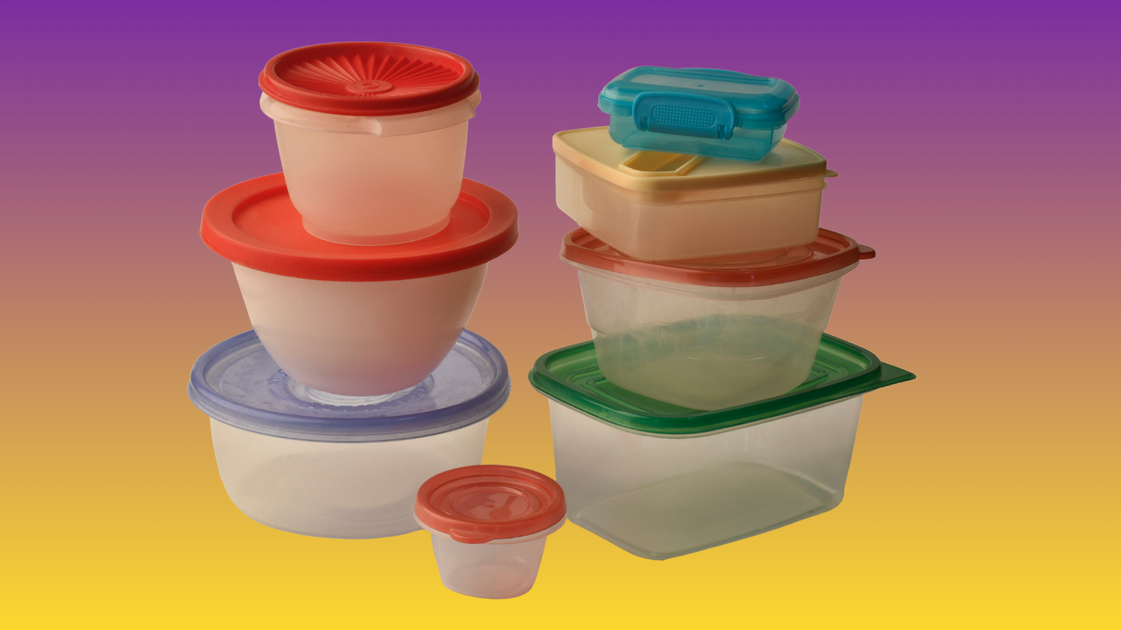
Just about every home kitchen has “that” space — the one where all the old butter tubs and takeout containers are crammed, along with tons of mismatched lids. The next time you’re reaching in there to find a place to store that last bite of breakfast burrito, you might want to think about using plastic that was manufactured during the Bush administration.
See all those cracks and nicks? The tomato sauce stain from the batch of spaghetti sauce you made in 2022? The way the smell of garlic butter still lingers? Turns out, those signs of aging are signals that you should toss this stuff out or use old plastic only to store non-food items.
Here’s why plastic doesn’t age well.
“As plastic containers age, they undergo physical and chemical degradation from heat, sunlight, washing and mechanical wear,” explained Chamali Kodikara, chair of the food safety and quality management division at the Institute of Food Technologists. She mentioned scary words like “shedding” and “chemical leaching” before mentioning how, after a few years and a hundred cycles in the dishwasher, that plastic can develop microscopic cracks. Food (and worse) can be sneaking into those cracks, and plastic can be leaking out.