Set in County Donegal, the poet’s polyphonic third novel wittily explores the fragile dynamics of a family navigating the loss of a father
T
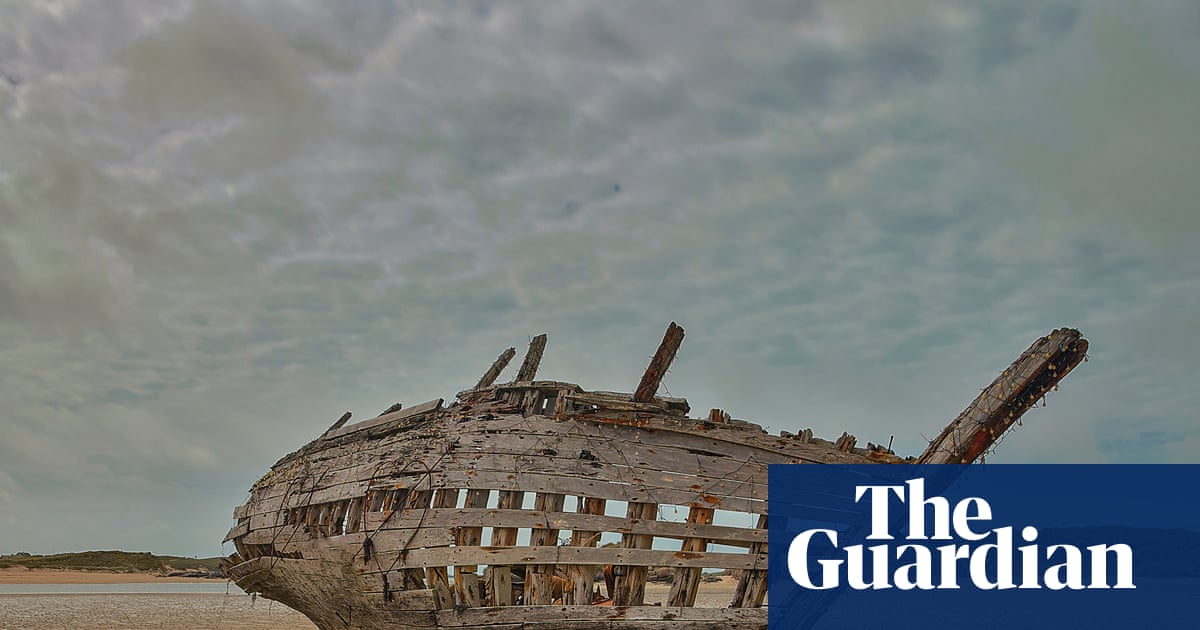
he dark hull of a shipwreck, beached and rotting on the sand, provides the powerful symbolism in award-winning poet and author Susannah Dickey’s third novel Into the Wreck. Five members of a family mourn the death of a gentle but distant father: a man shaped into silence by the Troubles, and whose absence leaves each of them trying to comprehend a family truth that was never fully articulated.
The story is set in a coastal town in modern-day County Donegal, delivered to us in five separate narratives. Gemma, the middle child of three, is studying for A-levels alongside an awkwardly timed new obsession with boys; she harbours a self-imposed responsibility to maintain the fragile equilibrium of the family home. Anna, the eldest, fled to London at 16 to escape constant confrontations with her mother and is now forced to return for her father’s funeral, while Matthew, the youngest, silently and heartbreakingly carries the weight of the world’s and the family’s problems on his 15-year-old shoulders.
In addition to the three siblings, we also hear from matriarch Yvonne, still sticking to the emotional script she has written for herself over the years and unable to find the words to describe her current position of widowed ex-wife. Finally, there is Aunt Amy, a poet. By her own admission, this larger-than-life and seemingly comedic character is brought into the family circle whenever mediation and light relief is required. She has danced on the periphery for years (“they thought bisexuality was straightness that hadn’t been finished correctly, like a skirting board”), but that position has offered her a unique viewpoint. Like many outwardly playful people, she is in possession of dark truths which could see an already fractured family become irreparably broken.