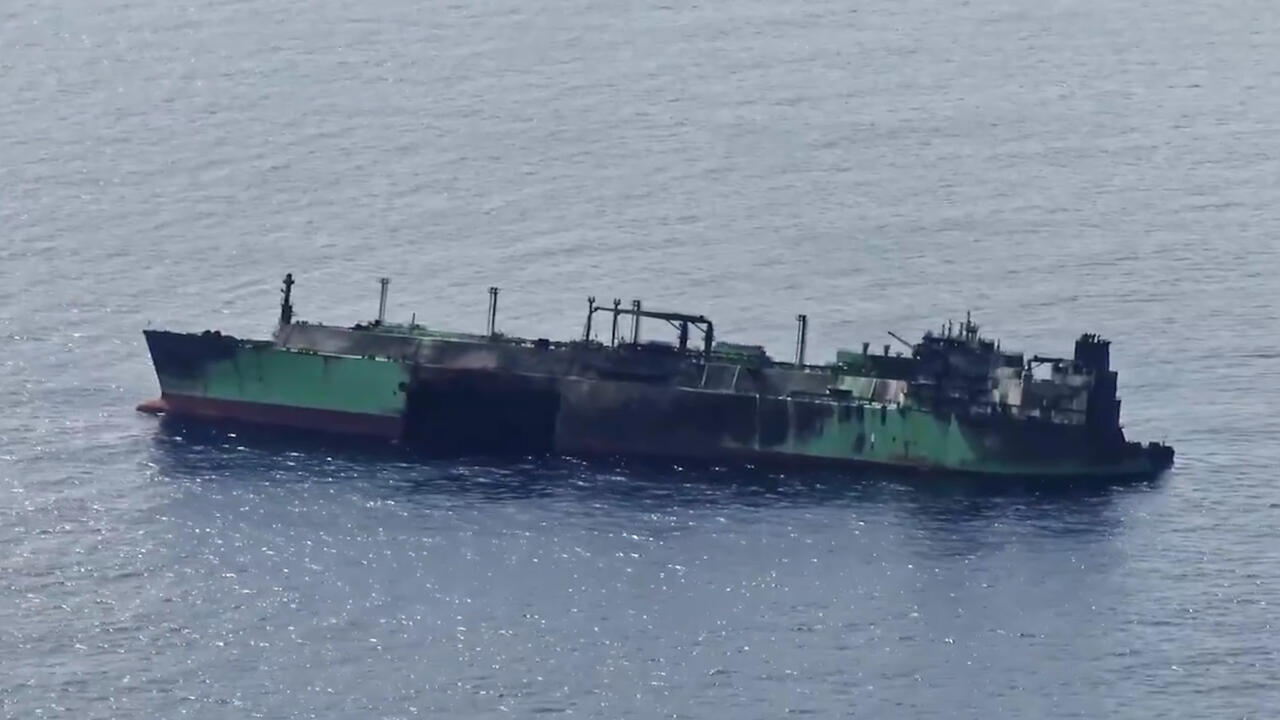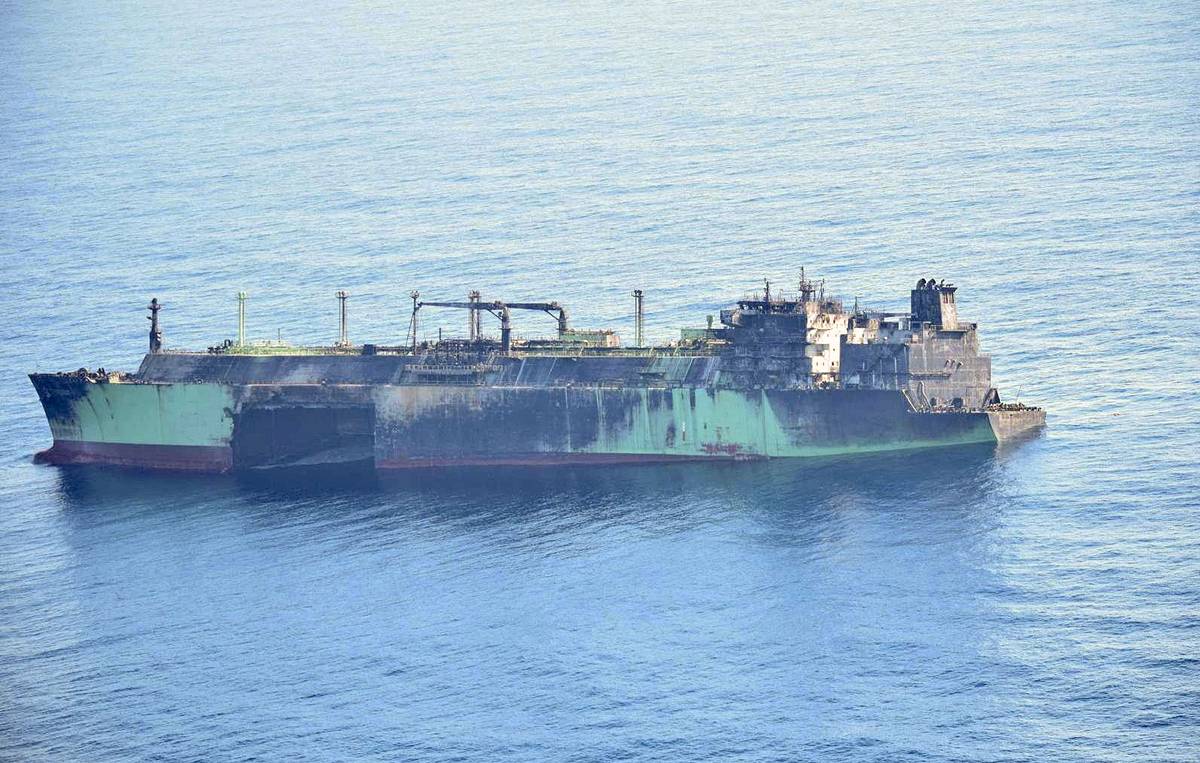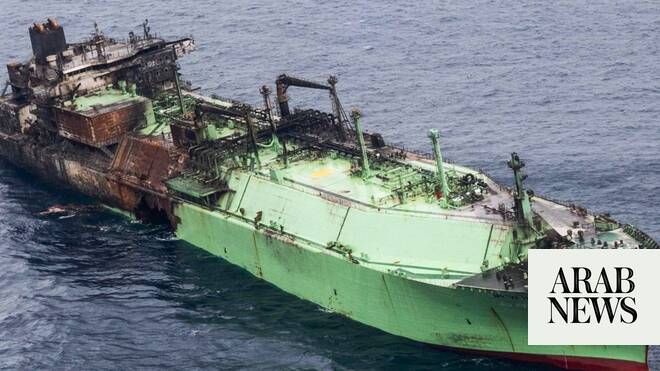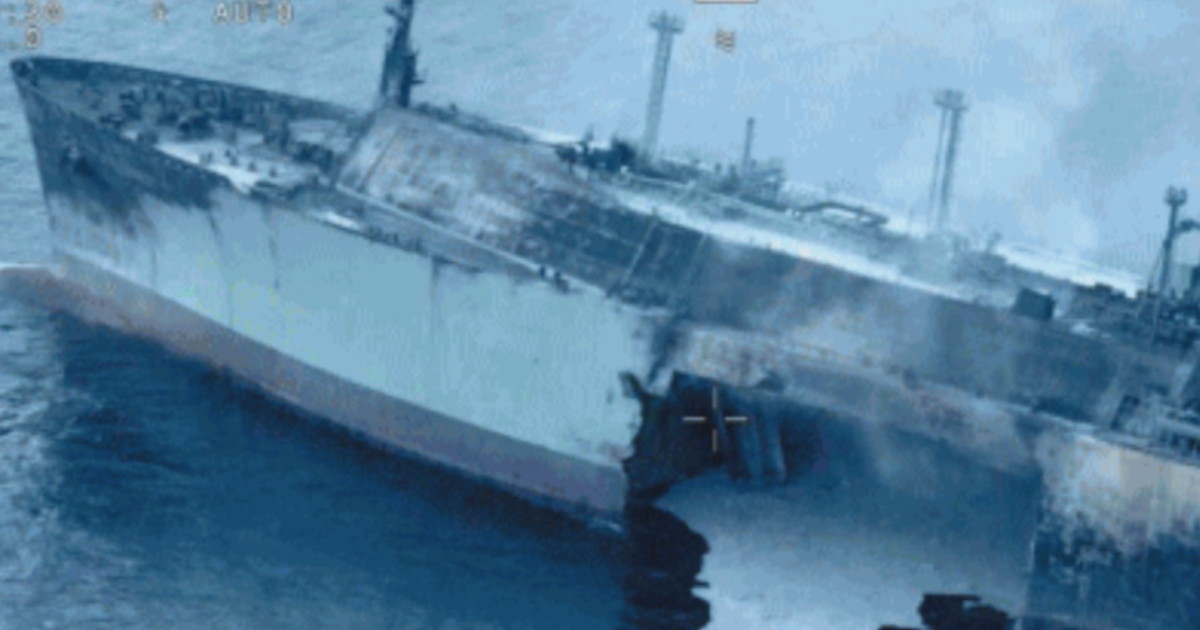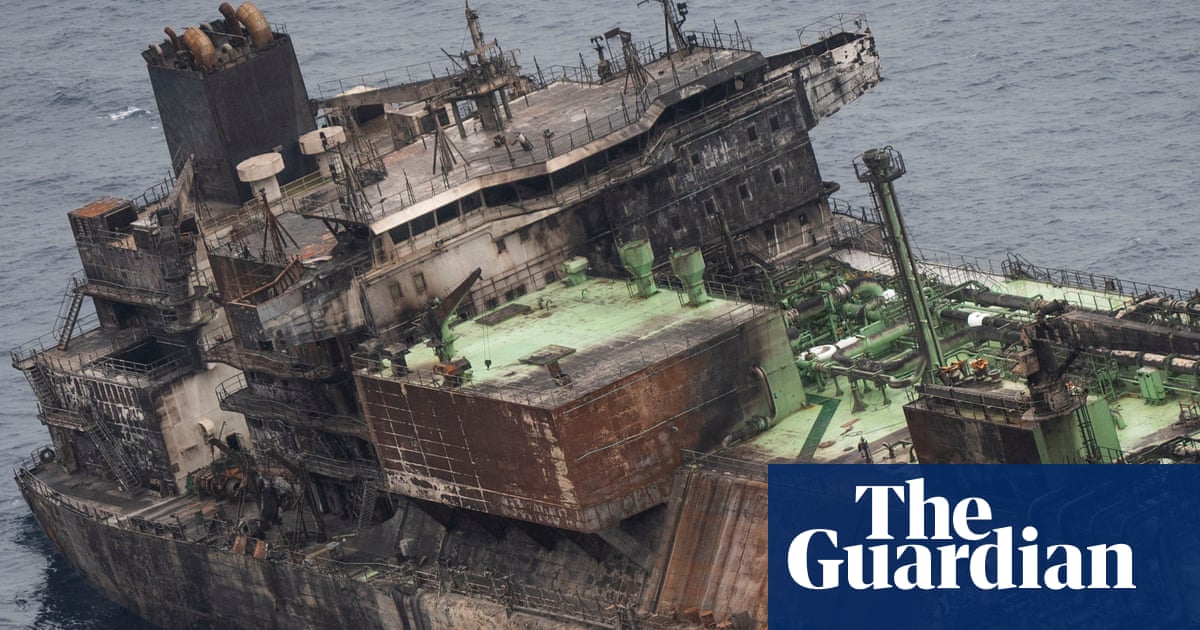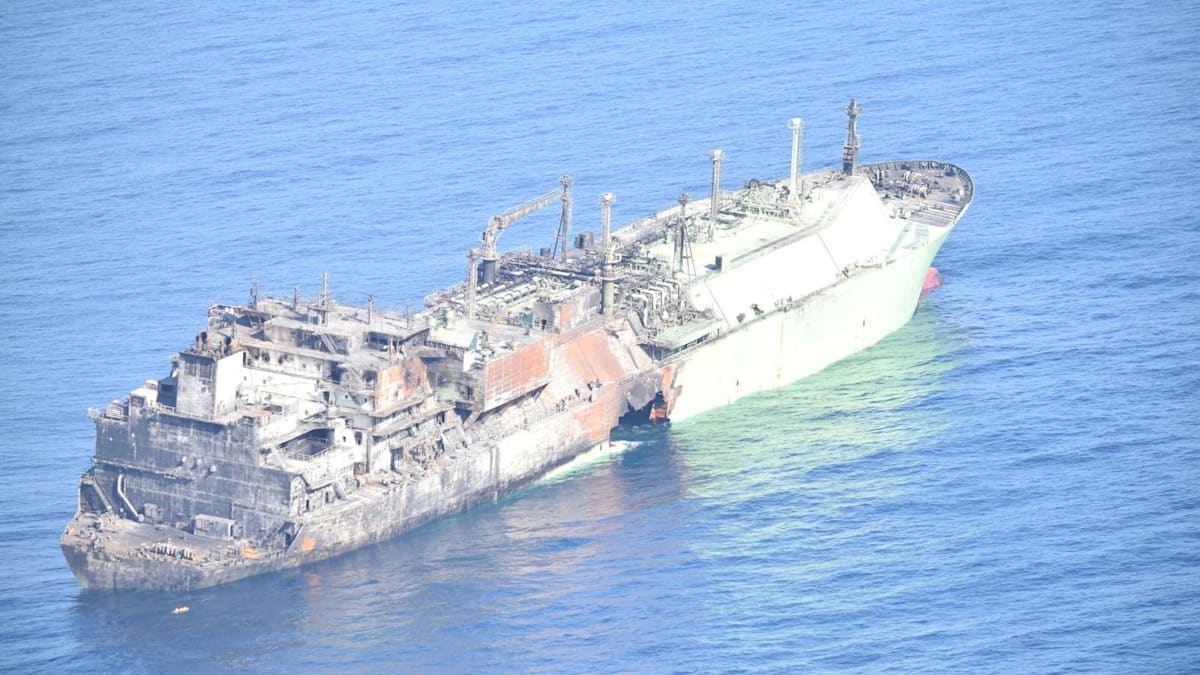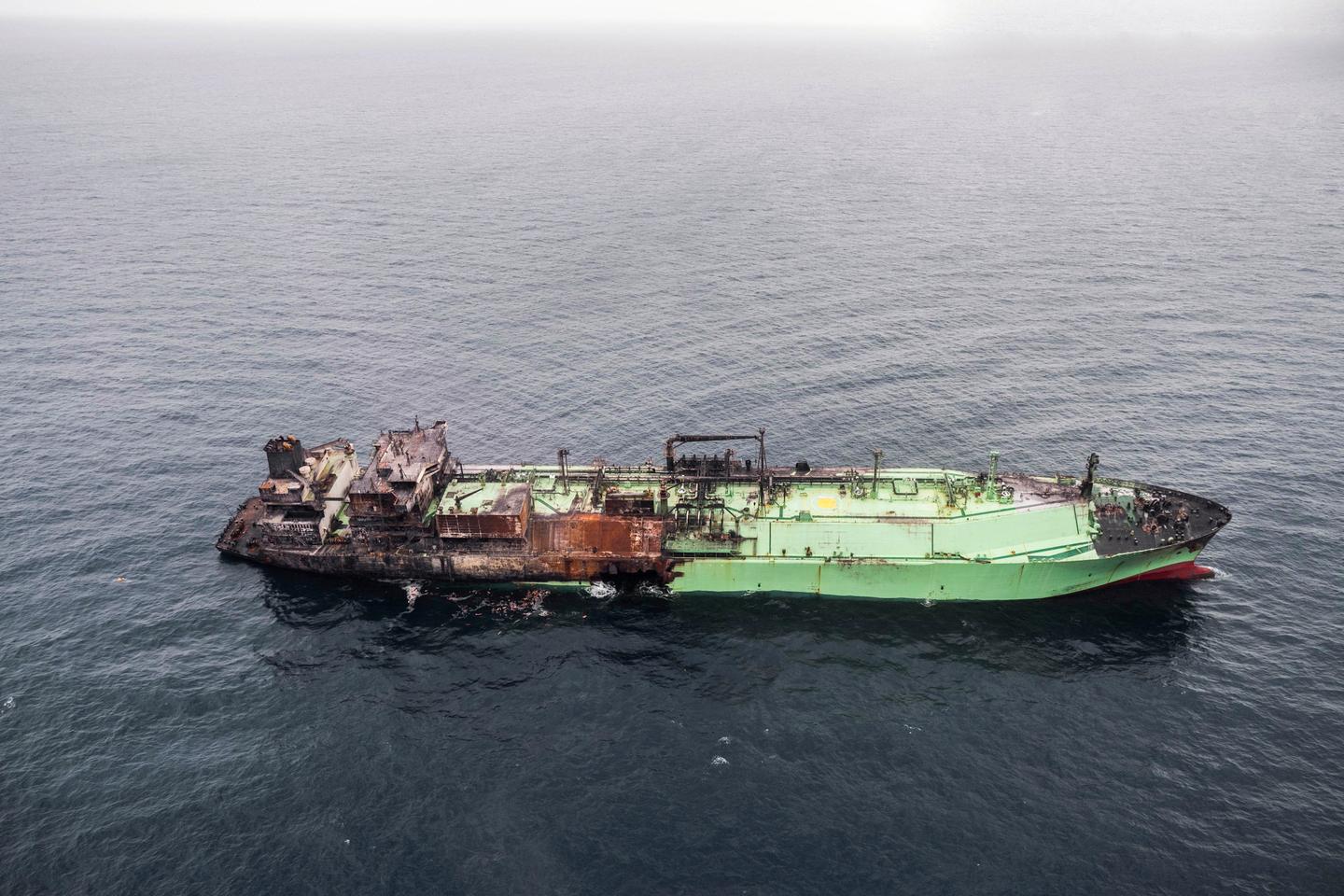
The wreck of the Russian LNG tanker Arctic-Metagaz, drifting between Malta and Lampedusa, March 15, 2026. MIGUELA XUEREB/AFP
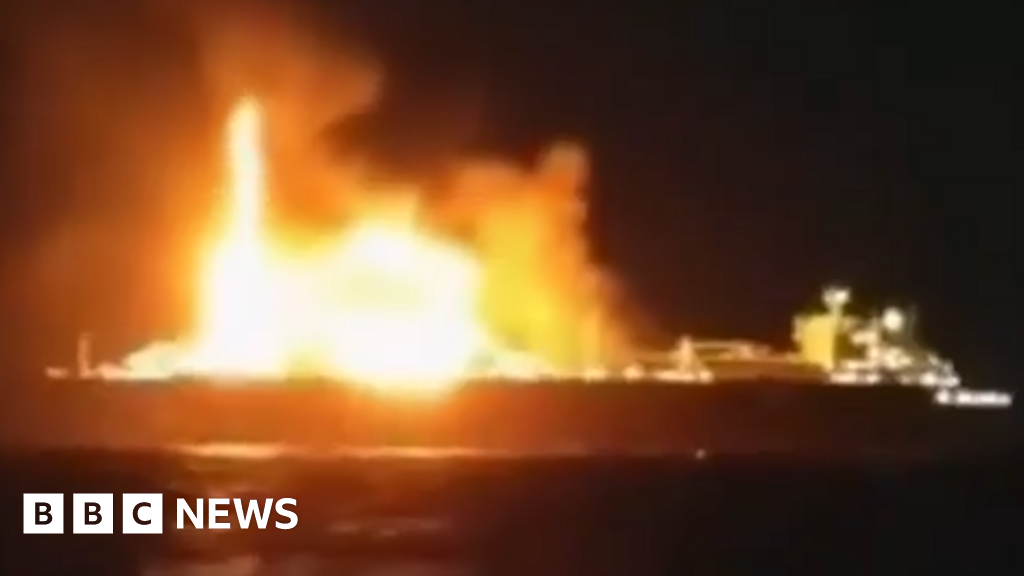
"Out of control." The phrase used by the Libyan Ports and Maritime Transport Authority to describe the state of the Russian LNG tanker Arctic-Metagaz on Thursday, April 2, cast deep concern over the fate of the gas carrier, which has a gaping hole at its waterline. After falling victim to an explosion a month earlier, the vessel, part of the Russian "ghost fleet" and traveling from Murmansk, northern Russia, to Port Said, Egypt, began a true odyssey in the Mediterranean.
Given the risk that the vessel could sink with its cargo of 60,000 tonnes of liquefied natural gas (LNG), stored in four sealed tanks, the crew of about 30 sailors was evacuated within hours of the disaster on March 3. The 277-meter-long ship then drifted off the coast of Italy and toward the Libyan coastline.
The Libyan National Oil Corporation (NOC) was forced to dispatch a tug to regain control of the stricken tanker and secure its transfer. "There are many oil platforms in the Gulf of Sidra. The tanker was drifting in that direction and there was a risk of collision or even explosion," said Thomas Scalabre, commander of the MICA Center, a maritime analysis center under the French Navy.