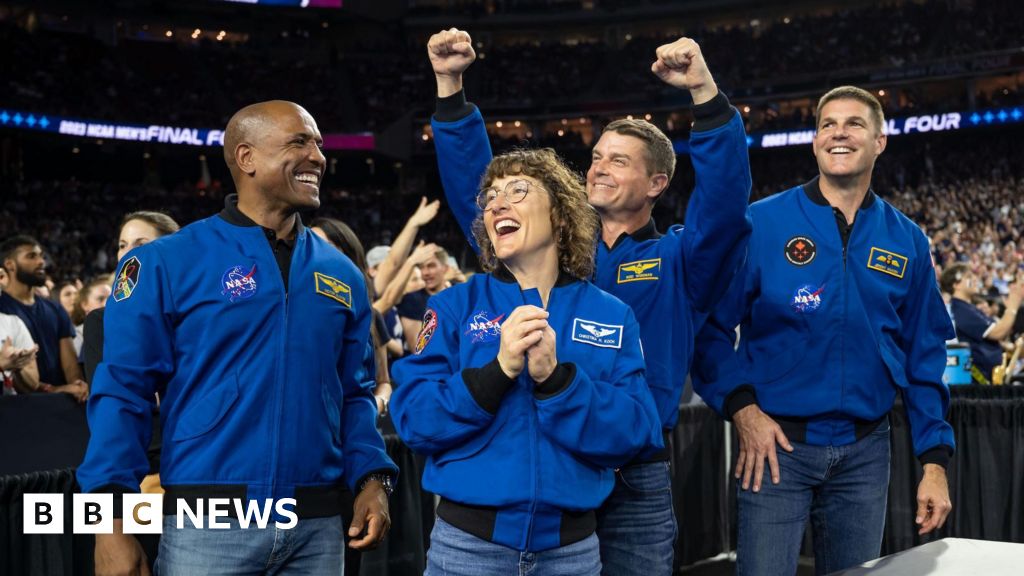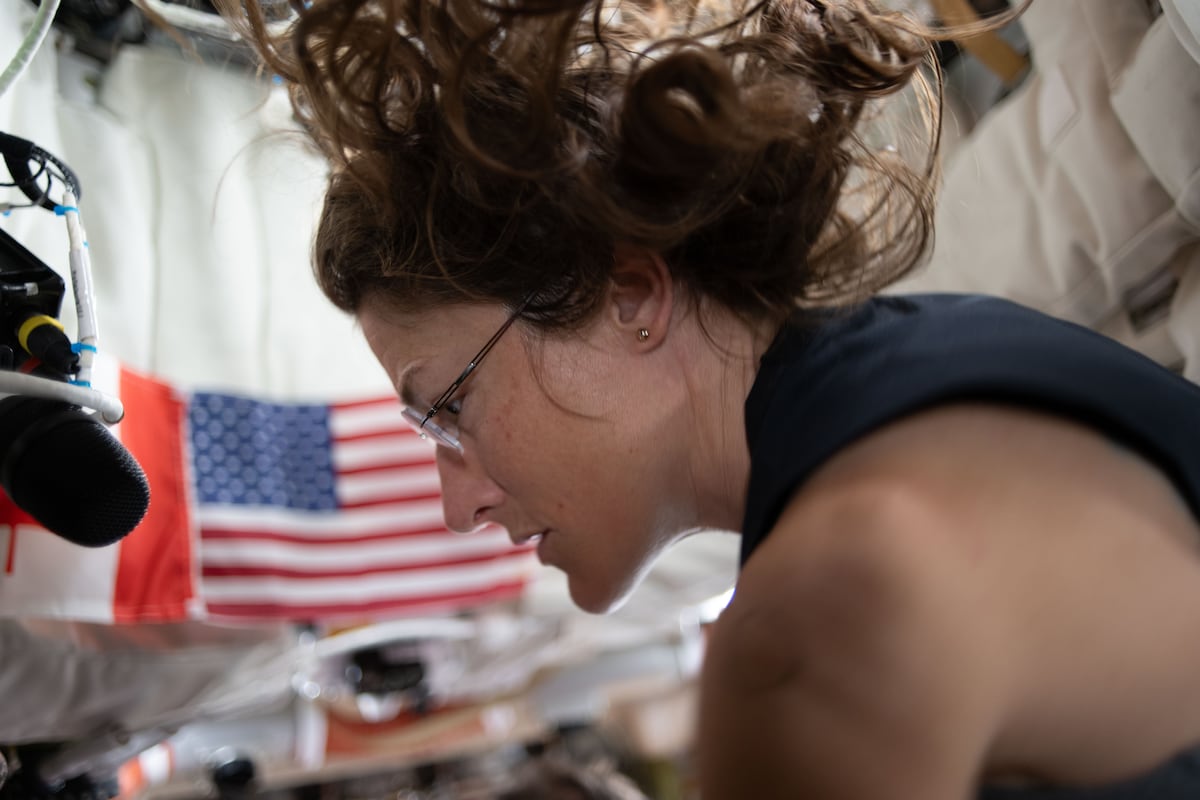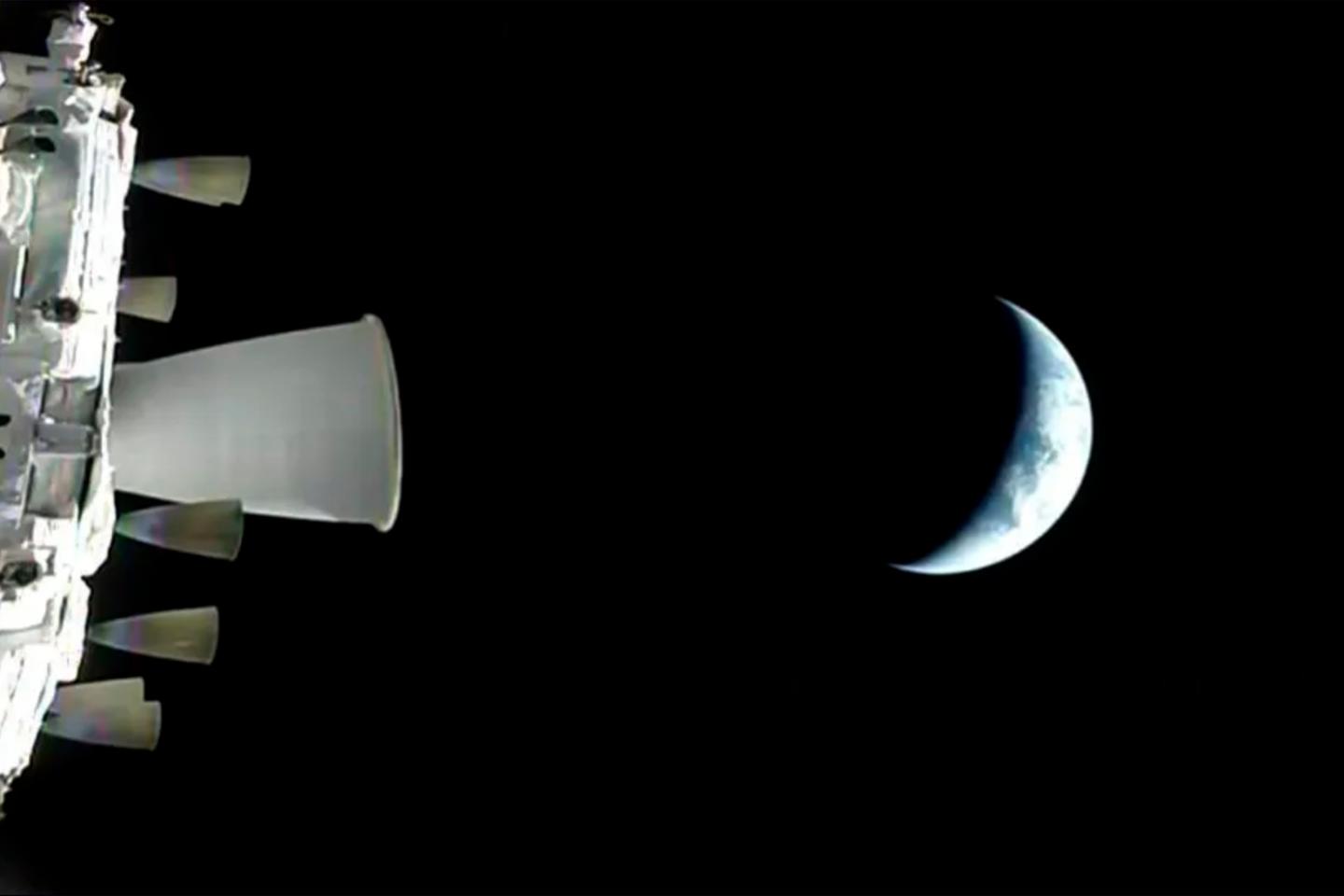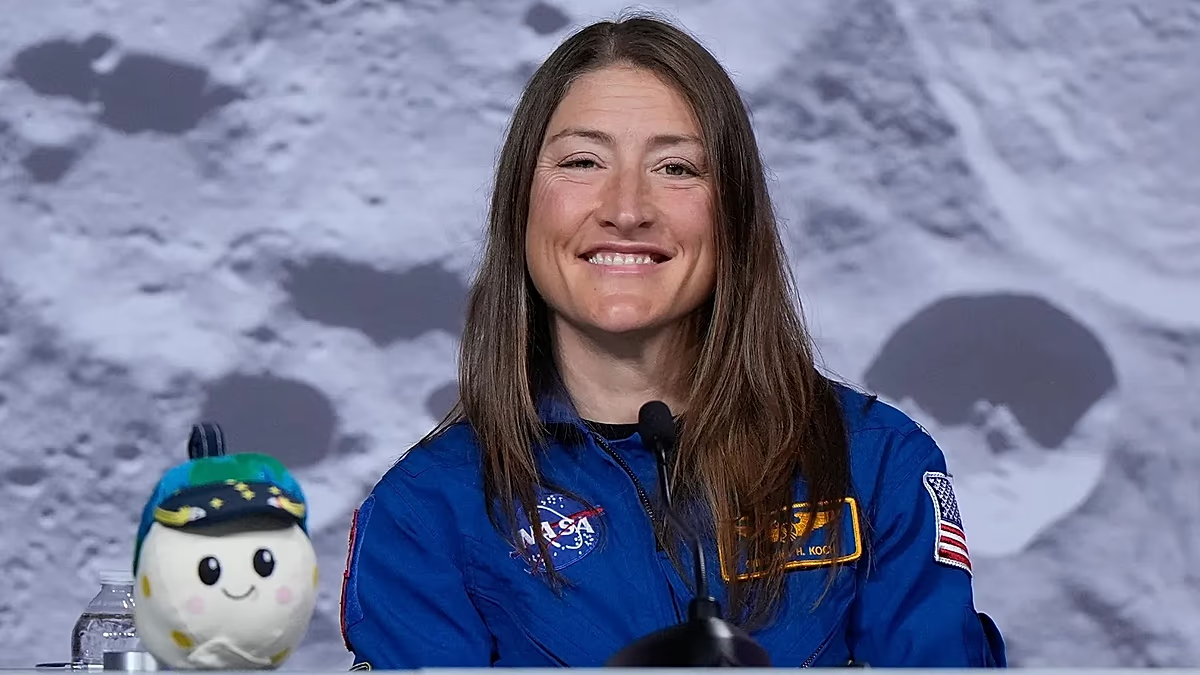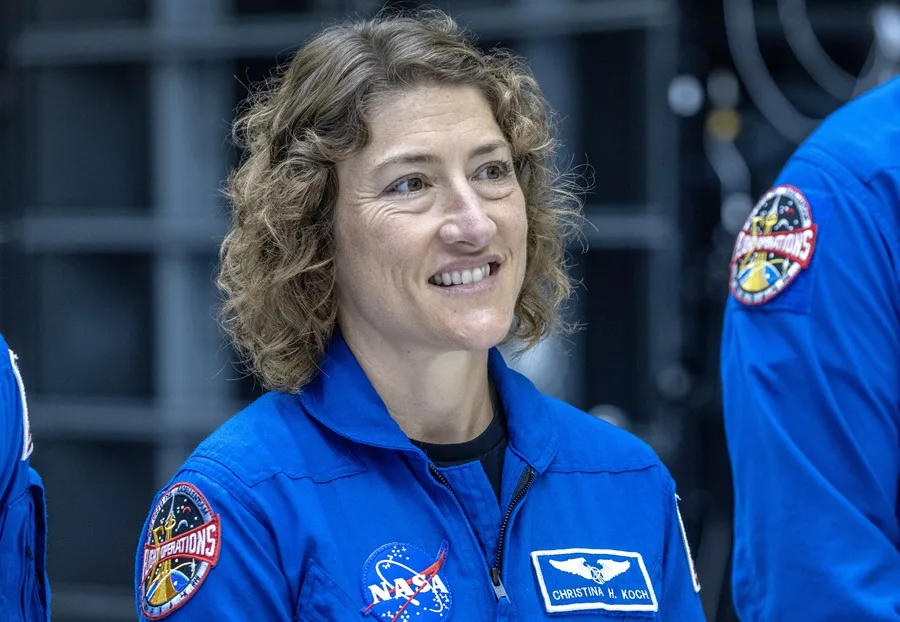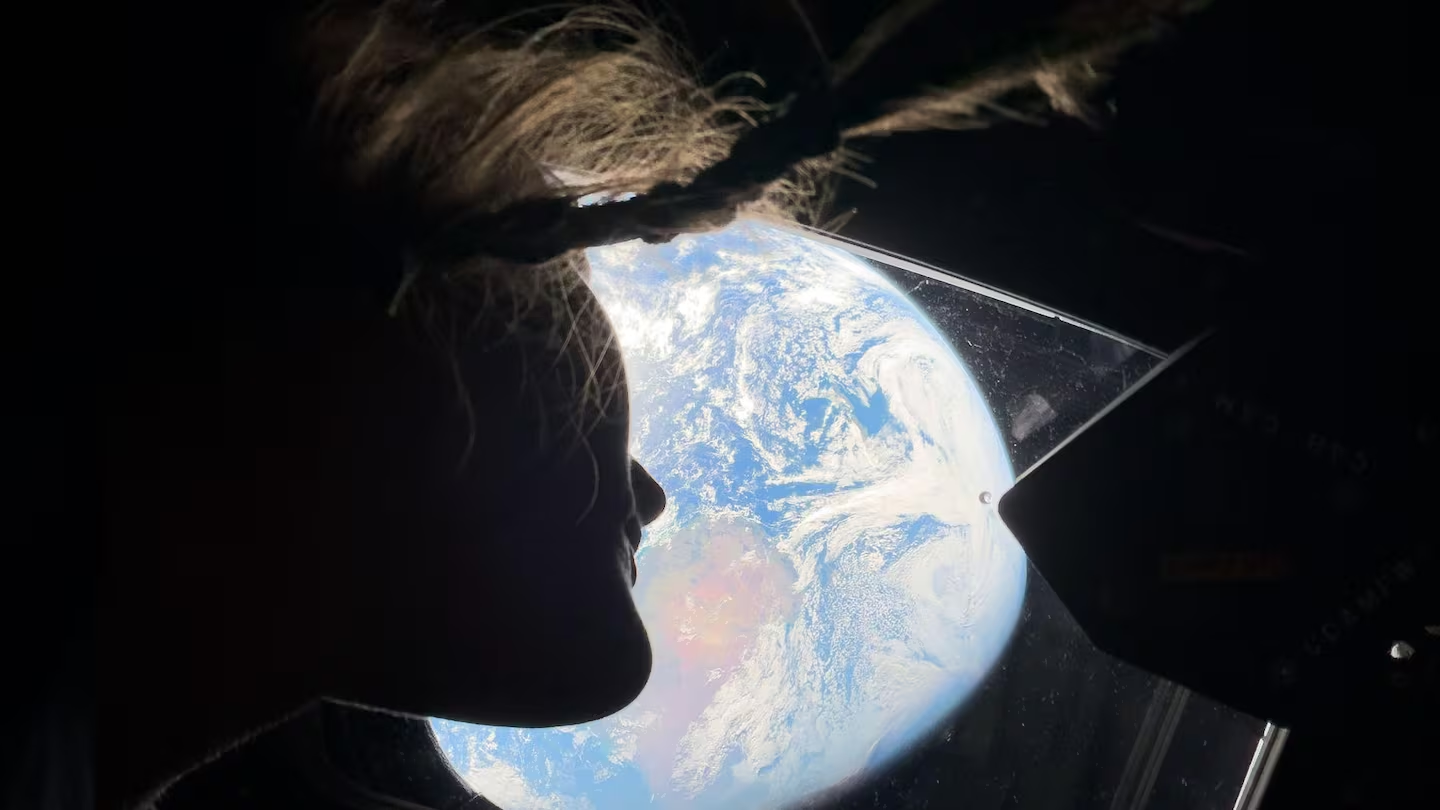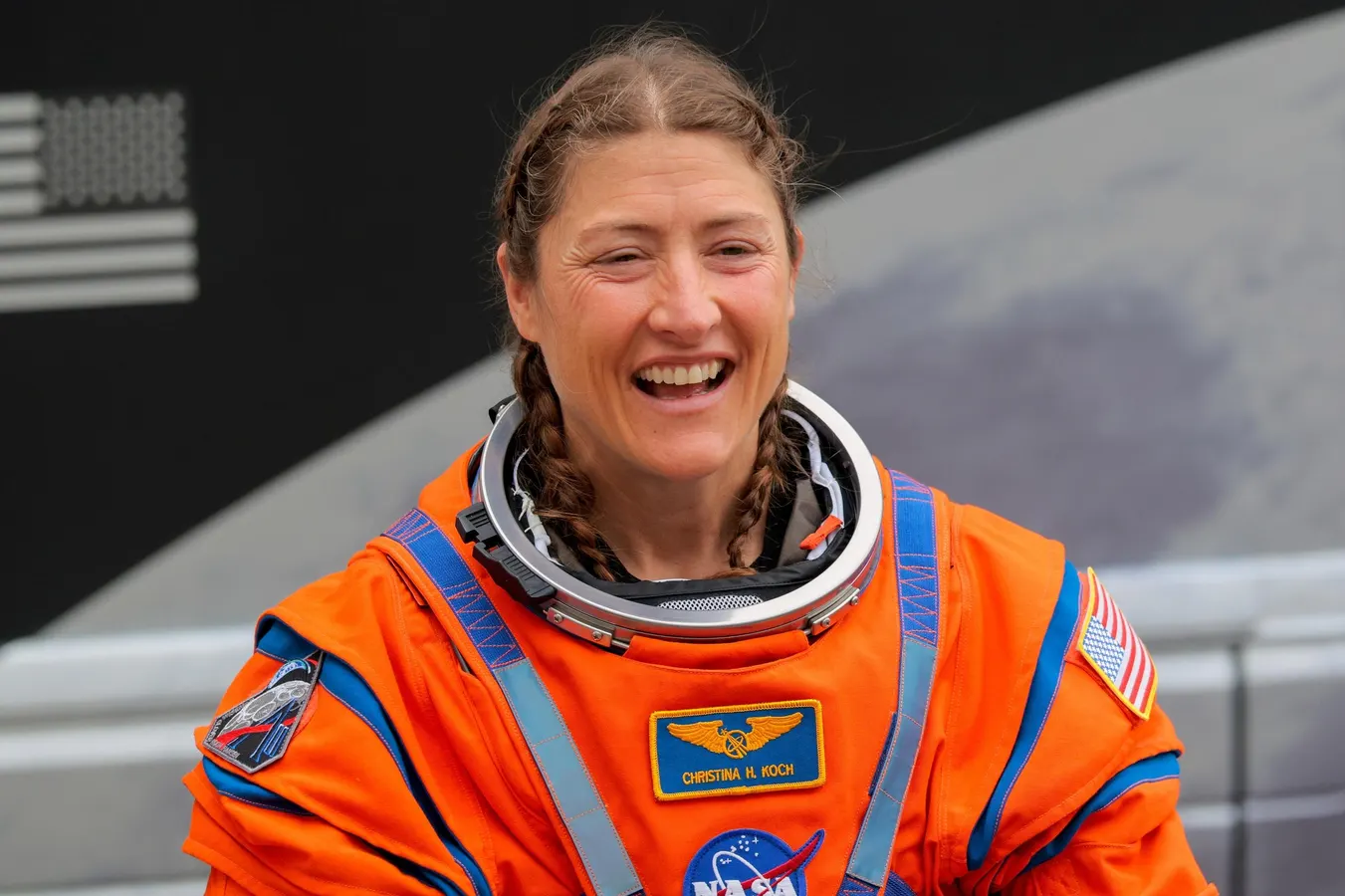
This is this week’s ForbesWomen newsletter, which every Thursday brings news about the world’s top female entrepreneurs, leaders and investors straight to your inbox. Click here to get on the newsletter list!CAPE CANAVERAL, FLORIDA - APRIL 01: Mission specialist Christina Koch walks out of the Neil A. Armstrong Operations and Checkout Building ahead of the launch of the Artemis II at NASA’s Kennedy Space Center on April 01, 2026 in Cape Canaveral, Florida. The 322-foot-tall Artemis II Space Launch System rocket and Orion spacecraft will take the astronauts around the moon and back, 230,000 miles out into space and the farthest any human has ever traveled from Earth. (Photo by Chip Somodevilla/Getty Images)Getty ImagesAt 6:35pm ET on Wednesday—more than fifty years after the last Apollo mission—NASA launched Artemis II, the first crewed mission set to travel around the moon. The launch marked the start of a 10-day mission that will test life support systems in NASA’s Orion capsule and gather data the agency will use to put humans back on the moon by 2028. It also marked a historic first for one of the astronauts on board the rocket.Christina Koch, a mission specialist and one of the four Artemis crewmembers, is set to become the first woman ever to travel beyond low-Earth orbit toward the moon. Because the mission will take the Artemis II crew farther from Earth than any other humans (about 254,600 miles, or 410,000 kilometers), Koch will also set the record for the farthest any woman has traveled from Earth. Koch is no stranger to records and firsts; she holds the record for the longest single spaceflight by a woman (328 days) and you may also recall that she was a part of the historic all-female spacewalk in 2019.“It is our strong hope that this mission is the start of an era where everyone, every person on Earth,” Koch said during a news conference before the Artemis launch, “can look at the moon and think of it as also a destination.”Cheers!Maggie McGrathExclusive Forbes Profile: Meet The Father-Daughter Duo Building A Revolutionary Way To Make Atomic Energy SaferCody Pickens for ForbesFor more than a decade, Elizabeth Muller and her father have taken a three-mile hike, usually twice a week, through the hills of Berkeley, California, stopping for coffee and brainstorming on the way. “I would have an idea and she would have an idea,” says Richard A. Muller, who devised the modern carbon dating method used to determine the age of ancient plant and animal remains. It was on these walks that the idea for a nuclear power startup emerged; today, their company, Deep Fission, has raised $122 million in funding at a $1 billion (post-money) valuation—and is poised to revolutionize atomic power.ICYMI: News Of The WeekAs recently as 30 years ago, men outnumbered women in the workforce by a margin of 7 million jobs. Today, in 2026, that gap has entirely closed. Laura Ullrich, the Director of Economic Research at Indeed, joined ForbesWomen editor Maggie McGrath to talk about how women may have permanently closed the gender gap in the workforce—and also why this isn't entirely good news.Want to make more money in 2026? Where you live could make a big difference—especially for women. A new gender pay gap report from Business.com shows that in some U.S. cities, women are earning as much as or even more than men.U.S. journalist Shelly Kittleson was kidnapped in Iraq earlier this week by a group that is suspected to be Iranian-backed militants. Geopolitical analyst Hollie McKay, a former war correspondent who has reported from Iraq, joined Forbes reporter Brittany Lewis to talk about why as a freelance journalist Kittleson was in an “especially vulnerable” position, and what happens next.Women are adopting AI at work more slowly than men, according to new data from Lean In. But it may not be that women are just reluctant to use the new technology. The data suggest that the old workplace gender biases are now showing up in how this new technology is used and rewarded. “New technology, old patterns,” as Lean In founder Sheryl Sandberg puts it.The Checklist1. Be audacious. What differentiates the ultra-successful from the rest of us? It’s not luck—it’s a willingness to take big swings, dream boldly, and not ask for permission for any of it.2. Practice active surrender. When you occupy all the space in the room, you leave zero percent for the "automatic" brilliance of others—or yourself. To find true momentum, you have to master the 50% Rule of Active Surrender: the strategic art of doing half the work and letting curiosity handle the rest.3. Turn boredom into a creative advantage. Constant stimulation—especially constant digital stimulation from our phones and apps—reduces sustained attention and limits deeper cognitive processing. When you create “input free” moments in your day, you start to lay the groundwork for creativity to flourish.The QuizIn just the last few days, President Donald Trump has publicly criticized the French president’s marriage, called singer Bruce Springsteen “a dried up prune,” and urged Erika Kirk to respond to critics by suing “their ass[es] off.” A right-leaning conservative firebrand and former Trump ally suggested his “brain’s not doing so hot,” who was it?Joe RoganAlex JonesCandace OwensTheo VonCheck your answer.Liked what you read? Click here to get on the newsletter list!
How Astronaut Christina Koch Is Making History With Artemis II Mission. Plus: Why Boredom Is Your Creative Advantage
Welcome to this week’s ForbesWomen newsletter, which every Thursday brings news about the world’s top female entrepreneurs, leaders and investors straight to your inbox.
881 words~4 min read