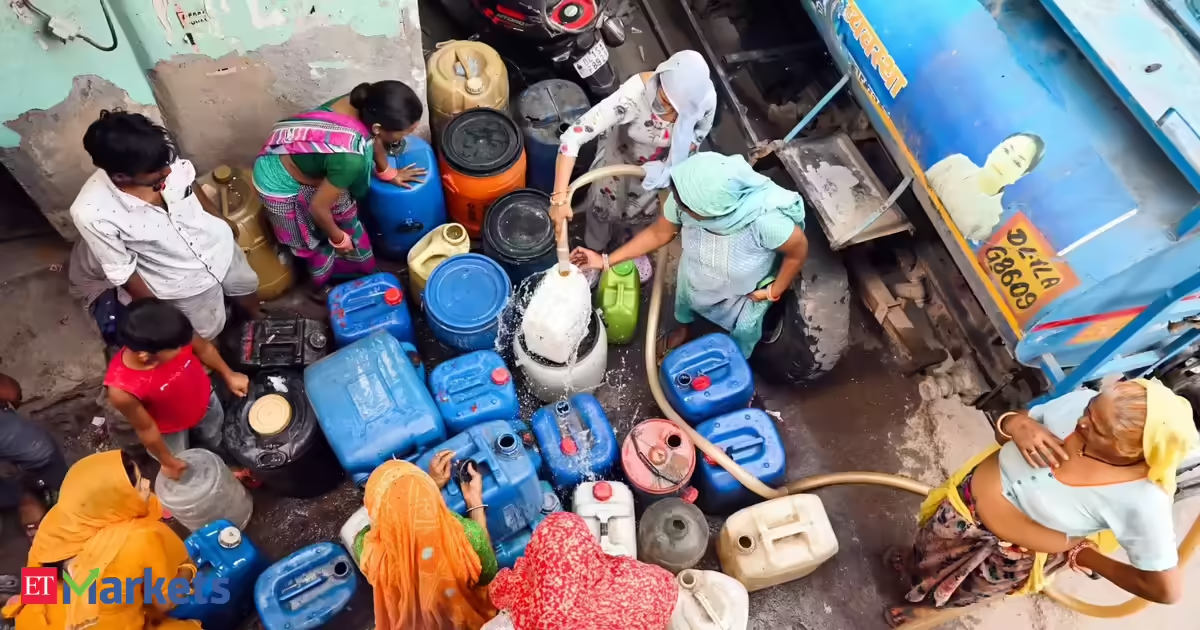
With water demand expected to be double the available supply by 2030, the need to transition from supply-side augmentation to efficiency-led water management and frugal usage of the resource has become extremely critical, urged the Indian Plumbing Association, an apex body of plumbing professionals and related ecosystem players in the country.
According to the association, urban centres such as Bengaluru illustrate the gravity of this water crisis. Recent studies by the Indian Institute of Science highlighted that over 85% of the city’s lakes are eutrophic, significantly impairing their ability to support biodiversity or recharge groundwater. As natural recharge systems continue to degrade, the city’s dependence on unsustainable water sources has surged, they pointed out.
They also said that the city currently relies on the Cauvery river for 80% of its piped water supply, again pumping it over 100 kilometres against a steep elevation, making it one of the most energy-intensive urban water systems in the world. Flagging a growing imbalance between the demand and the supply for water, the industry body highlighted that there were structural vulnerabilities in urban water governance across India.