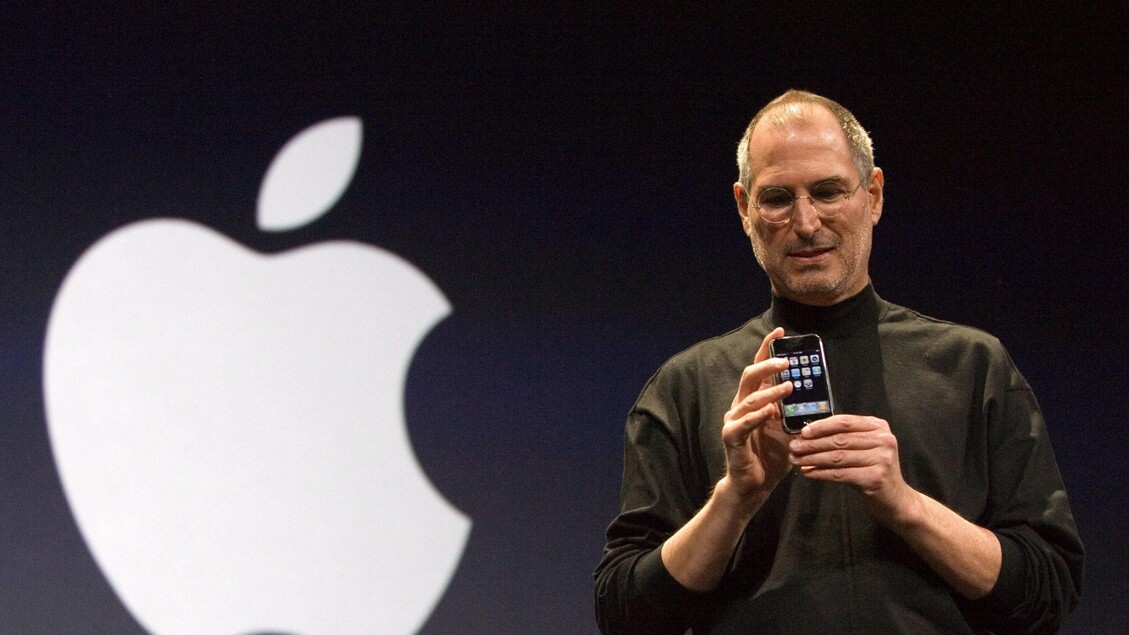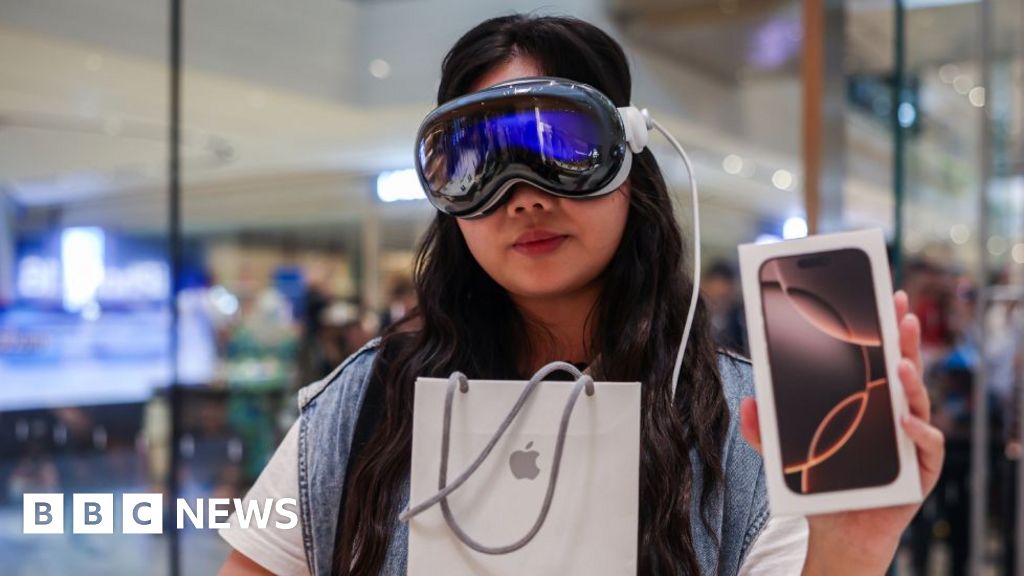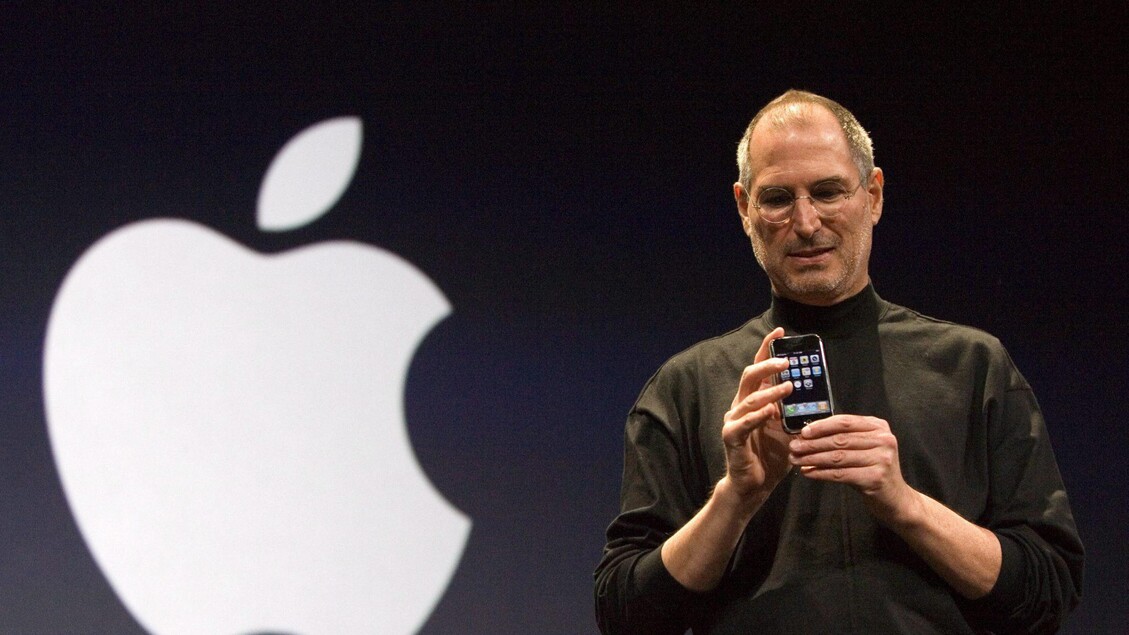
The invention that turned Apple into a world-beating, billion-selling, society-changing colossus was not a laptop or a music player; it was the iPhone. It seemed to appear in 2007, fully formed, beautifully conceived, self-assured, and conceptually obvious.But behind the scenes, the iPhone we know today was made possible by more than bold bets, fanatical attention to detail, brilliant design, and a vision for the future; there were also false starts, last-minute redesigns, and a few strokes of luck.For starters, the product Apple set out to build first was not a phone. It was a tablet.Interdisciplinary teams at Apple are always experimenting with fledgling technologies. “There’s hundreds of little startups that are just poking around, doing stuff,” says sensors VP Myra Haggerty. “Sometimes someone’s like, ‘Hey, come look at what we’re working on!’ Then you go into some random lab somewhere, and they’re doing this really cool thing. ‘What could we do with this?’”Take, for example, Duncan Kerr’s projector demo.In 1999, Kerr, a British designer with a polymath design background—engineering, technology, industrial design, interface prototyping—had joined industrial design chief Jony Ive’s studio.In early 2003, he began holding Tuesday meetings with interface designers and input engineers to explore new ways of interacting with computers; after all, the old “point mouse, click button” routine was 25 years old. Kerr’s team experimented with technologies like camera-driven systems, spatial audio, haptics (vibrating feedback), and 3D screens. “We’d invite research people in, or companies who had some curious technology. We did a lot of demos, tried stuff out,” he says.Kerr was especially intrigued by the idea of manipulating on-screen objects with fingers. But mocking up ideas on paper could take the team only so far. He, along with interface designers Bas Ording and Imran Chaudhri, wanted to build a real-world multi-touch display to continue their explorations. Enter: the iGesture NumPad mouse/touchpad.It was a flat, black trackpad, 6.25 x 5 inches, made by a Delaware company called FingerWorks. Wayne Westerman was a piano player and repetitive stress sufferer; with his professor John Elias, he’d invented a set of keyboards that required barely a feather’s touch. Because they could detect and track multiple finger touches simultaneously, they could also interpret gestures that you drew on the surface, replacing mouse actions. For “Open,” for example, you could twist your fingertips on the surface as though opening a jar.In late 2003, Apple commissioned FingerWorks to build a bigger version of their multi-touch pad: 12 x 9.5 inches, a better approximation of a computer screen’s size. Kerr’s team set up a test rig in the design studio of Infinite Loop 2. They mounted an LCD projector on a tripod, shining directly down onto the trackpad. They taped a sheet of white paper over it so that the projector’s image—generated by a nearby Power Mac—would be bright and clear. Then the fun began: developing ways to interact with the on-screen elements. You could slide a finger to move an icon in the projected image. You could spread two fingers apart to enlarge a map or a photo. Using both hands, you could tap, move, and stretch objects. It was magical.In November 2003, Kerr’s team showed the demo to Ive, who showed it to Steve Jobs. Everyone who saw the multi-touch demo loved it, swore that it was the future. Of what, they weren’t yet sure.In late 2005, Jobs attended the 50th birthday party of a Microsoft engineer, the husband of a friend of his wife, Laurene. Over dinner, the guy lectured Jobs on how Microsoft had solved the future of computing by inventing a tablet with a stylus: portable, powerful, untethered.“But he was doing the device all wrong,” Jobs said later, according to Walter Isaacson’s book Steve Jobs. “This dinner was like the 10th time he talked to me about it, and I was so sick of it that I came home and said, ‘Fuck this. Let’s show him what a tablet can really be.’”Jobs came into the Monday morning executive team meeting riled. “We need to show the world how to create a real tablet,” he said—and by that, he meant no stylus. “God gave us 10 styluses,” he often said, waggling his fingers.The FingerWorks demo suddenly seemed as though it would be incredibly useful. Using iBook laptop components, Ive’s team built prototype multi-touch tablets that ran Mac OS X, but they weren’t compelling. In 2005, a page-sized touchscreen required a fast processor, which required a fat battery; the prototypes were disappointingly heavy and thick. Worse, the Mac’s OS wasn’t a good fit for operation by finger touch. Still, Apple bought FingerWorks outright, bringing Westerman, Elias, and their patents to Cupertino.Photograph: Kim Kulish/Getty ImagesPlenty of people take credit for planting the idea of a phone in Steve Jobs’s head, but that idea didn’t actually need planting. By 2005, cellphones could already play music. They were crude and limited, but the writing was on the wall: Nobody wanted to carry two different devices. The iPod’s days were numbered.But Apple had zero experience with phones—no engineers, no designers, no contacts in the cellular industry. At the board’s recommendation, therefore, Jobs partnered with a veteran phone maker: Motorola.It was a logical choice. Moto’s processors had powered Macs for years, and its thin, shiny RAZR flip phone was a huge bestseller. The plan was to add iPod software to a phone that Motorola had already designed. It would be the first phone that could play music from the iTunes Store, the main source of music purchases for 80 percent of the music-downloading public.When rumors swirled that Apple was working on a phone, the company’s stock spiked, photoshopped concept images circulated online, and Apple fans became obsessed. They wondered if it would have a stunning iPoddish design, or if it would have a click wheel, or if it would hold thousands of songs, or if you could use a song as a ringtone.In each case, the answer was no. The Motorola ROKR E1, as it was called, was a homely, cluttered, plastic phone. No matter how much room was left on its memory card, it could hold only 100 songs. Without FireWire or USB 2, transferring songs took forever. It was internet-connected, but couldn’t download songs.“The frustrating part was, people kept calling it the Apple phone or the iTunes phone,” says current worldwide marketing head Greg Joswiak. “It was like, ‘Trust me: We had nothing to do with this. We created iTunes; they created the phone.’”When Jobs unveiled the ROKR at a September 2005 special event, his disgust was evident. “It’s a pretty cool phone,” he managed, to no applause.And the ROKR wasn’t alone. All cellphones were awful.“We just hated them; they were so awful to use,” Jobs later told Fortune. The market, he noted, was huge—a billion phones a year—four times the number of PCs shipped. “It was a great challenge: Let’s make a great phone that we fall in love with,” Jobs went on. “We’ve got the technology. We’ve got the miniaturization from the iPod. We’ve got the sophisticated operating system from Mac.”Of course, an Apple music-playing phone would shoot the iPod business in the head. But better Apple, he reasoned, than a rival.People lining up to get a new iPhone.
The Untold Story of the Birth of the iPhone
Apple turns 50 on April 1. In his new book, “Apple: The First 50 Years,” David Pogue chronicles the secrecy-laden environment in which Steve Jobs willed the first iPhone into existence.
1,821 words~8 min read