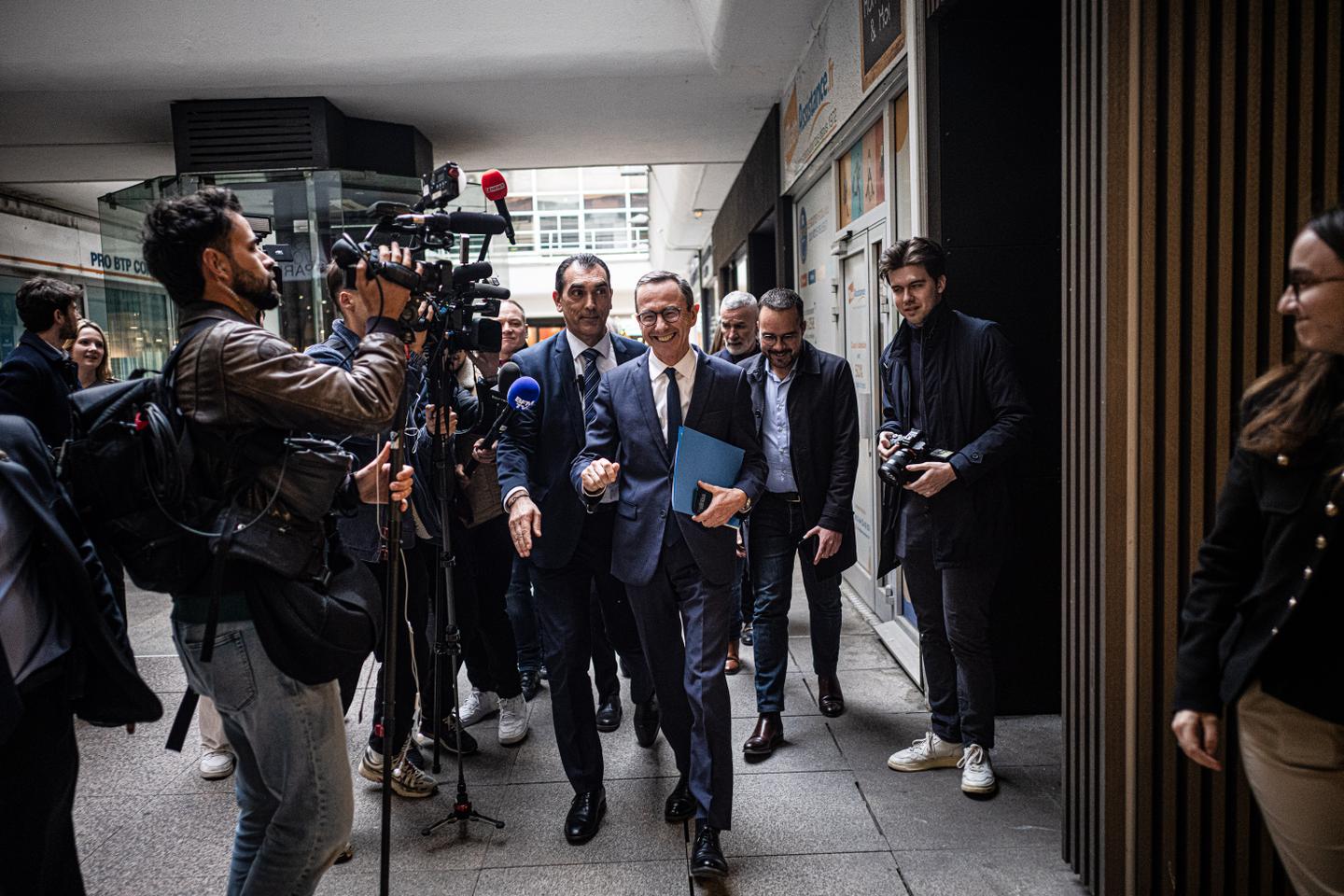
The leader of the right-wing Les Républicains party, Bruno Retailleau, in Paris, on March 24, 2026. JULIEN MUGUET FOR LE MONDE
In politics, a presidential election is singular, and municipal elections are plural. That nuance is not just a matter of grammar. On Sunday, March 22, after the second round of the local elections, all sides could claim victories. While the conservative Les Républicains (LR) party brandished its title as champion of France's medium-sized cities, the Socialists swelled with pride after having won six of the country's 10 largest cities. The radical left-wing La France Insoumise (LFI) celebrated its conquest of the northern city of Roubaix, while the far-right Rassemblement National (RN) called its results an unprecedented "breakthrough."
With the final electoral hurdle before the race for the presidency cleared, political parties are now accelerating the process to designate their presidential candidates. On both the left and the right, the question of how to select a candidate has dominated since the municipal elections, with the question of primaries appearing particularly divisive. Meanwhile, no such debate has taken place within LFI, as party founder Jean-Luc Mélenchon has already decided that he will run once again and "do better," to quote the phrase he had used on the night he was eliminated from the running in 2022, while pretending to pass the torch on to the next generation. The RN is also relatively calm. The far right's second-in-command, Jordan Bardella, is simply waiting for July 7, when a court will likely confirm Marine Le Pen's ban on running for office, before he takes on the role of the party's official candidate.