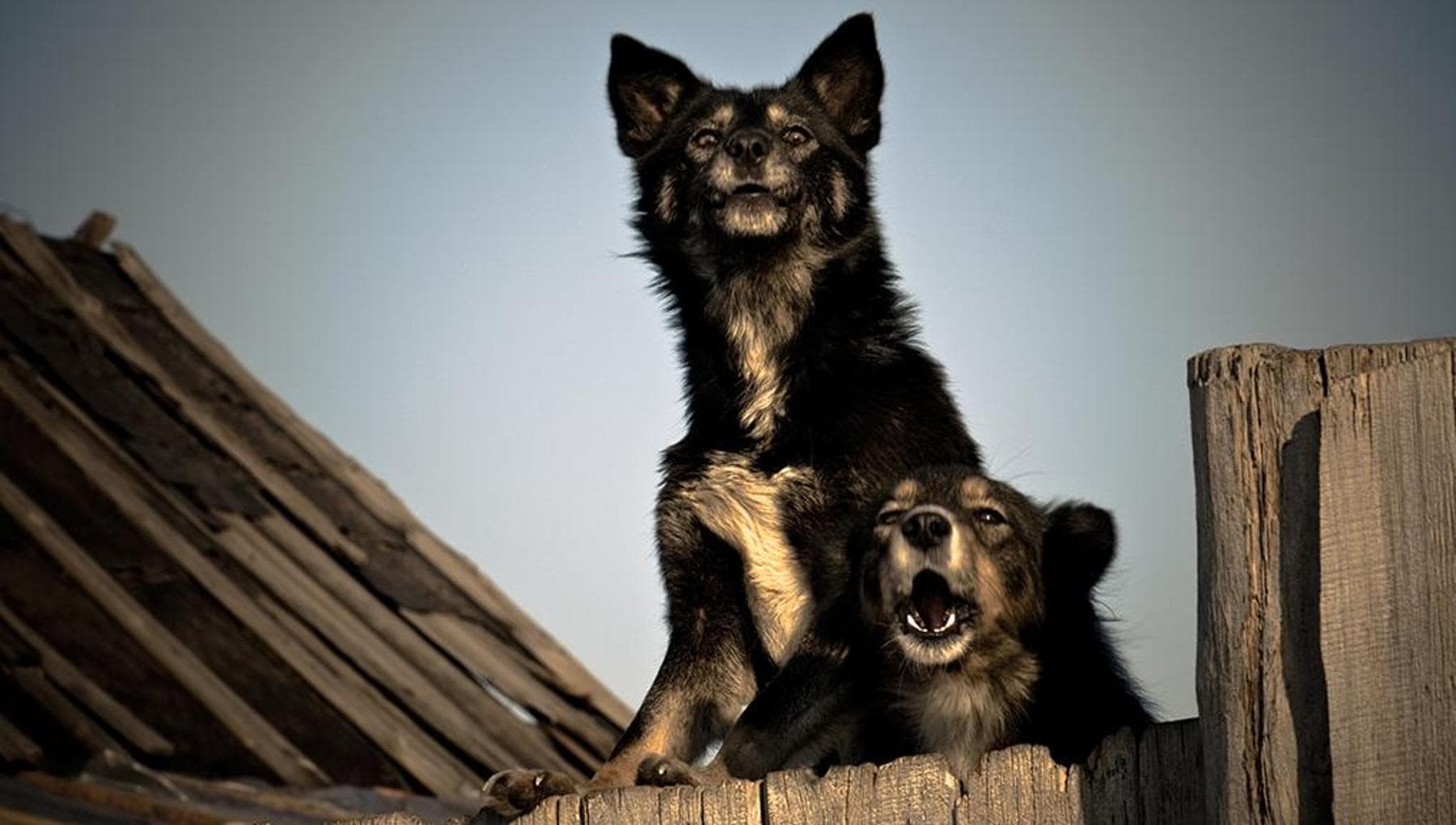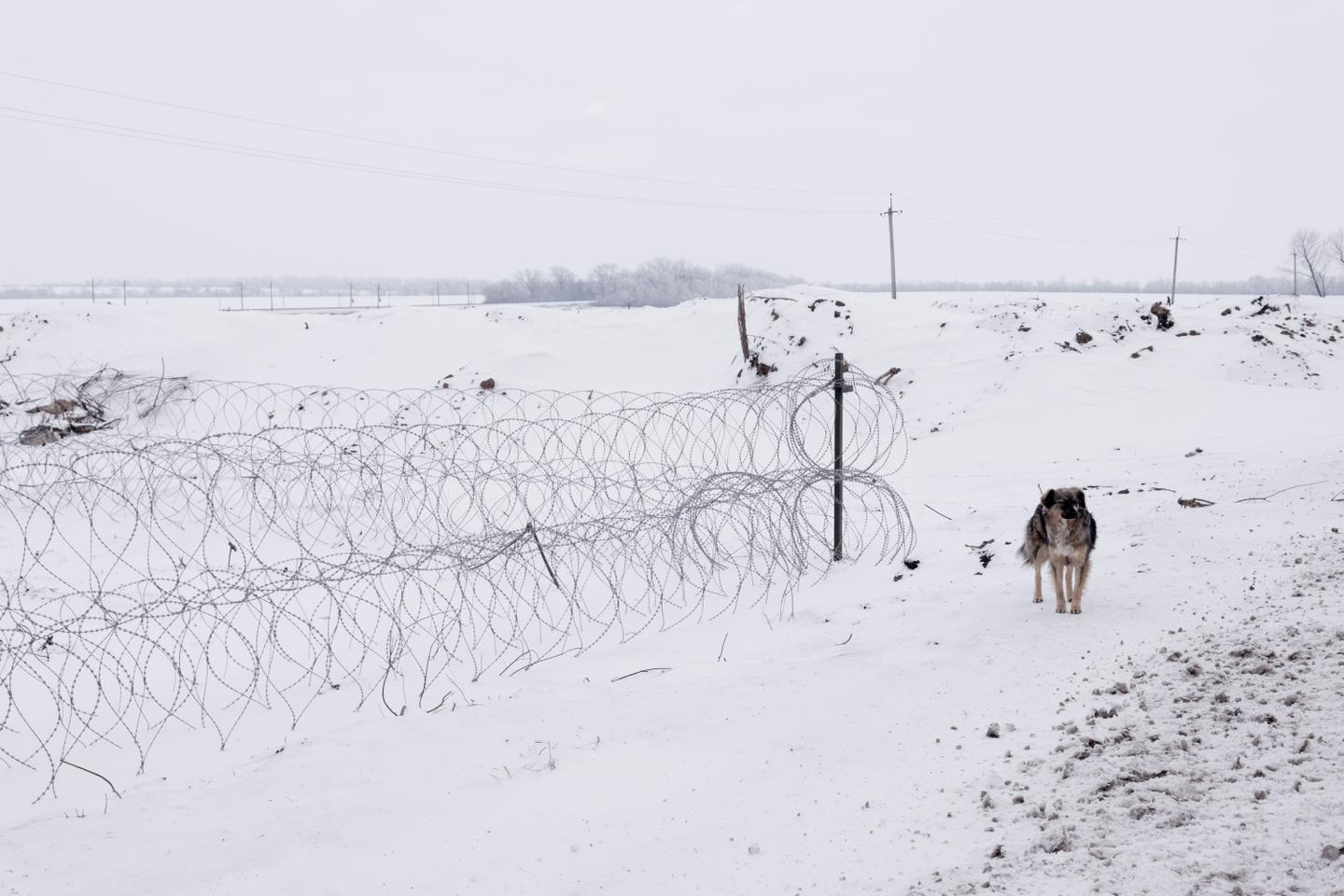
A dog stands near a defensive line in the Zaporizhzhia Oblast (Ukraine), January 22, 2026. JEDRZEJ NOWICKI FOR LE MONDE
The closer you get to the front line, the more pronounced the differences become. Out there, in bombarded zones deserted by civilians and held by soldiers, dogs no longer look quite the same. They are young, smaller, livelier and often move in packs. These traits recall those of wild dogs who resemble wolves, and they seem to enhance their chances of survival.
These are the findings of a study published in December in the scientific journal Evolutionary Applications – the result of more than 10 months of research in Ukraine between 2023 and 2024. The study is based on observations of 763 stray dogs in nine regions of the country; many of them were abandoned following the outbreak of the invasion due to population displacements. This research – rare on a global scale – documents in real time the impact of war on an animal population and, more broadly, on its environment.
The team, split between Ukraine and Poland and led by Ukrainian zoologist Mariia Martsiv of the Ivan Franko University of Lviv, divided the country into three zones: safe, bombarded and war zones. The researchers enlisted volunteers, veterinarians and animal shelters to gather as much information as possible about stray dogs using photos, saliva or hair samples: weight, size, age, physical appearance, as well as health status, presence of injuries or diseases.