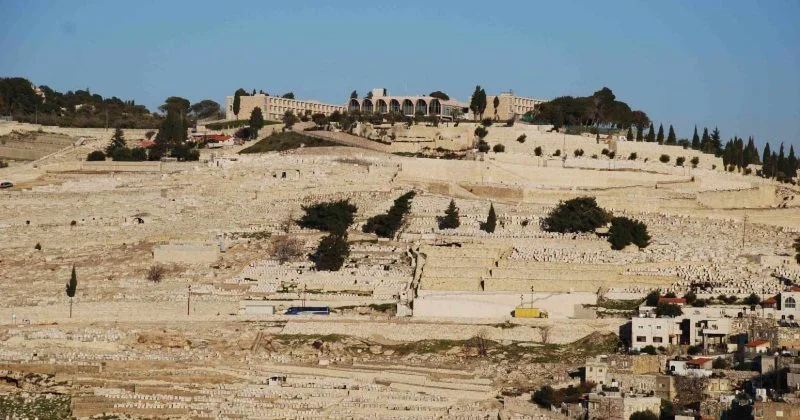
Most businesses on the Muslim side of the Old City of Jerusalem are closed due to restrictions linked to the war with Iran imposed by Israel, on March 12, 2026. LAURENCE GEAI/MYOP FOR LE MONDE
One of the two main actors in the current Middle East war has yet to truly suffer significant economic consequences for it. Israel had only suffered marginal impacts for now. The inflation triggered by the conflict with Iran and its wider regional and global repercussions has remained limited after a month, notably for gas prices at the pump. Israeli drivers will only begin to notice the war's impact in early April, when the government, which regulates the maximum price of fuel on a monthly basis, factors the recent rise in oil prices into its calculations. The price for a liter of unleaded 95 could then surpass 8 shekels (€2.19) per liter, a more than 15% increase, approaching levels seen after Russia invaded Ukraine in 2022.
Subscribers only
Oil market gripped by record volatility and speculation since start of Middle East war
In a conflict with Iran and its allies seen as "existential" for Israel's future, the economic consequences, both international and domestic, have so far been only secondary issues in the Israeli public's concerns and debate. This is firstly because Israel's economy is largely geared towards services, which makes it less dependent on energy-intensive industries. Second, Israel's distinctive energy profile provides it with partial protection: Domestic natural gas production accounts for 45% of the national energy mix, compared to just 37% for oil, which grants Israel sovereign access to the energy resources it needs to produce over 70% of the electricity the country uses.