If you look at the careers of successful modernist architects, often, somewhere right near the beginning, you will find a house commissioned by their parents. It helps in establishing an architectural practice to have a well-to-do family.
This was certainly the case for Patrick Gwynne, whose most famous house, The Homewood in Esher, Surrey, was built for his parents in 1938 when he was 24 years old. Elevated on piloti, the slender columns popularised by Le Corbusier in his early villas, it was an attenuated strip of white on one side, glass on the other. A blast of modernism in the London suburbs, it looked scandalously continental. One of only two modernist houses owned by the National Trust (along with Ernő Goldfinger’s Hampstead home, 2 Willow Road), it is a monument to one of the most prolific British architects of his era, and yet his name is rarely cited as an influence. For most, Gwynne remains a marginal figure, never quite recognised by the establishment despite his commercial success, and frequently dismissed as a bit of a stylist.
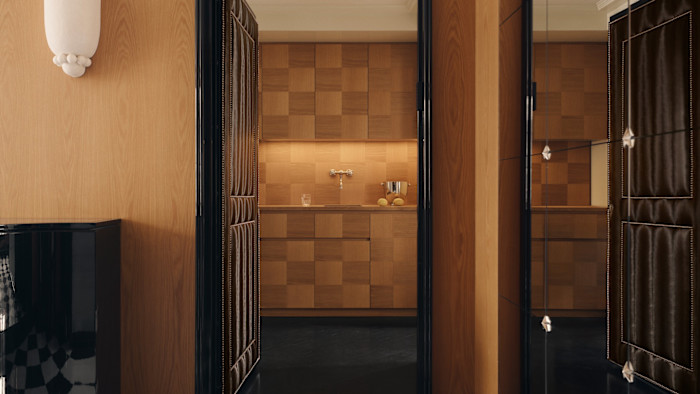
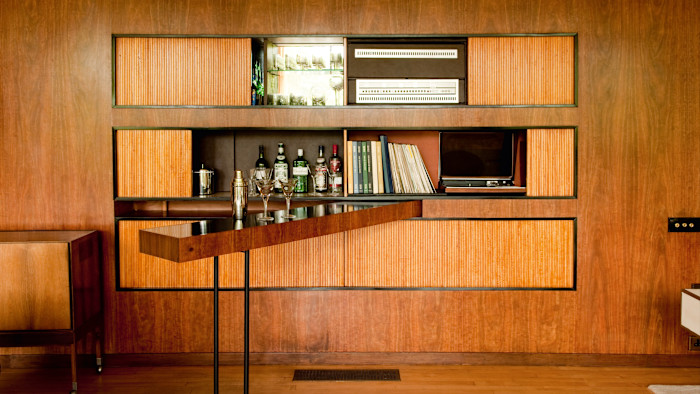
Beechworth Close in Hampstead © Daytrip Studio/Genevieve Lutkin
Gwynne shot by Anthony Buckley © National Trust Images/Anthony Buckley
Frankly, I’ve always been a little resistant myself. Gwynne’s work has often seemed a somewhat pale reflection of European modernism – its California cool looked underpowered beneath grey suburban British skies. But a visit to one of his London houses has begun to change my mind. Beechworth Close in Hampstead was built in 1961 for Max and Anne Bruh. The couple had fled Nazi Germany in 1939 and acquired a struggling fashion brand, Frank Usher; offering a budget take on runway and a shot of glamour in postwar-austerity Britain, it flourished.