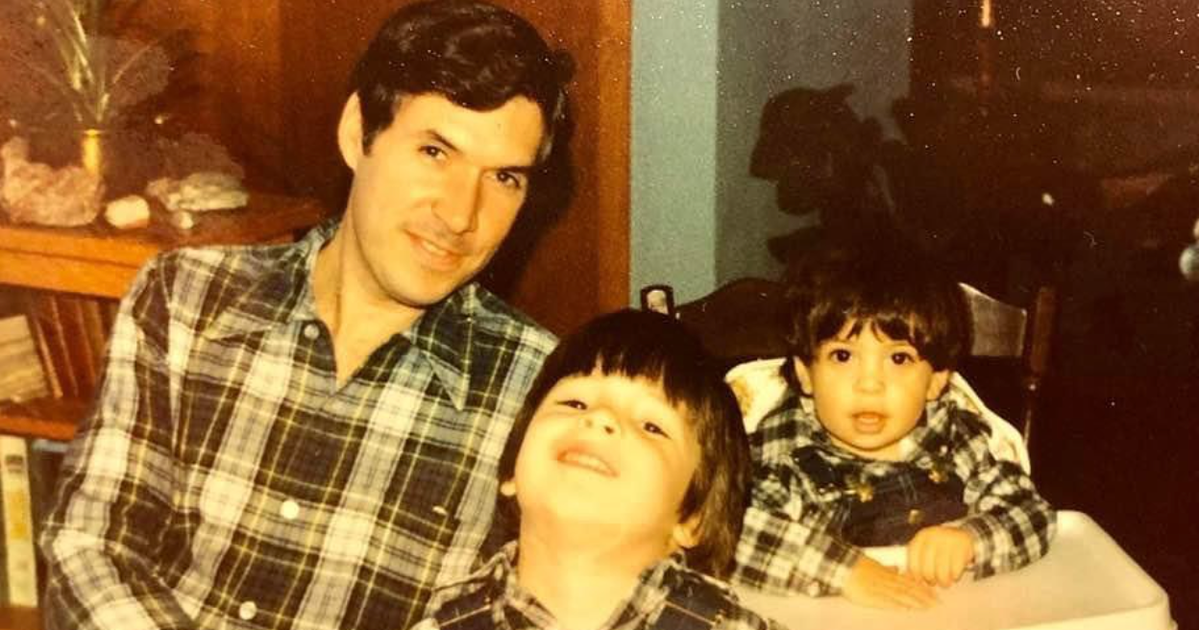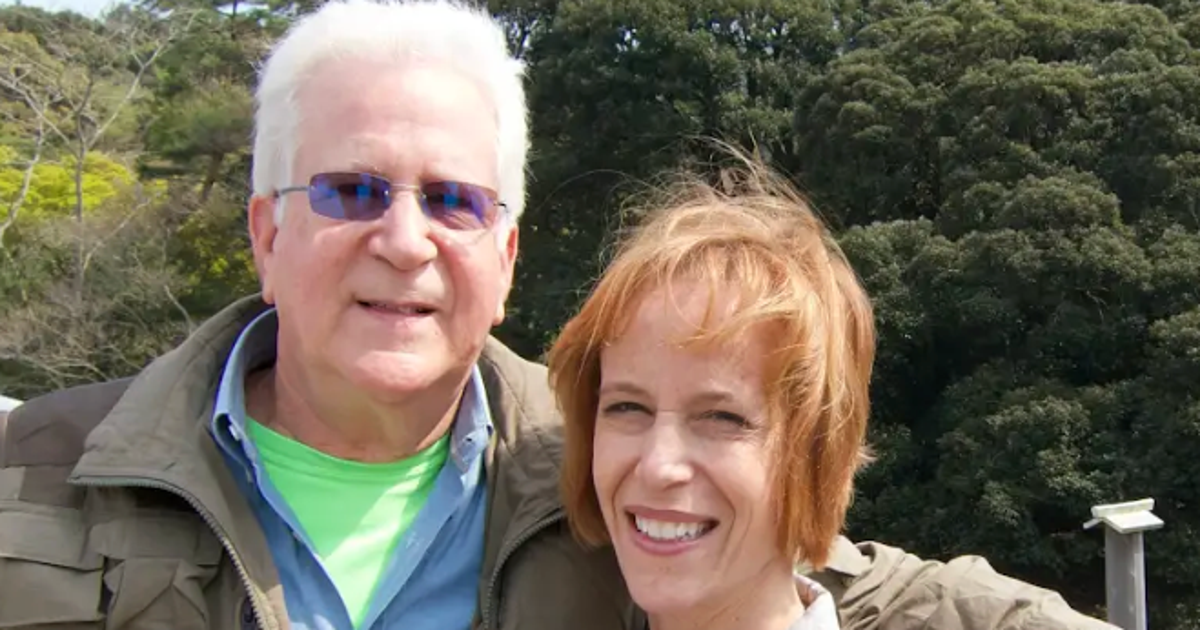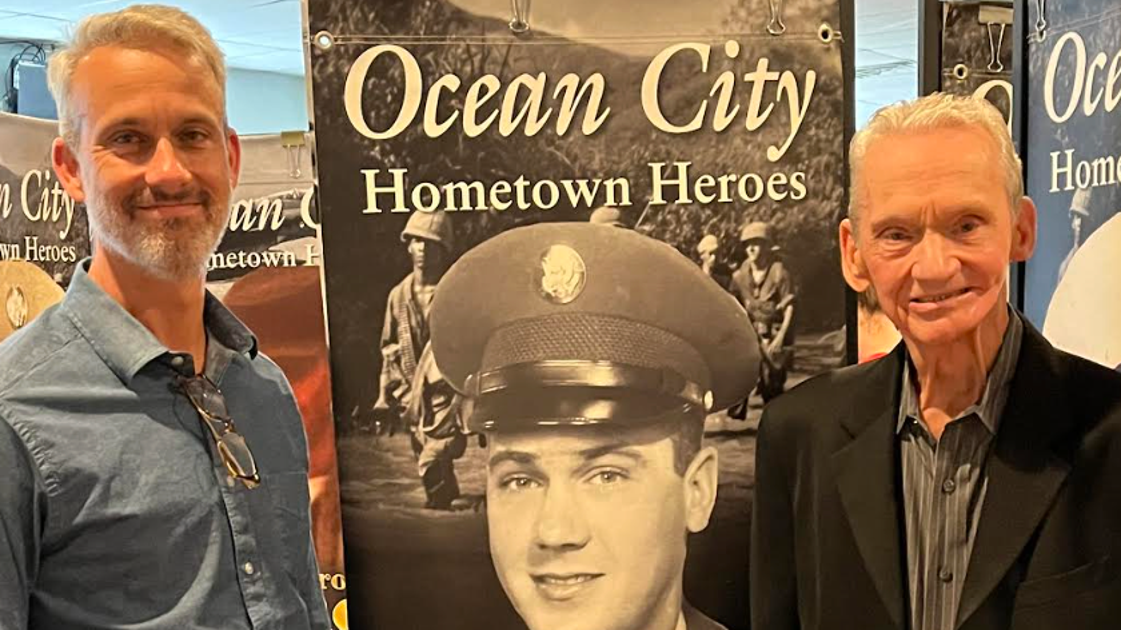
My dad was always going to go down swinging.This was a man who’d spent the first year of his life in a neonatal intensive care unit receiving radiation for an enlarged thymus. A man who’d served in Vietnam as the war spiraled out of control. Who’d first defeated oral cancer 25 years ago.So when the news came that he had another tumor in his mouth at age 80, he steeled himself for battle.The problem was that by then he was a shell of the man he’d once been. After years of illness, hospitalizations and surgeries, his body was breaking down. On top of the tumor in his mouth, he also had prostate cancer, COPD, hypertension, a bovine aortic valve, a bionic hip, and a litany of other maladies too long to mention here. It was obvious to everyone how sick and frail he was — just not to my dad. If it was, he was refusing to admit defeat. I drove across the country to stay with him and my mom while he underwent testing. I took him to Philadelphia’s Penn Medical Center to visit Dr. Ara Chalian, the surgeon who’d operated on him decades earlier. Dr. Chalian expected this might happen — that my dad would suffer consequences from the original treatment about 20 years down the road. He just never expected him to make it this long, he sheepishly admitted. The author and his dad during better times in front of their home in Wayne, Pennsylvania, sometime in the 1980s.Courtesy of Matt McAllisterHis treatment options included surgery, radiation and chemotherapy. However, given my dad’s state, the doctor wanted an oncologist to weigh in on the feasibility of those options.Before that could happen, my dad suffered yet another setback. We were having dinner one night when he started choking. His skin turned bluish gray as he struggled for air. He had aspirated on some food that slipped through the holes in his mouth — a result of the radiation decades ago. This was the third time in recent years he’d aspirated, and each time had nearly killed him.At the emergency room, the chief physician explained that my dad’s do not resuscitate order requested no lifesaving measures if they’d only prolong his suffering. Did we want to honor that? My mom and I agreed he would want the chance to recover. Knowing his will to live, it was an easy decision. Even so, as we signed the paperwork, an uneasiness took hold — had we just crossed a boundary he’d meant to keep?We stayed by his side all that night and, of course, he bounced back, just like he always had. He never did need to be intubated. He spent four days in the hospital and then was transferred to the rehab center a few towns over. He groaned about going, but he knew he needed to build his strength back up for what lay ahead.Over the next two weeks, I visited every day, bringing him magazines, sneaking him McDonald’s milkshakes, and sitting by his side until he fell asleep, exhausted from his grueling schedule of physical therapy. His goal was getting strong enough for surgery, so he threw himself into his treatments with stoic determination.The author (left) and his father, David McAllister, attend a ceremony in Ocean City, Maryland, celebrating local war veterans in October 2023.Courtesy of Matt McAllisterBy the time he was released, he’d gotten some strength back, but he weighed less than 90 pounds. His ribs protruded like they were trying to escape. He needed a walker to get around and an oxygen tank to breathe. Still, he was elated to be home. While he was gone, I’d bought him an OLED TV and a recliner; he collapsed into it like General Patton returning from battle.Finally, the day of the oncology consultation came. The biopsy revealed spindle cell sarcoma. We were told that surgery would be too dangerous, especially given his recent hospitalization, and chemotherapy too toxic. Only radiation remained as a viable option. They couldn’t administer a dose strong enough to cure the cancer, the doctor wanted us to understand, but they might be able to hold it at bay.“Great!” my dad said enthusiastically. “So you’re telling me I might get another 10 or 15 years after this?”The doctor looked at me, confused. Did this man, who appeared to be at death’s door, really think he might live to 95?Yes, I nodded. He did. My dad had always been a prankster. In this case, I couldn’t help but admire his ability to fool even himself. There was one other option, the doctor added. We could do ... nothing. The tumor appeared to be localized, and it might linger in his mouth without spreading to his brain or lungs, allowing my dad to live out his remaining time comfortably. My dad dismissed the idea out of hand.On the long car ride home, while I fretted over the news, my dad was practically giddy. He’d spent two months worried they wouldn’t be able to do anything, but now we at least had a plan. Watching him in the passenger seat, animatedly telling me stories I’d heard a thousand times before, I wondered if my dad, who was hard of hearing, had heard the doctor say the radiation wouldn’t cure him, or if he knew what “palliative” even meant. But I couldn’t bring myself to puncture his hope. Maybe I was protecting him. Maybe I was protecting myself.The author’s father in his new recliner shortly after returning home from rehab in March 2025.Courtesy of Matt McAllisterWe soldiered on. I brought his friends in for visits, not knowing if these would be their last goodbyes. His oldest childhood friend warned my dad that he better recover or he’d whoop his behind. Two pals from Pennsylvania drove down and shared one last beer while they reminisced about the good old days. My daughters flew in from California. These visits buoyed his soul and reinvigorated him for the fight ahead.Finally, we got in to see the radiation oncologist. He warned us that radiation would be challenging, the side effects exhausting. He advised my father to get his six remaining teeth pulled out and insisted that he get a feeding tube put in. Both procedures were far from trivial for a man of my father’s health. This was where the rubber was about to meet the road.It was the feeding tube that did him in. As I helped him change into a surgical gown on the day of the procedure, I could see the toll of the last few months weighing on him. His mind and spirit were still as determined as ever, but his body was continuing to slide, and I sensed for the first time some doubt starting to seep in. It was a struggle to remove his clothes, leaving him breathless and exhausted. When he was finally settled, he turned to me and said something I’ll never forget.“I’m glad you’re here,” he told me, smiling with gratitude.He could have meant “here” in the pre-op room of the hospital, but something in his eyes — glints of fear and hope mingling together — spoke to a larger context. I wanted to tell him that I couldn’t imagine being anywhere else, that it was an honor to help him and a privilege to spend this time with him. I wanted to tell him that it was the least I could do — that after everything he had done for me, I wouldn’t dream of not returning the favor.Instead, I patted him on the shoulder and smiled back. “I’m glad I’m here too, Dad,” I told him. He came out of surgery just fine, and I left the next day to drive my wife and dogs back to California. My sister had flown in to give me a reprieve. The author’s dad (right) has one last visit at his home with a lifelong friend in April 2025.Courtesy of Matt McAllisterShe called when we were somewhere outside Toledo. The feeding tube had caused internal bleeding, and Dad was back in the hospital. This time, he really did need to be intubated. We didn’t have long to decide whether or not to go through with it.I realized then that we had never discussed his DNR order with him after overriding it the first time. Back then, I’d known he wanted to recover so he could fight the cancer. That desire still burned inside him now. But this time felt different. He was exhausted and in pain, with much less chance of survival.Even still, in the heat of the moment, we panicked and had him intubated. We didn’t want to have any regrets, and besides, that was what my mom believed he would want. When you’ve been with someone for 57 years, you can feel what’s in their heart. Meanwhile, I plowed toward California, lost in a daze of my own thoughts, memories, prayers and anxieties. As we neared Salt Lake City, my sister called again. He wasn’t getting any better. It was time to make the call.After they took him off life support, the doctors expected him to pass within hours. But they didn’t know him very well. He held on for another day and a half.It tore me apart not being with him at the end. As I lay in bed getting updates from my sister, I prayed for him to find the strength to let go. I said out loud, as if he could hear me from across the continental divide, that I was proud of him, and that he didn’t have to fight anymore. We’d be OK, I promised. He had done good. Built a happy, meaningful life full of joy and kindness, and he’d left the world a better place. Even in his dying days, he had shown how beautiful life could be, how much it was worth fighting for.He’d also taught me that hope isn’t denial — it’s the choice to find meaning in the struggle itself. It’s showing up, day after day, even when you know how the story ends.It’s going down swinging.Matt McAllister is a freelance journalist covering business, technology and climate change. He holds a master’s degree in creative writing from San Francisco State University and a Bachelor of Arts from Syracuse University. He previously ran a content marketing agency helping companies connect with readers through the power of brand journalism and storytelling. He resides in Berkeley, California. Do you have a compelling personal story you’d like to see published on HuffPost? Find out what we’re looking for here and send us a pitch at pitch@huffpost.com.
My Dad Wasn’t Supposed To Make It To 80. When Cancer Struck Again, His Response Left The Doctor Speechless.
"My dad was always going to go down swinging."
1,769 words~8 min read