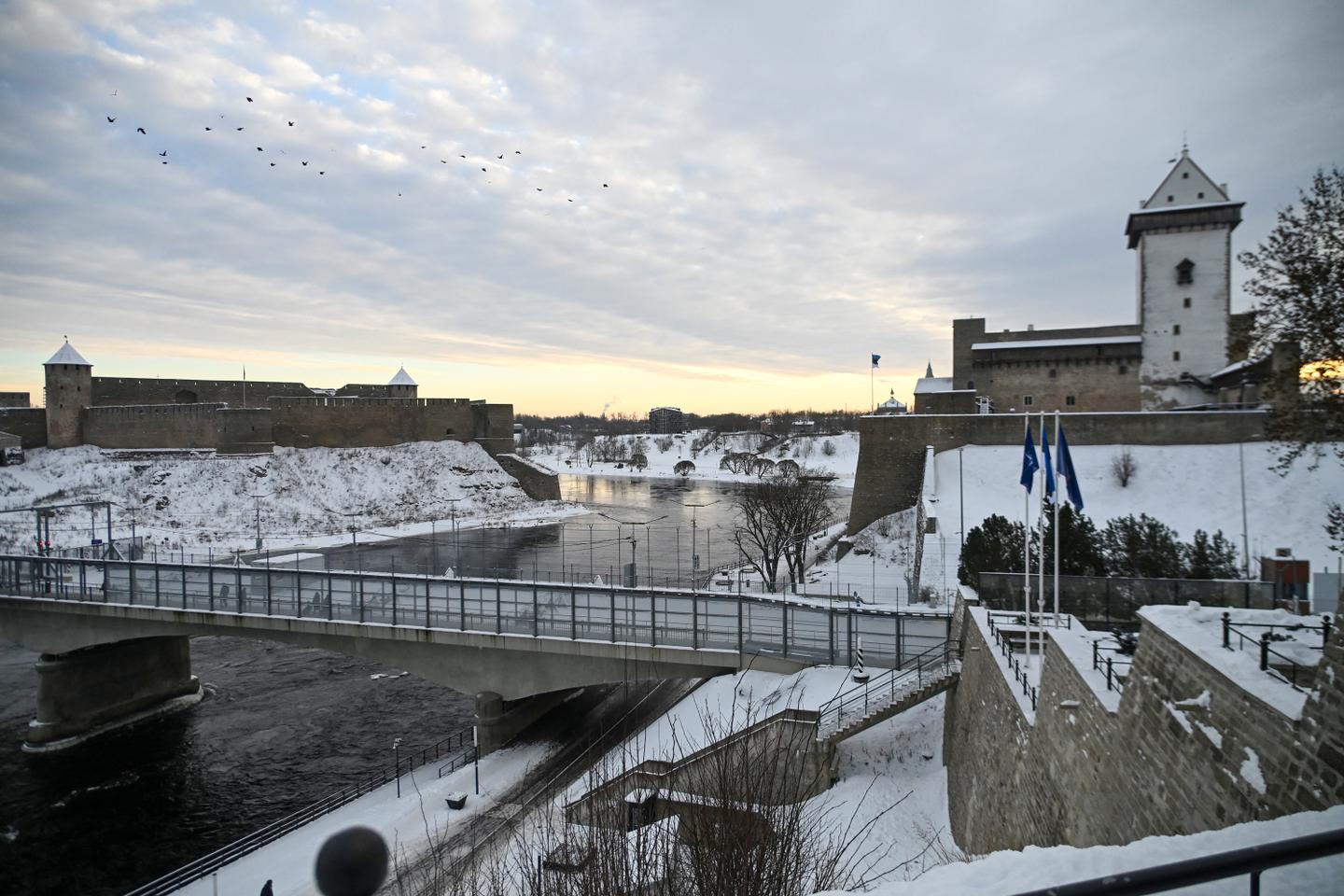
Ivangorod, in Russia, on the left, and Narva, in Estonia, separated by the Narva River, January 15, 2026. STR/AFP
Although the drones came from Ukraine, the threat ultimately came from Russia. Facing collateral damage, the Baltic states feared the war would spill onto their territory. "They do not consider themselves at war, but they no longer feel at peace either," said Céline Bayou, associate researcher at Inalco, France's National Institute for Oriental Languages and Civilizations.
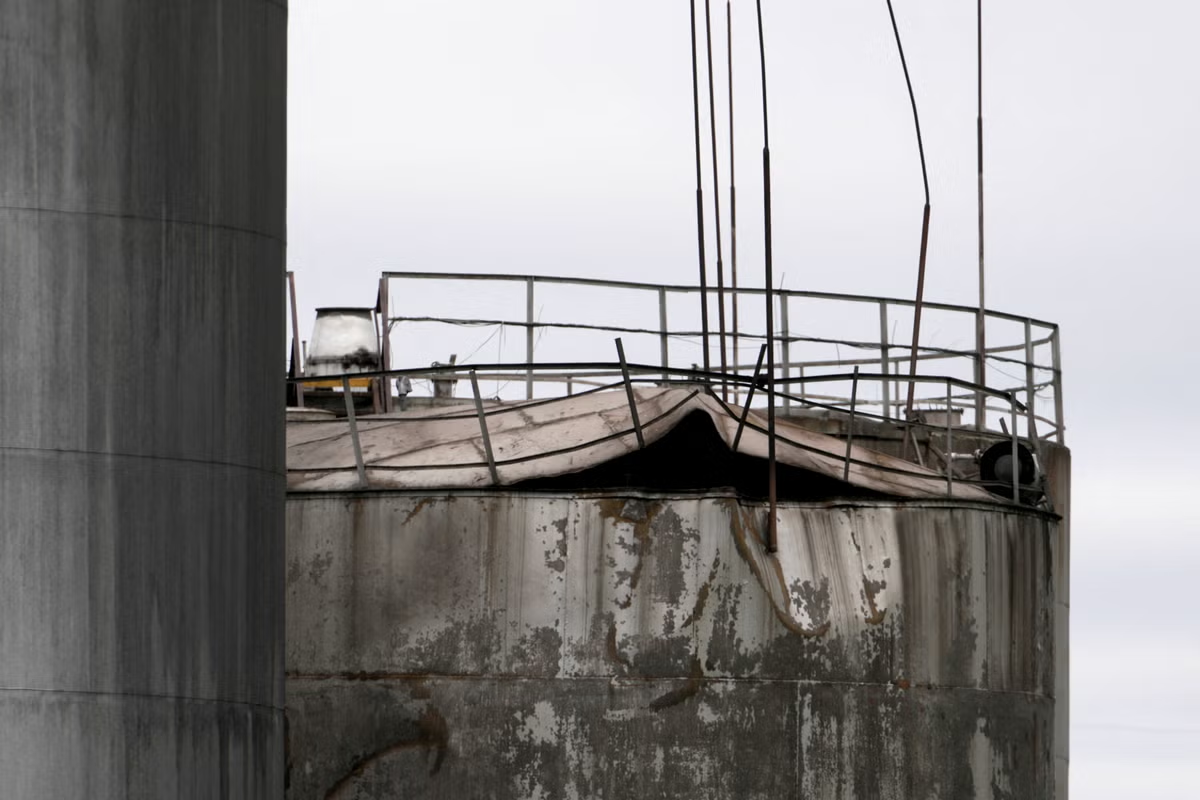
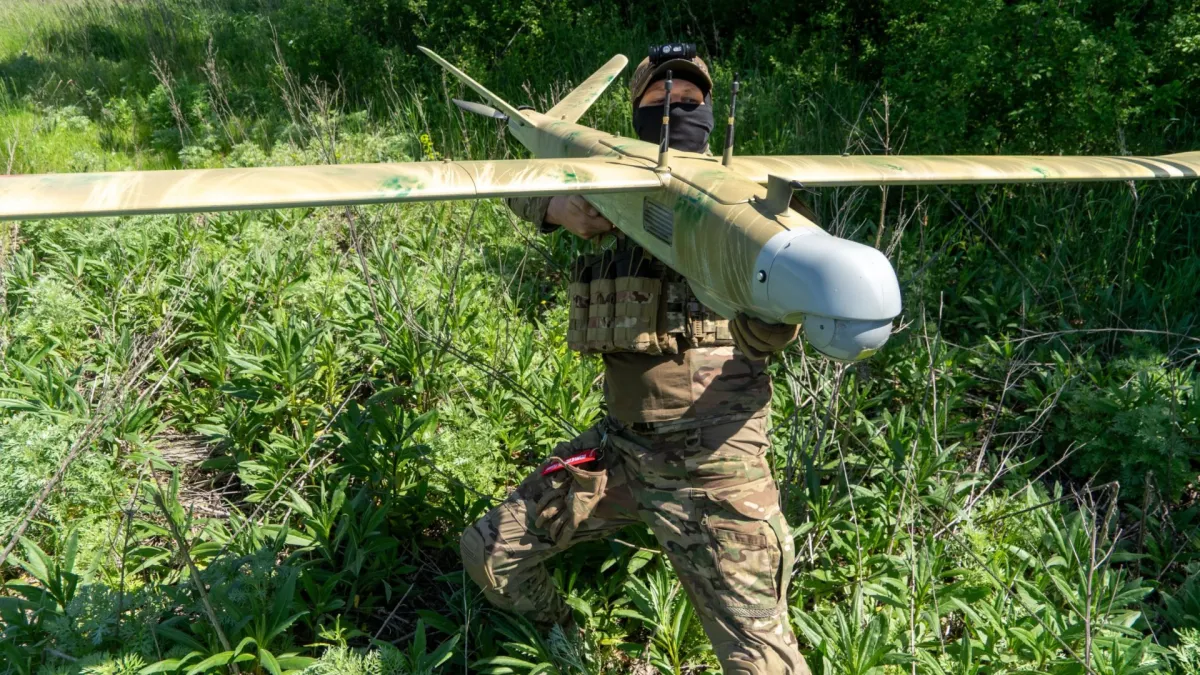
Two Ukrainian drones veered off course on Wednesday, March 25, and entered the Latvian and Estonian airspaces, respectively, during a massive overnight attack targeting Russia. The first exploded in a field in the Kraslava region, Latvia, while the second struck the chimney of the Auvere power station in Estonia, just two kilometers from the Russian border.
Subscribers only
Espionage, sabotage and ghost tanks in the Baltic Sea