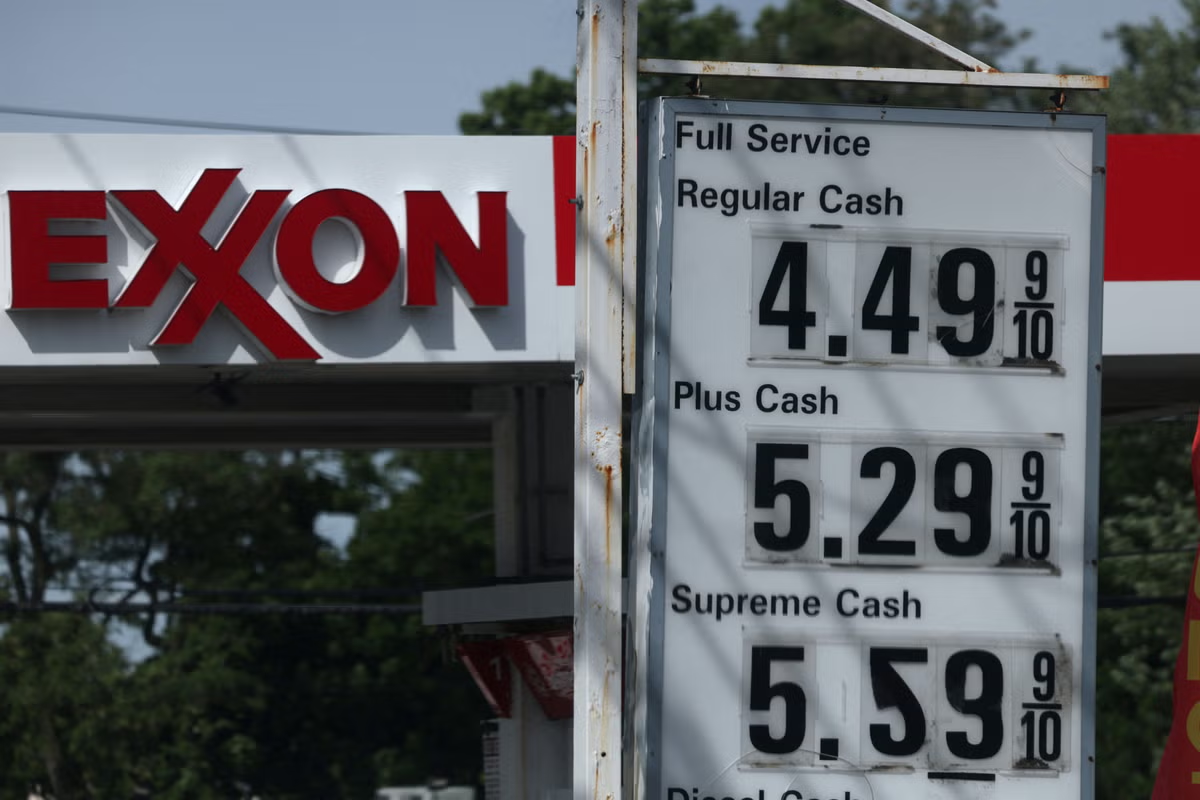
Oil prices have increased because Iran borders the Strait of Hormuz, a narrow waterway in the Persian Gulf through which exports from the UAE, Qatar, Kuwait, and Iraq all flow. Some 20 million barrels of oil typically flow through the strait every day, about 20% of the global oil supply. Iran has said it controls the strait, littering it with mines, and ship captains are too nervous to enter the waterway, choking off global supply and sending prices spiraling.
However, other pockets of the economy are also impacted by disruption in the strait: Fertilizers are a by-product of gas production, driving inflation in agriculture costs. There’s only a certain margin of costs that producers can absorb before they need to pass it on, with consumers ultimately footing the bill in another very visible way. Additionally, higher gas prices aren’t just borne by consumers but businesses as well: Transportation costs for farm equipment, commercial shipping, trucking, and delivery services have also increased as a result of the disruption.
The conflict in Iran, and the increase in oil prices as a result, have a “disproportionate” impact on low-income households because they spend a larger portion of their budgets on fuel, food, and utilities—the prices of which have increased because of the war, according to Barbara Denham of Oxford Economics.