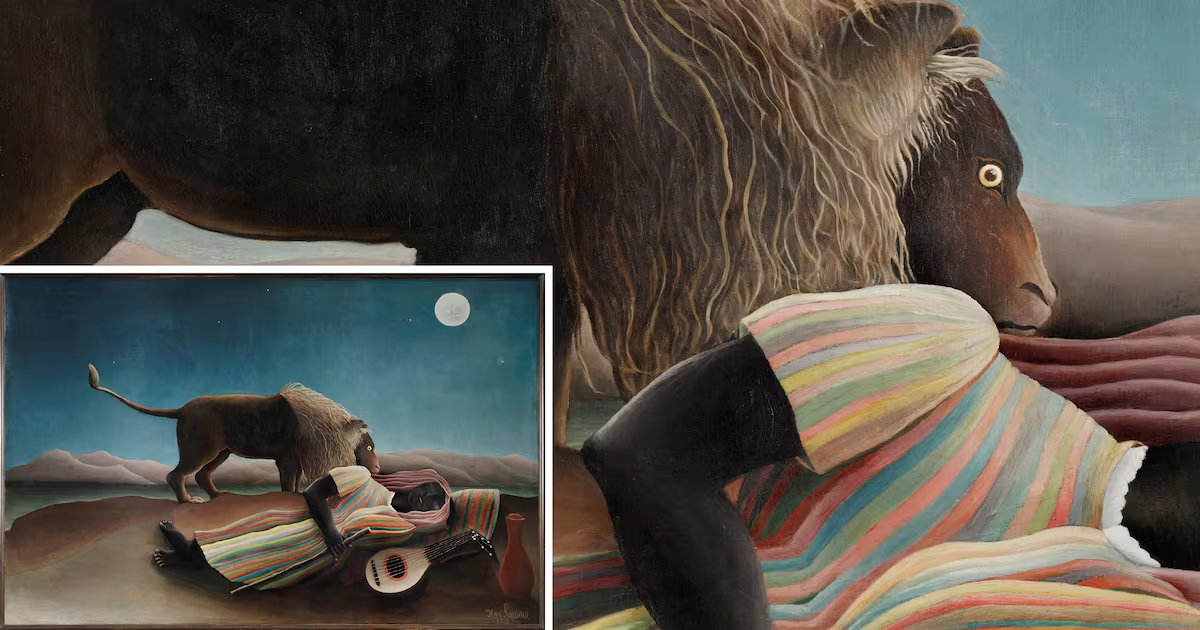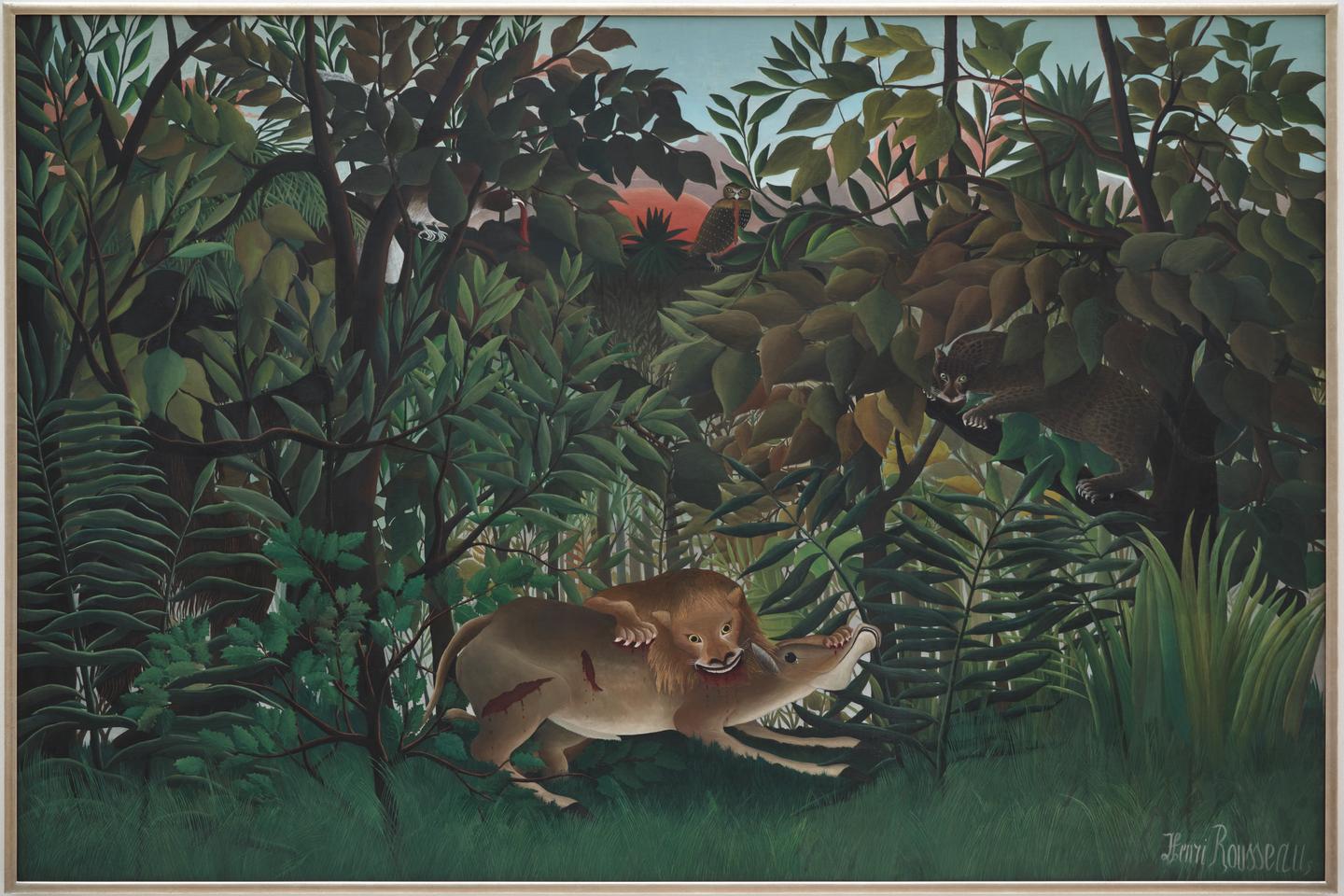
'Le Lion, ayant faim, se jette sur l'antilope' ('The Hungry Lion Throws Itself on the Antelope,' 1898-1905) by Henri Rousseau. RIEHEN/BASEL/FONDATION BEYELER
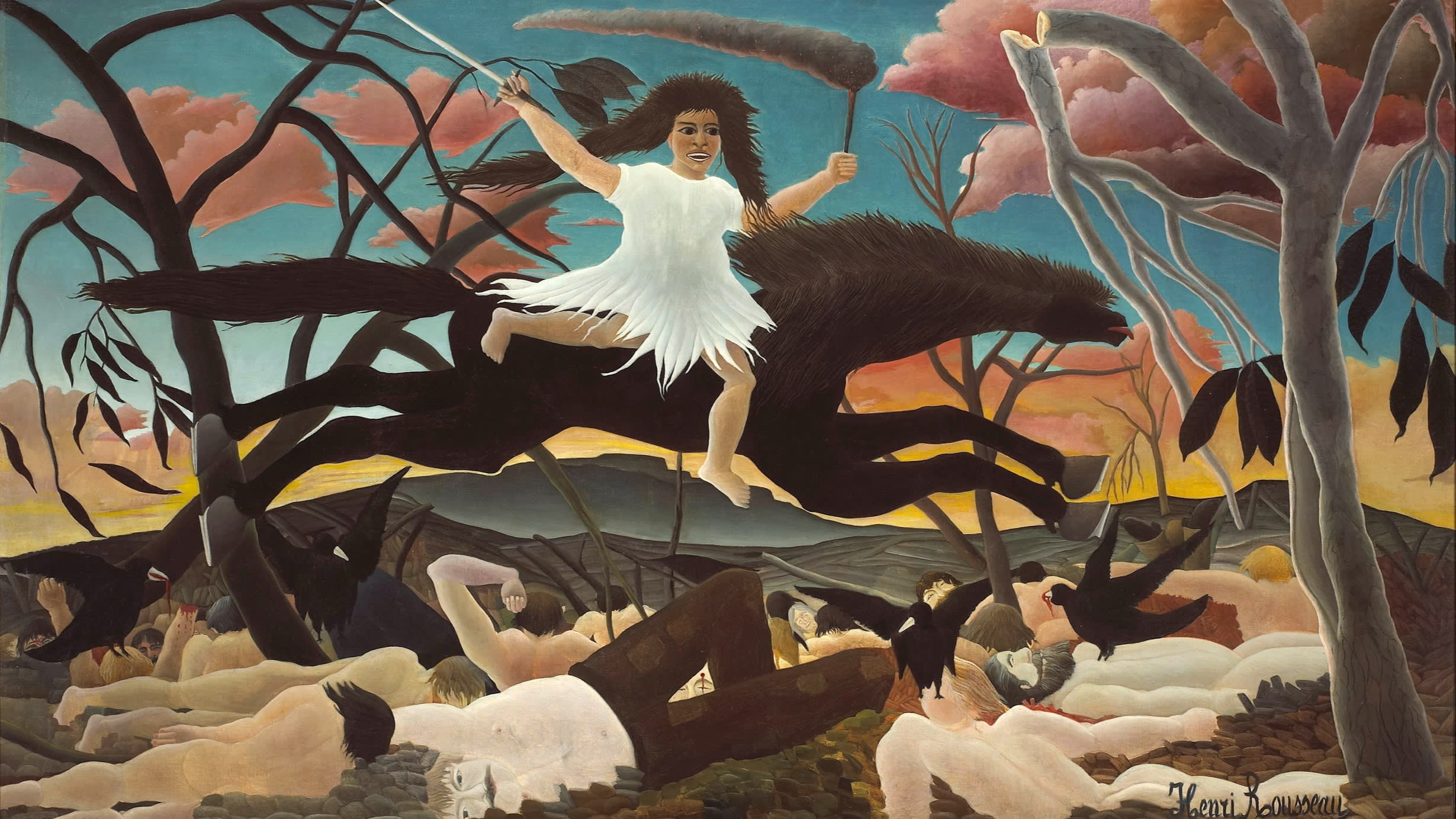
Henri Rousseau, known as Le Douanier Rousseau (the customs officer), was born in Laval (western France) in 1844 and died in Paris in 1910, and has enjoyed widespread fame for over a century. His reputation was first fueled by the admiration of contemporaries such as Guillaume Apollinaire, Pablo Picasso and Robert Delaunay. After Rousseau's death, major collectors as well as Dada and Surrealist poets, including Tristan Tzara and André Breton, further contributed to his fame. Some of his paintings have become part of collective memory, and La Guerre (War, 1894) has been reproduced almost as often as Picasso's Guernica (1937), which can be seen as a modern version of Rousseau's work.
This makes it all the more remarkable that the Musée de l'Orangerie in Paris is offering visitors a fresh perspective on Rousseau. While certainly an homage, the exhibition is thoughtfully curated around a central idea, as suggested by the subtitle, "A Painter's Ambition." The aim is to demonstrate, through careful attention to his practice and attitude, the lofty vision driving Rousseau's art; in other words, he was by no means the "naïve," "primitive" or "Sunday painter" as he has often been reductively – if affectionately – portrayed. His work is underpinned by a historical culture cultivated at the Louvre and by continuous effort to establish a personal style, which also required him to secure the material means for such ambition.