We have two choices: be paralysed by fear or just continue with what we are doing. I know what I choose
I
n the past, my response to any given large-scale world crisis has generally been to do nothing, which, as well as aligning with my personality, has the advantage of being exactly what the experts recommend.
During periods of intense market volatility, we are advised not to look at our investments, let alone touch them. If we are rushed at by a bear, we are supposed to stand stock still (unless it’s one of those bears you have to bang pots and pans at, but let’s leave them aside). The result of this is an avoidant philosophy hingeing on the motto “it’ll probably be fine”, that, this week, as Tehran mocked the US for pretending peace talks were under way, was accompanied by a cold, rival notion: what if this time it’s different?
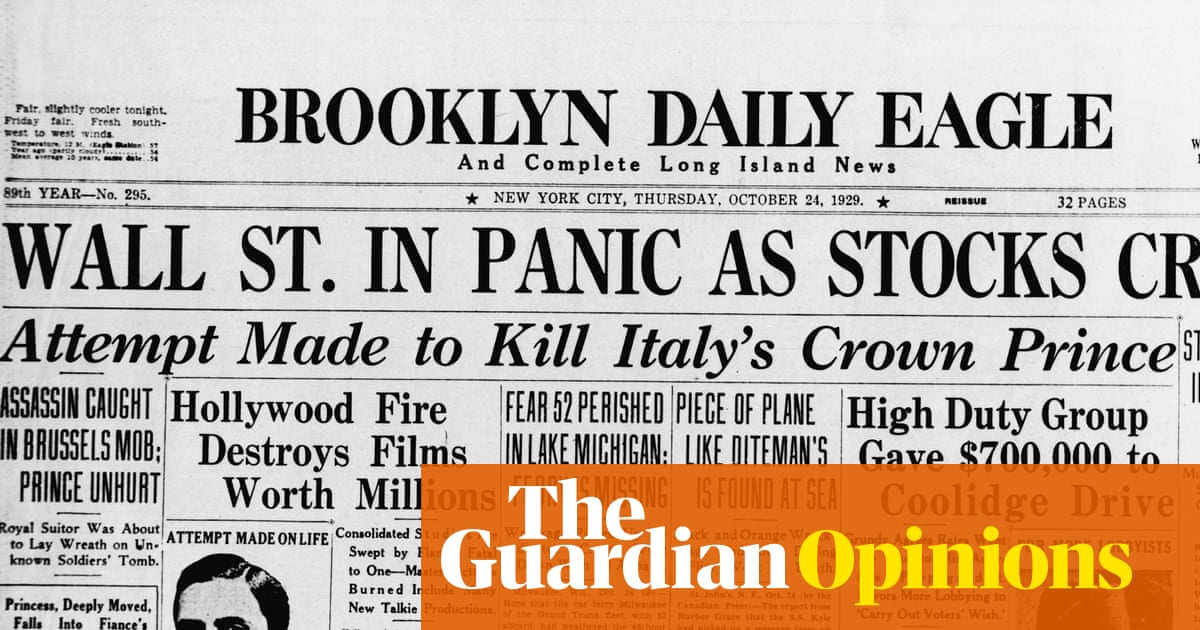
Two spirit-sinking thoughts followed in quick succession: as the war in Iran rumbles on and the energy crisis deepens, what if interest rates bounce up to what they were in the 1970s (impossible, surely?); and, does this mean I have to read Andrew Ross Sorkin’s book about the Wall Street crash? The headlines aren’t reassuring. In the Financial Times at the weekend, the banner headline warned: Borrowing costs soar to 18-year high. Columnists in the Telegraph shared plans to stockpile petrol and tinned food. “Could the Iran war lead to WWIII?” asked NPR, cheerfully, while over in the New York Times, a hedgefunder turned US Treasury official wrote: “I predicted the 2008 financial crisis. What is coming may be worse” – a dire warning at least partially offset by the cheesy, business-as-usual configuration of the headline. Beyond the media, city traders last week started pricing in four quarter-point base interest rate rises in 2026, a complete about-face from previous predictions of rates coming down this year.