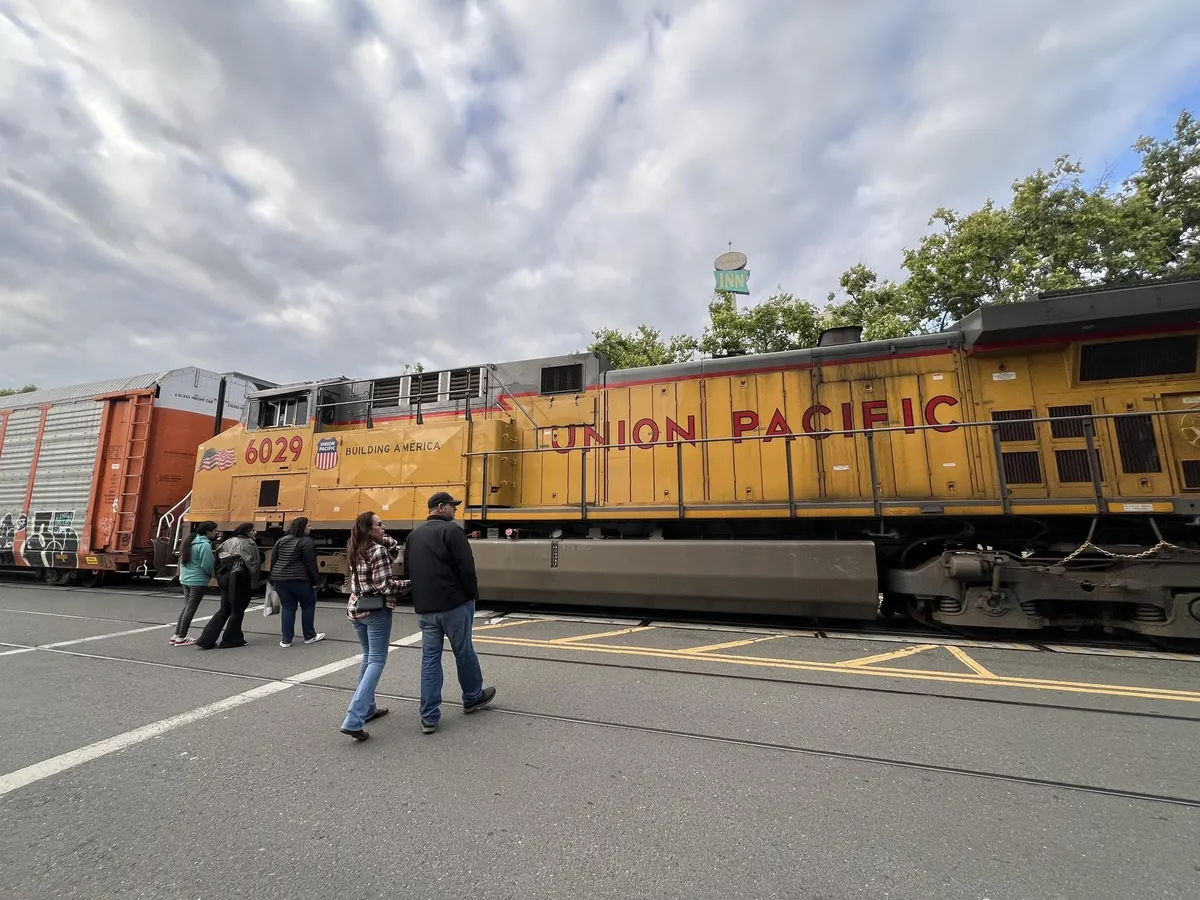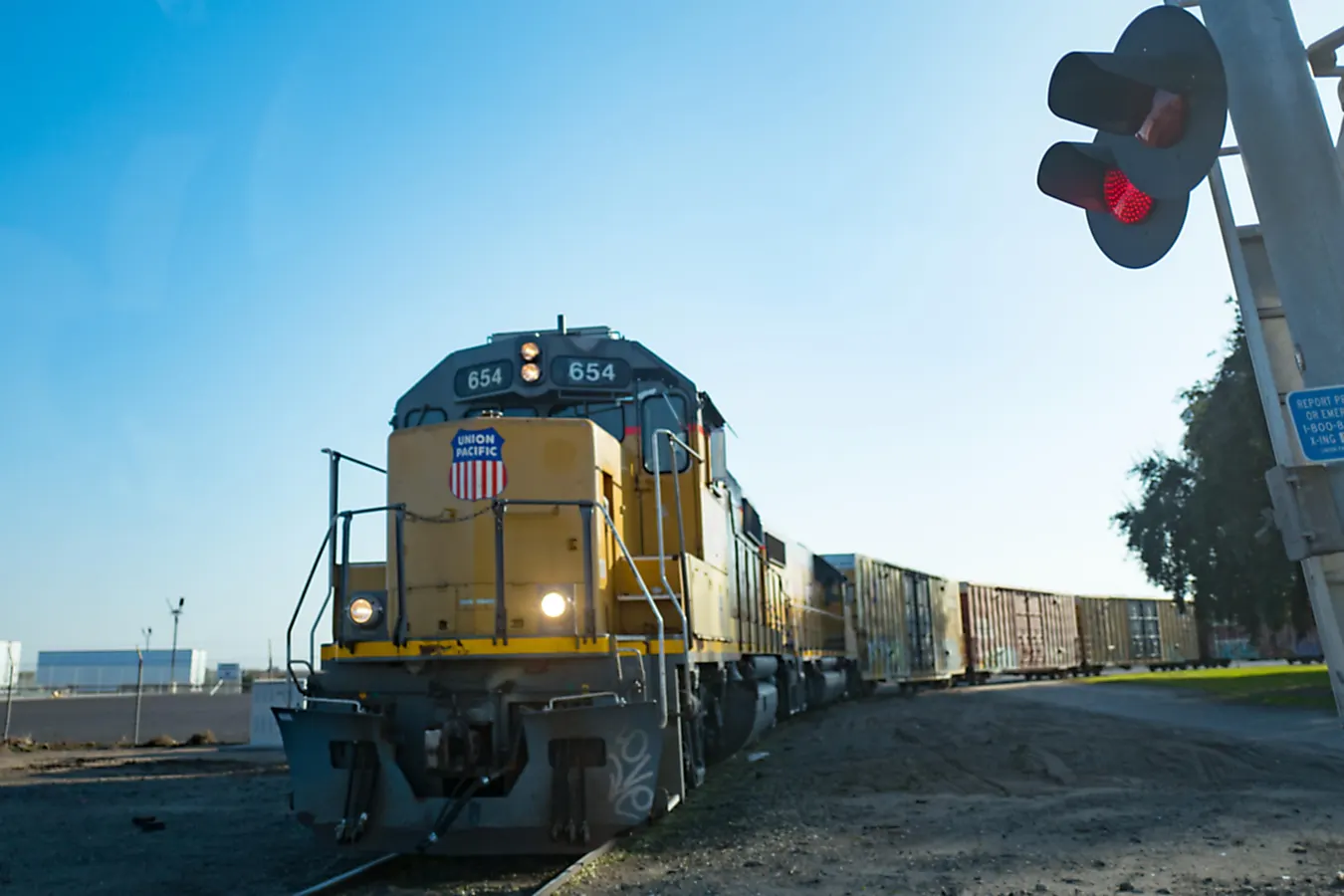
Union Pacific cargo train with multiple box cars as it prepares to cross a railroad crossing near Jamestown, California. (Photo by Smith Collection/Gado/Getty Images)Getty ImagesWashington has always had a gift for disguising costly mistakes as moral necessities. The labels are familiar: “safety,” “fairness,” “accountability.” The rhetoric is polished, reassuring and designed to discourage dissent. But behind the noble language usually lies the same old impulse: more federal control over private enterprise, more bureaucratic interference in the economy and more costs for the public.That’s exactly what’s happening with the so-called Railway Safety Act. This bill is being sold as a practical response to rail accidents. It’s no such thing. It’s a classic Washington maneuver: Use a real concern to justify a much broader expansion of government authority over an industry that has delivered better results precisely because politicians stopped micromanaging it.And the stakes extend far beyond the rail sector.The larger question is whether America still understands what drives prosperity. The economic gains of the Trump years weren’t accidental, nor were they mysterious. Growth accelerated because government moved—however imperfectly—in the right direction: fewer unnecessary regulations, cheaper and more abundant energy and a stronger climate for private investment. That combination helped restrain costs, support wage gains and restore momentum in sectors that matter, including manufacturing, energy and agriculture.The Railway Safety Act moves in exactly the opposite direction. It reflects the stale and destructive belief that every disruption, every failure, every accident must be met with another federal mandate and another bureaucratic command. That belief has been wrong for decades, and it’s wrong now.Freight rail is one of the clearest success stories of deregulation in modern U.S. history. After the Staggers Rail Act of 1980, the industry was released from the suffocating command-and-control model that had pushed it toward decline—and financial ruin. What followed wasn’t chaos, as the regulatory class always predicts. It was a stunning renewal.Railroads invested roughly $23 billion annually in private capital into their own systems. Not taxpayer money, private money. They improved infrastructure, upgraded equipment, increased productivity and strengthened service. Safety improved as well. Costs fell. The industry became more efficient, more resilient and more capable of supporting the broader economy.Today, our railroad freight industry is by far the best in the world. Better than Europe’s and Japan’s and light years more efficient than China’s.That happened for one reason above all: Washington backed off. Now Washington wants back in.The Railway Safety Act would impose rigid, one-size-fits-all mandates on railroad operations, including prescriptive requirements on crew size and other operating practices. These mandates aren’t serious, evidence-driven answers to the primary causes of recent incidents. They’re political gestures designed to sound tough, compassionate and decisive while shifting power back to regulators and politicians.This is how bad economic policy is almost always made. A problem emerges. Activists and politicians demand visible action. Congress obliges with sweeping rules that have little to do with root causes and everything to do with appearances. The costs pile up later, quietly but relentlessly, and they’re borne not by the architects of the policy, but by everyone else.That is precisely what would happen here. Freight rail isn’t some narrow industrial sideline; it’s one of the great circulatory systems of the U.S. economy. It moves roughly one-third of the nation’s energy supply, along with enormous volumes of grain, fertilizer, chemicals, construction materials and manufactured goods. If Washington makes rail transportation less efficient, the cost of moving the essentials of modern life goes up. That means higher electricity bills. Higher grocery prices. Higher input costs for farmers. Higher transportation and construction costs. Higher prices for businesses and consumers throughout the economy.At a time when Americans are already worn down by years of elevated living costs, it’s hard to imagine a more foolish course than deliberately injecting new inefficiencies into the supply chain. Yet supporters of this bill wrap themselves in the language of populism. They claim they’re standing up for workers, communities and families. That’s absurd. There’s nothing pro-worker about raising the cost of transporting fuel, food and raw materials. There’s nothing pro-family about making the economy less efficient and more expensive. There’s nothing populist about government policies that squeeze household budgets even further. This isn’t populism; it’s bureaucratic control disguised as compassion.Of course, safety matters. It’s essential. But serious safety policy is rooted in evidence, technology and incentives—not in headlines, symbolism and ideological hostility to markets. The most meaningful advances in rail safety have come from better equipment, improved monitoring, predictive maintenance, stronger analytics and sustained private investment in infrastructure and technology. Those are real solutions. They improve performance while preserving the flexibility and incentives that make complex systems work.Blanket federal mandates do the opposite. They substitute rigidity for judgment. They elevate politics over operations. They discourage innovation and weaken the investment climate that has made freight rail a success.That’s why this debate is about far more than trains. It’s a test of whether the U.S. still believes in the principles that produce growth. Do we trust enterprise, investment and innovation? Or do we fall back into the old habit of assuming that every problem requires another order from Washington?The U.S. has run that experiment before. It produced stagnation, weaker competitiveness and higher costs. It didn’t produce prosperity then, and it won’t produce prosperity now.Congress should reject the Railway Safety Act. It’s not thoughtful reform. It’s a Trojan horse for bigger government—one that would burden a vital industry, raise prices across the economy and push the country further away from the pro-growth formula it urgently needs.The U.S. doesn’t need more political theater masquerading as economic policy. It needs more investment, more efficiency and less federal meddling.That’s the real choice here
The Railway Safety Act: A Trojan Horse For Bigger Government
Washington says the Railway Safety Act is about safety. In reality, it's about control—and Americans will pay the price.
941 words~4 min read