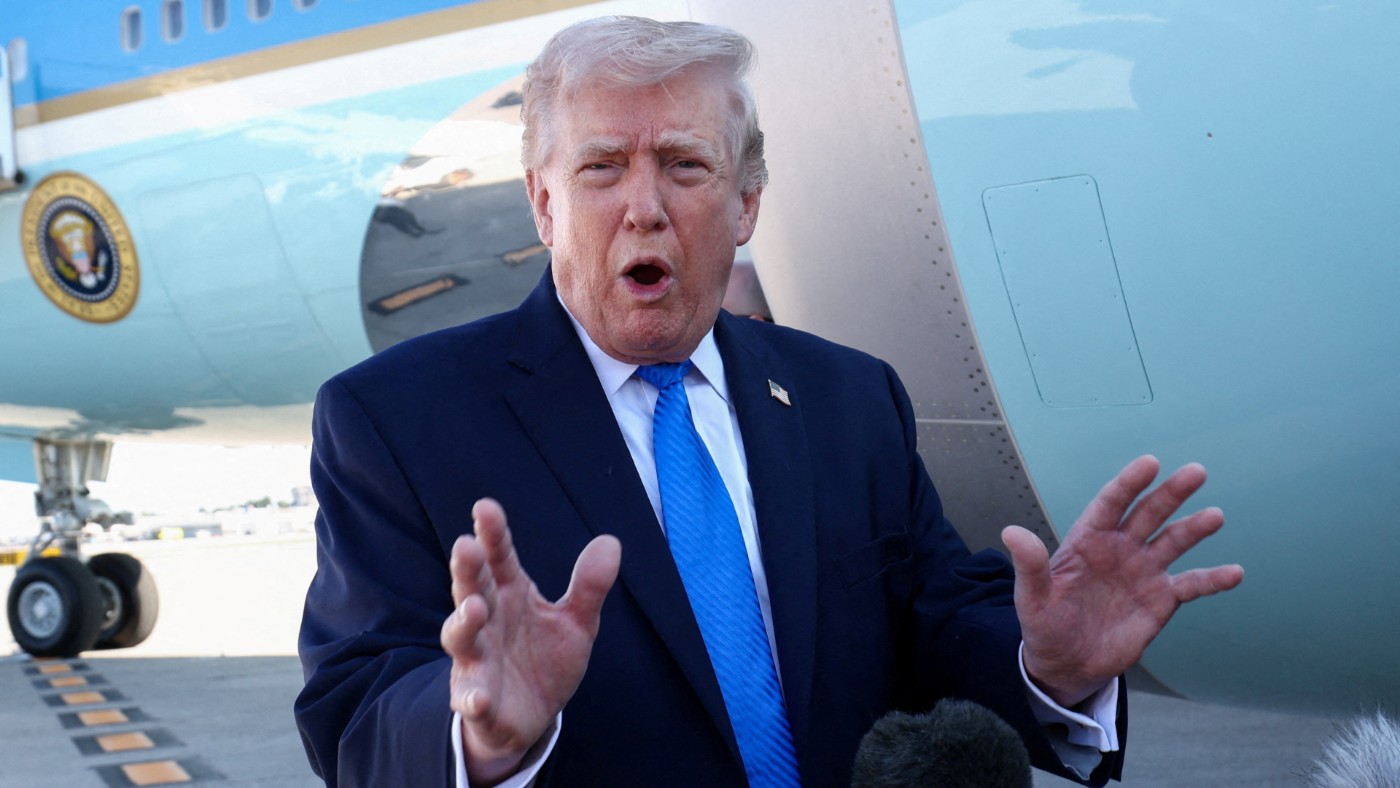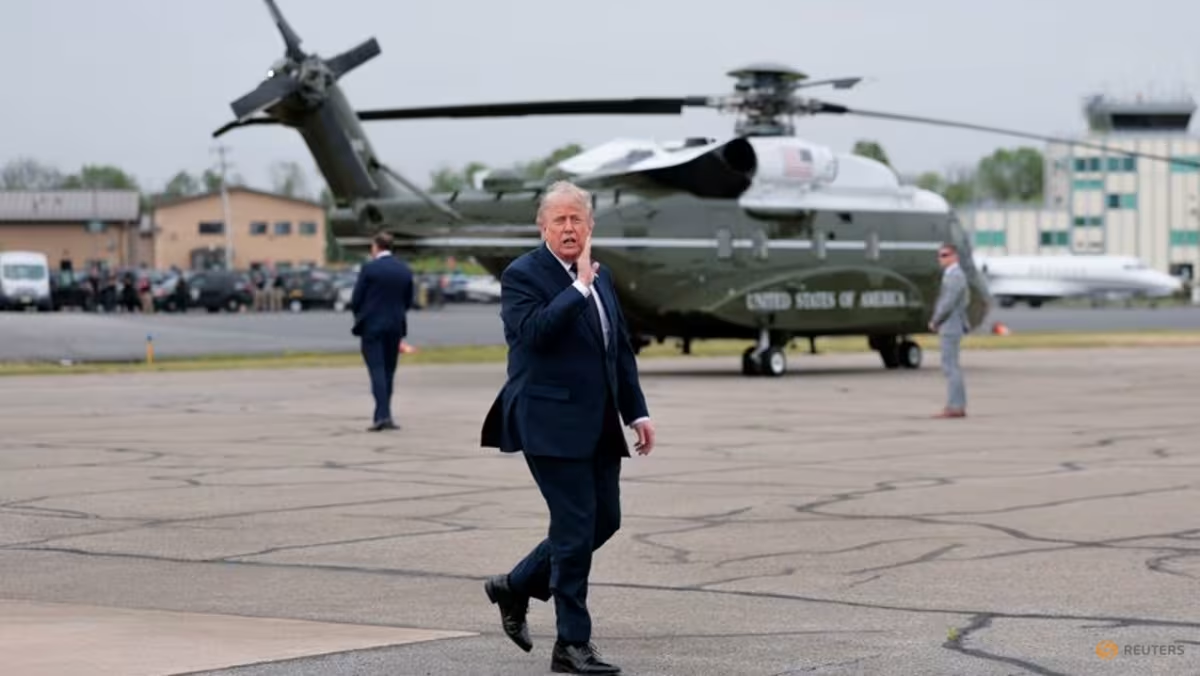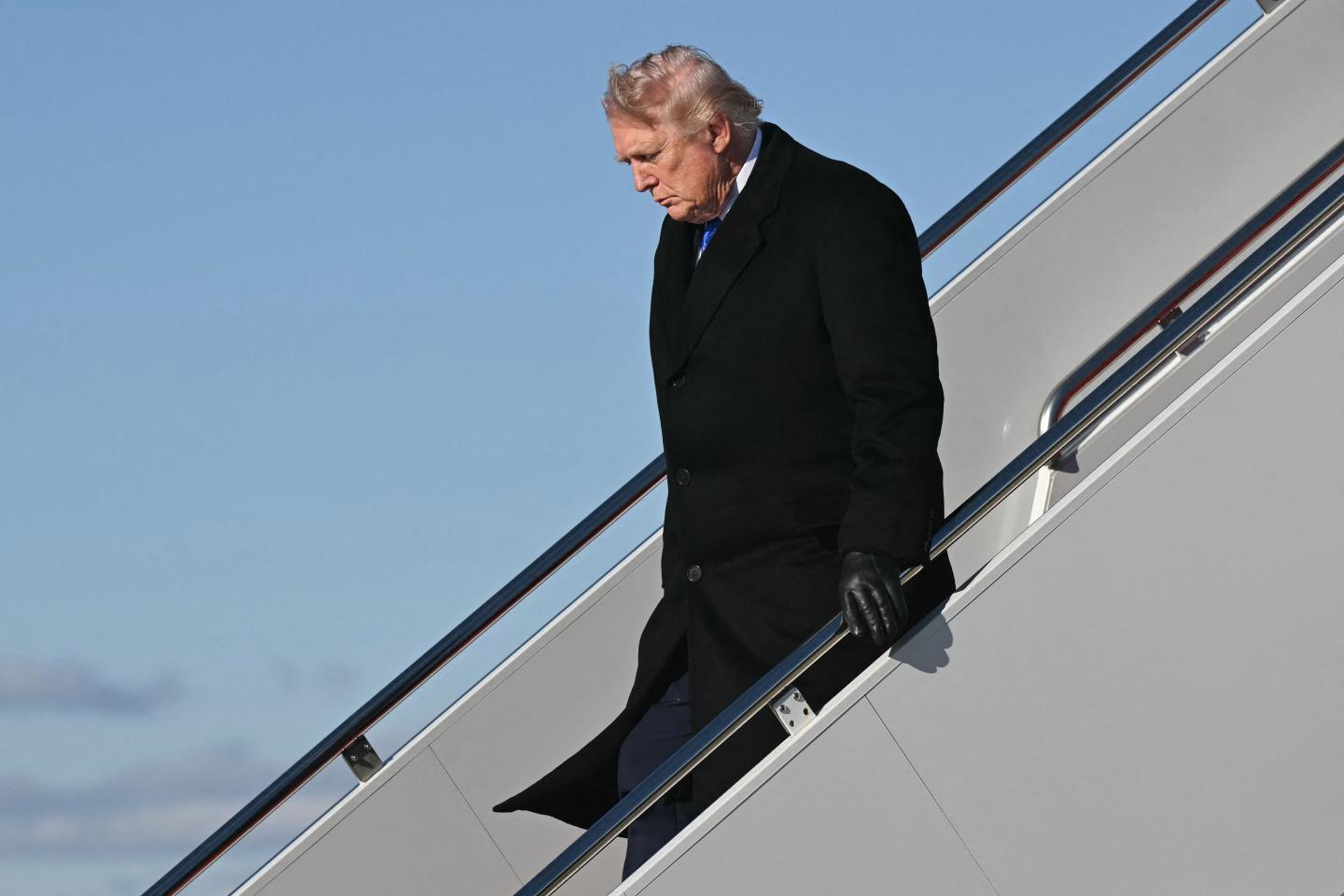
US President Donald Trump disembarks from his plane at Andrews Air Force Base in Maryland on March 23, 2026. SAUL LOEB/AFP
Donald Trump has made a habit of walking back his own ultimatums. He did so again on Monday, March 23. Just moments before US markets opened – already jittery over the war he launched on February 28 against Iran with Israeli Prime Minister Benjamin Netanyahu – he backtracked on his threat to "annihilate" Iranian power plants that same day unless the regime in Tehran immediately lifted its blockade of the Strait of Hormuz. More than 20% of the world's oil supply passes through this strategic chokepoint. The deadline for this threat was pushed back five days, to March 27.
By announcing this turnaround on his social network, the US president acknowledged the resilience of the Iranian regime, which had vowed to respond to what would amount to war crimes by targeting civilian infrastructure on the Arab shore of the Gulf. The president also recognized Tehran's ability to make the Strait of Hormuz a central issue in the ongoing conflict. Donald Trump said he intended to use this respite to find a path toward de-escalation, one that could help avoid a spiral with devastating consequences for the global economy.