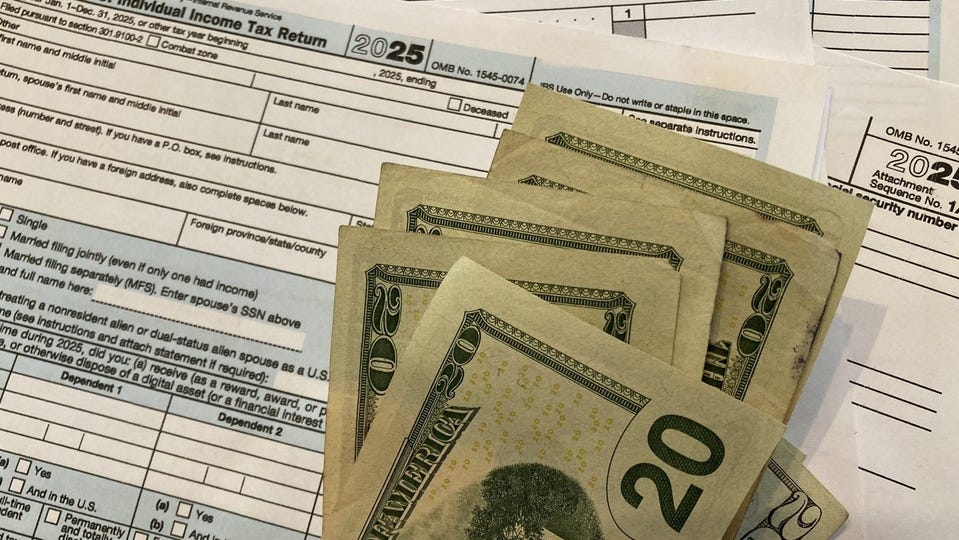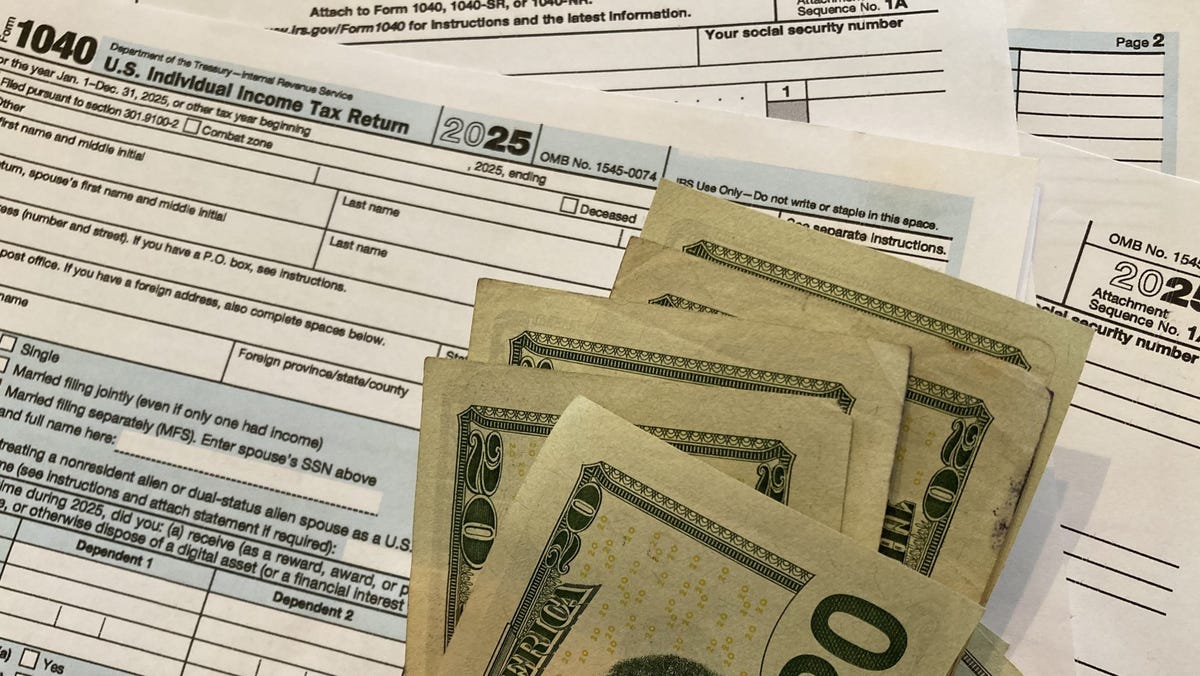
The IRS says that over 1.3 million people have unclaimed refunds for tax year 2022.gettyIf you didn’t file a 2022 tax return, you might be leaving money behind. The IRS says that more than $1.2 billion in tax refunds remain unclaimed from the 2022 tax year, with over 1.3 million taxpayers potentially entitled to money they never claimed. Filing Deadline For Tax RefundsIf you are due a refund, you generally have to file a federal income tax return to get your money. Taxpayers typically have three years to claim those refunds. After that, the money becomes the property of the U.S. Treasury.For 2022 returns, that three-year window closes on April 15, 2026. Miss the deadline, and the refund is gone for good—no extensions, no appeals.Tax Refunds Can Be More Than Your WithholdingFailing to file doesn’t just mean forfeiting money that has been withheld from. your wages. It can also mean missing out on refundable tax credits like the EITC.Refundable tax credits are the most generous type of credit because they can reduce your income tax liability below zero. If that happens, you may receive the remaining amount as part of your tax refund, even if you didn’t owe federal tax. One of the best-known refundable tax credits is the Earned Income Tax Credit (EITC), which helps low- to moderate-income workers and families reduce their tax burden and typically results in a refund. The amount of the credit varies based on income, filing status, and the number of qualifying children. To qualify for the EITC, you generally must have earned income from wages, self-employment, or certain disability payments and not make more than income limits, which vary based on filing status and family size. You must also have a valid Social Security number, be a U.S. citizen or resident alien for the entire year, and not file as married filing separately.For 2022, the EITC was worth up to $6,935 for taxpayers with qualifying children. But remember, like most refundable credits, it isn’t automatic. If you don’t file, you don’t get it.A Few Important CaveatsBefore you start mentally spending that refund, there could be a few potential roadblocks. The IRS says that refunds for 2022 may be held if you haven’t filed returns for 2023 and 2024, meaning that your compliance with those more recent filing obligations matters. (The better response? File your unfiled returns so that you don’t miss out.)Even if you’re due a refund, you may not actually receive it. Under the Treasury Offset Program, the government can apply your refund to certain outstanding debts, including past-due child support, federal or state tax liabilities, unemployment compensation debts, and some federal non-tax debts like student loans. If your refund is offset, you should receive a notice explaining the amount and the agency that received the funds. Importantly, the IRS doesn’t decide whether the offset is appropriate—it simply processes it. To challenge the offset, you’ll need to contact the agency that claimed the debt, not the IRS. If the refund was from a joint return and the debt belongs only to your spouse, you may be able to recover your share by filing an injured spouse claim (Form 8379). IRS Estimated Potential Tax RefundsThe IRS estimates a median refund of $686 for 2022, meaning that half of eligible refunds are larger than that amount. And that figure doesn’t include additional credits that taxpayers might qualify for, which could push the total even higher.Unsurprisingly, the largest states account for the most unclaimed refunds, with California and Texas leading the list, followed by Florida, New York, and Pennsylvania. (Click on the map above to see how many taxpayers in your state the IRS believes might be entitled to a potential tax refund.)There’s also some variation in the size of the refund depending on where you live. States like Massachusetts and Hawaii show relatively higher median refunds, while others, including Arizona and Mississippi, show lower median refunds.There’s No PenaltyAnd don’t worry about potential penalties for filing late. There’s no penalty for failing to file if you’re due a refund because the main penalty for not filing is calculated based on unpaid tax, and if you’re owed money, there is no unpaid tax to penalize.But there is a consequence for waiting too long—you lose the money entirely.What You’ll Need So That You Can File If you didn’t file in 2023 (for the return related to the 2022 tax year) and don’t have your paperwork handy, you still have options. You can request copies of Forms W-2, 1099, 1098, or 5498 from your employers or financial institutions. You can also use the IRS “Get Transcript Online” tool to access wage and income information, which is often the fastest route. The website's features have expanded significantly (and if you’ve been on the site this year, you’ll also note that there’s been a refresh).IRS website promotes IRS online accounts.Kelly Phillips ErbWith an online account, you can view prior-year returns and other tax records, including your adjusted gross income, or AGI (which you’ll need for some tax software programs) and official IRS transcripts. You can also make payments, schedule future payments, enter into installment agreements, and review your payment history.Alternatively, you can submit Form 4506-T to request a transcript by mail. You’ll want to request a wage and income transcript, which shows data from information returns received by the IRS, such as Forms W-2, 1099, 1098, Form 5498 and IRA contribution information. You can use the information from the transcript to file their tax return. Plan ahead, written transcripts requests using Form 4506-T can take several weeks. Since that process can take several weeks, the IRS strongly urges to try other options first (as do I).Most major tax software providers also support prior-year filings, so if you used software before, check for a “prior year” option. (Be sure to check for any upcharges before you commit.)Bottom LineIf you skipped filing a 2022 return, it’s worth taking another look, even if you assumed it didn’t matter. You may be entitled to money—the IRS is holding more than a billion dollars in unclaimed tax refunds. But you need to act quickly since the clock is ticking.ForbesHow Tax Credits Can Lower Your Tax Bill—or Boost Your RefundBy Kelly Phillips ErbForbesTax Refunds Are Up In 2026—But Not As Much As Some ExpectedBy Kelly Phillips Erb
The IRS Is Sitting On $1.2 Billion In Unclaimed Tax Refunds
More than 1.3 million taxpayers may be owed a refund for the 2022 tax year. The window to claim that money closes on April 15, 2026.
1,051 words~5 min read