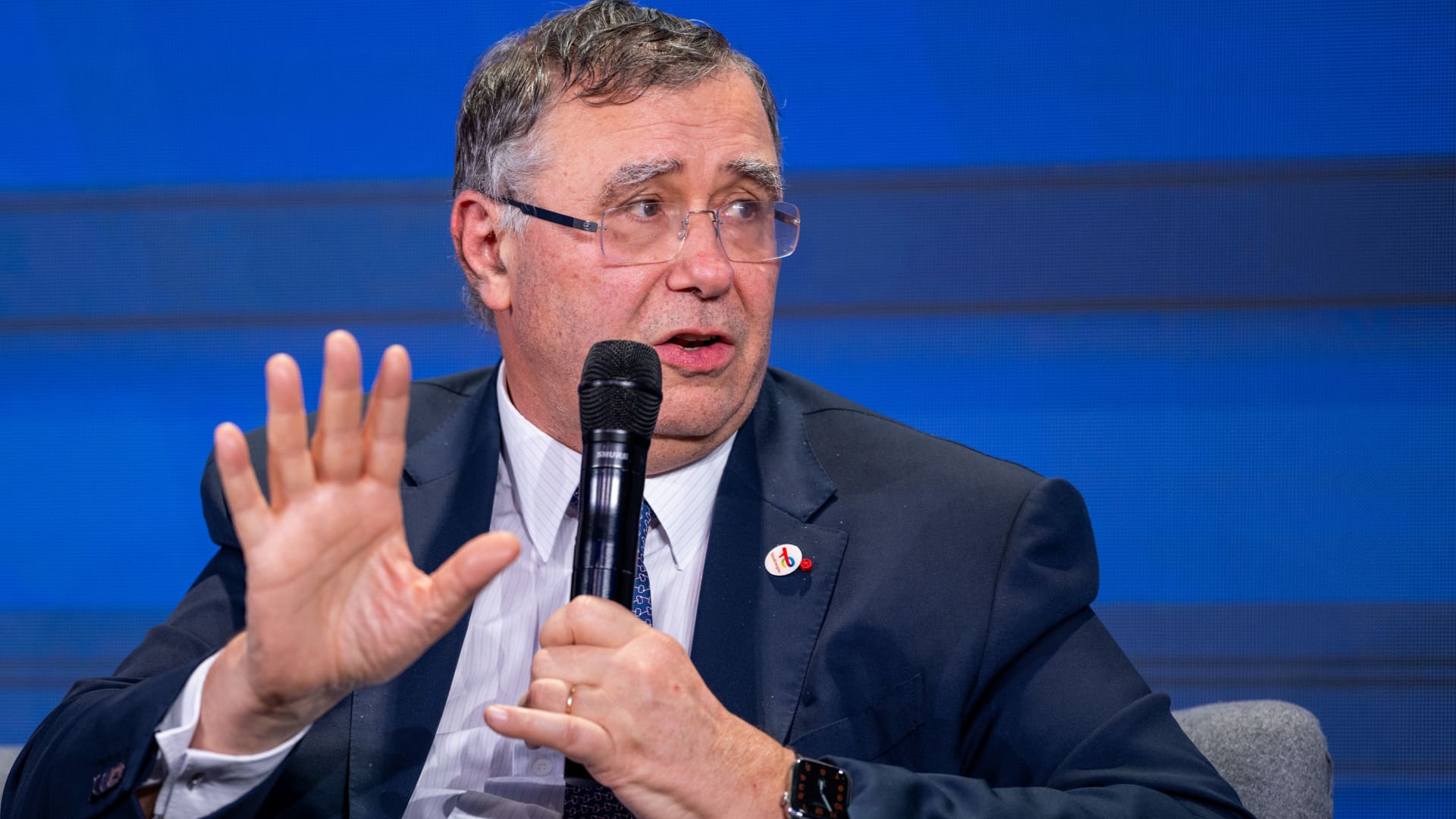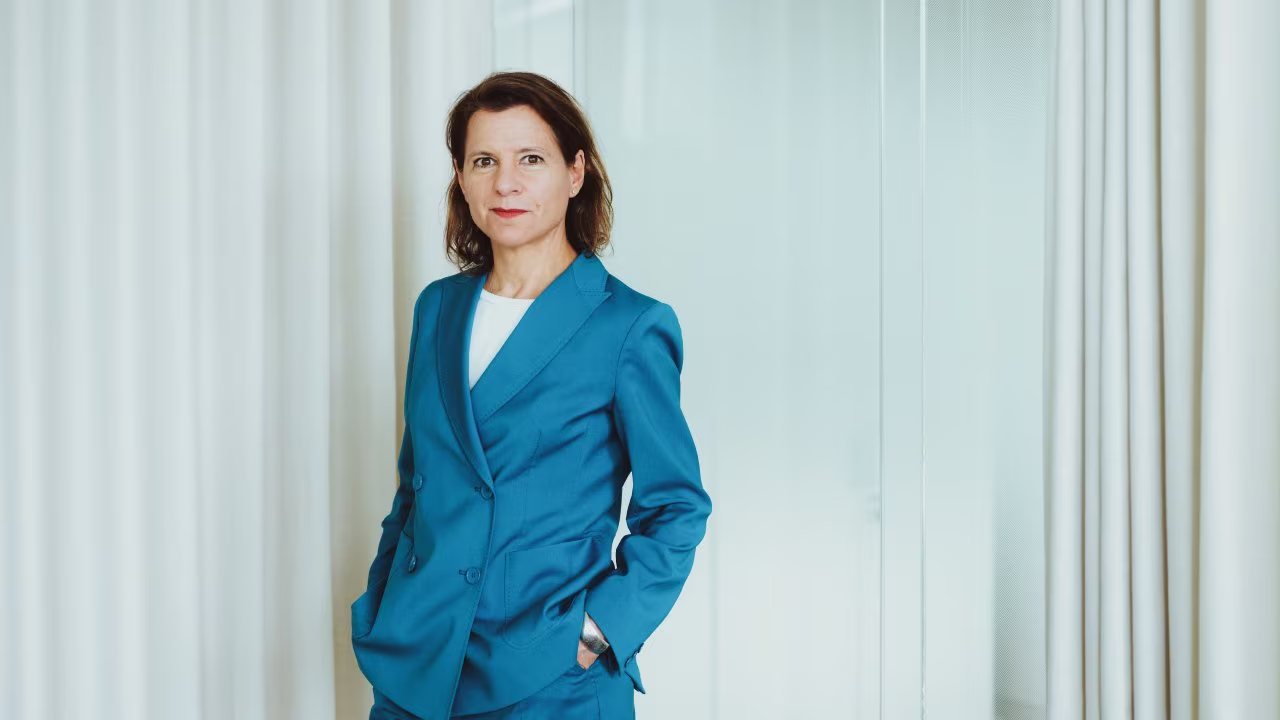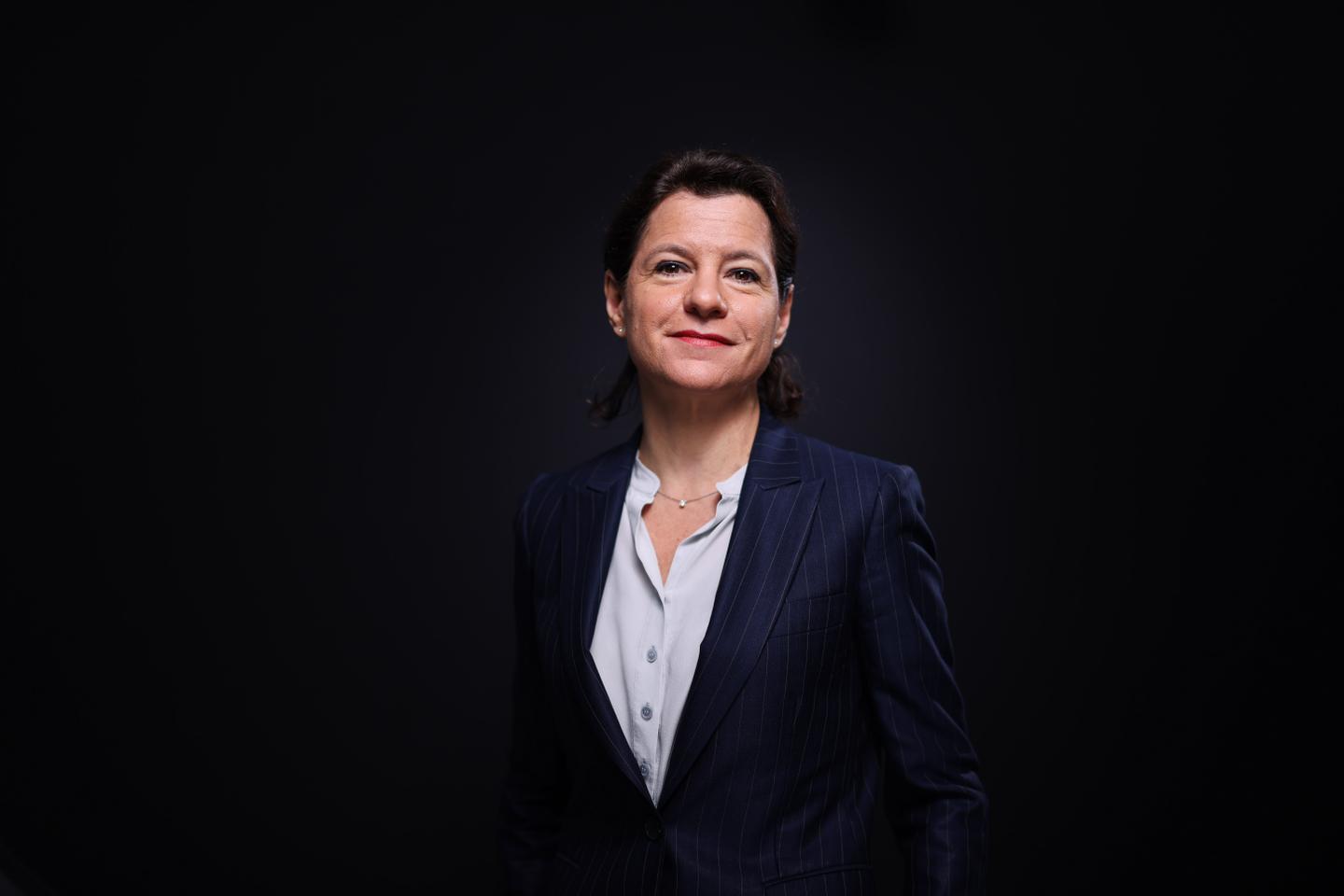
Catherine MacGregor, CEO of Engie SA, at the World Economic Forum in Davos, Switzerland, January 23, 2025. HOLLIE ADAMS/BLOOMBERG VIA GETTY IMAGES
Engie is a key player in supplying gas and electricity in France. According to its chief executive, Catherine MacGregor, the situation triggered by the conflict in Iran is far less worrying than when the war in Ukraine began. But she does warn that, in order to avoid fueling a surge in prices, European governments must refrain from taking emergency measures and intervening in the markets, despite concerns about the possible emergence of a global battle for liquefied natural gas (LNG).
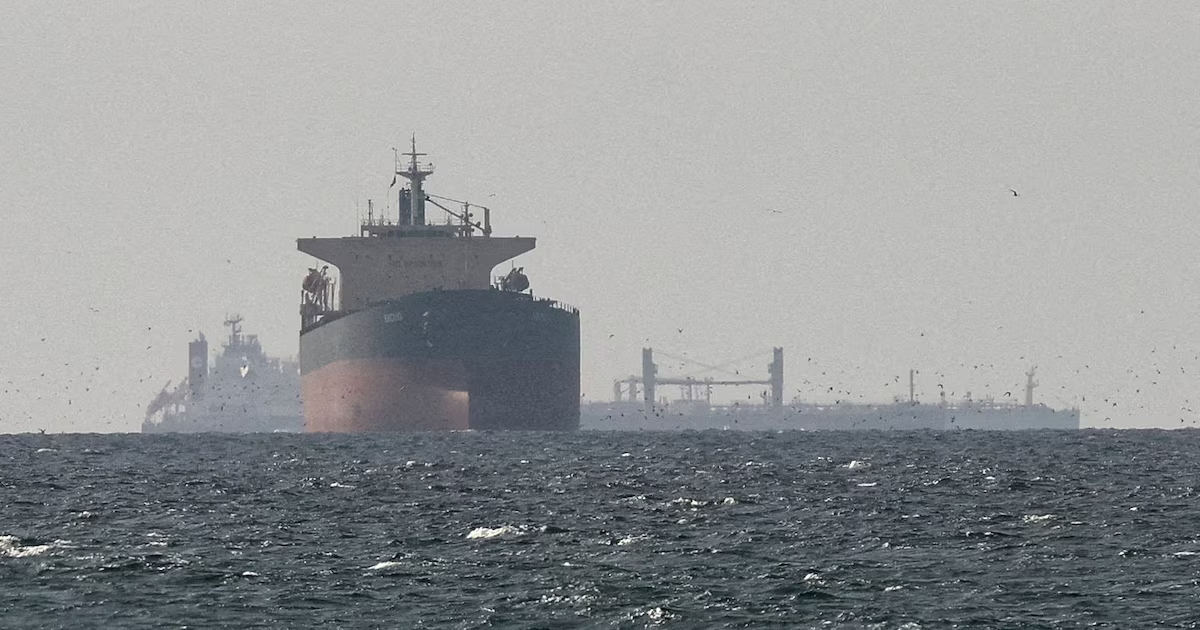
With the Strait of Hormuz blocked and attacks on energy infrastructure driving up gas and oil prices, should Europe prepare for an energy crisis comparable to the one caused by Russian gas in 2022?
My primary concern is for our 3,000 employees in the region, whose safety is our top priority. The current situation is very volatile. We therefore need to be cautious with any forecasts. But there are many differences compared to 2022. At that time, roughly 40% of Europe's gas supplies were called into question.
Today, we are not talking about the same scale when it comes to gas: Under normal circumstances, 20% of the world's LNG passes through the strait and LNG accounts for about 15% of the global gas supply. That means less than 5% of the world's gas consumption is concerned. Moreover, this LNG produced by Qatar and the United Arab Emirates is mainly destined for Asia. As a result, European physical deliveries are not directly affected. There is, however, upward pressure on prices. On the European market, gas has risen above €60 per megawatt-hour (MWh), though this still remains far below the levels reached in 2022, nearly €320 per MWh.