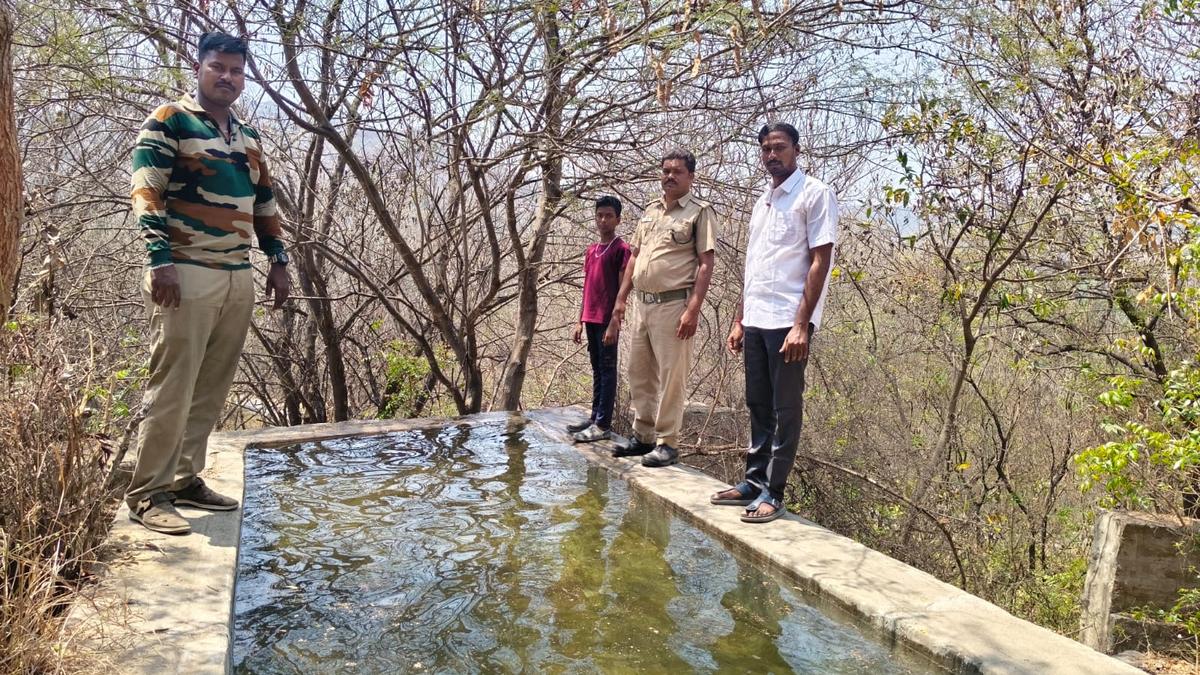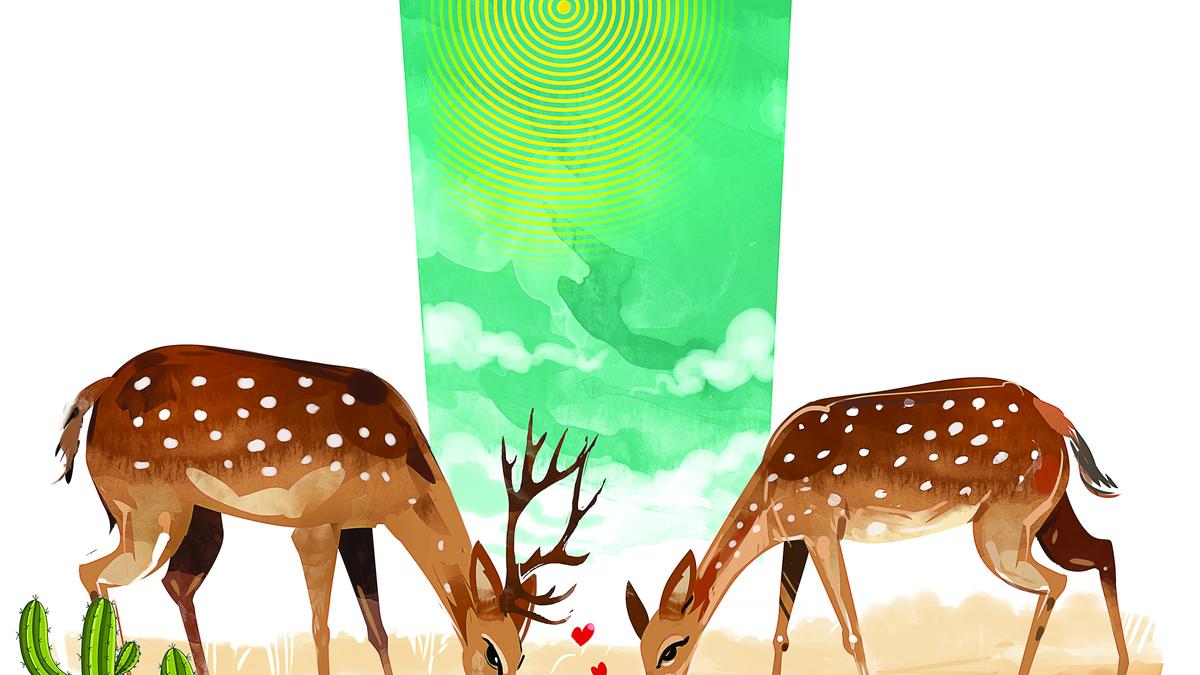
A scene of a male and female deer drinking from a pool, depicted in Ainthinai Aimpathu, is often cited to illustrate the ideal bond between lovers. Set in the arid Palai landscape, the poem describes how the Pinaimaan (female deer) and the Kalaimaan (male deer), exhausted after wandering in search of water, arrive at a small pool. However, there is only enough water to quench the thirst of one. In an act of love and self-denial, the male pretends to drink so that the female may quench her thirst, while the female feigns drinking for the sake of the male. Thus, neither truly drinks.
References to plants and flowers
This episode is among many in Tamil classical poetry that captures the intimate bond the ancient Tamils shared with nature. The literary landscape is not inhabited by animals alone; it is richly adorned with references to plants and flowers. Kurinjipattu, for instance, speaks of 99 flowers, and Tamils wore different flowers for different occasions. Many of these animal names have gone out of usage. To recover this vocabulary, H. Chithiraputhiran, a former professor at Tamil University, Thanjavur, has compiled a dictionary of animals in classical literature. Titled Tamil Sevvilakkiyangalil Vilangina Sorkal: Special Dictionary-Index, Concordance, Dictionary (Classical Tamil Literature-Special Dictionary of Animals), the work has been published by the Central Institute of Classical Tamil. Animals and flowers are intricately associated with the five physiographical divisions (thinai) of the ancient Tamil country, each reflecting a distinct ecological and emotional world.