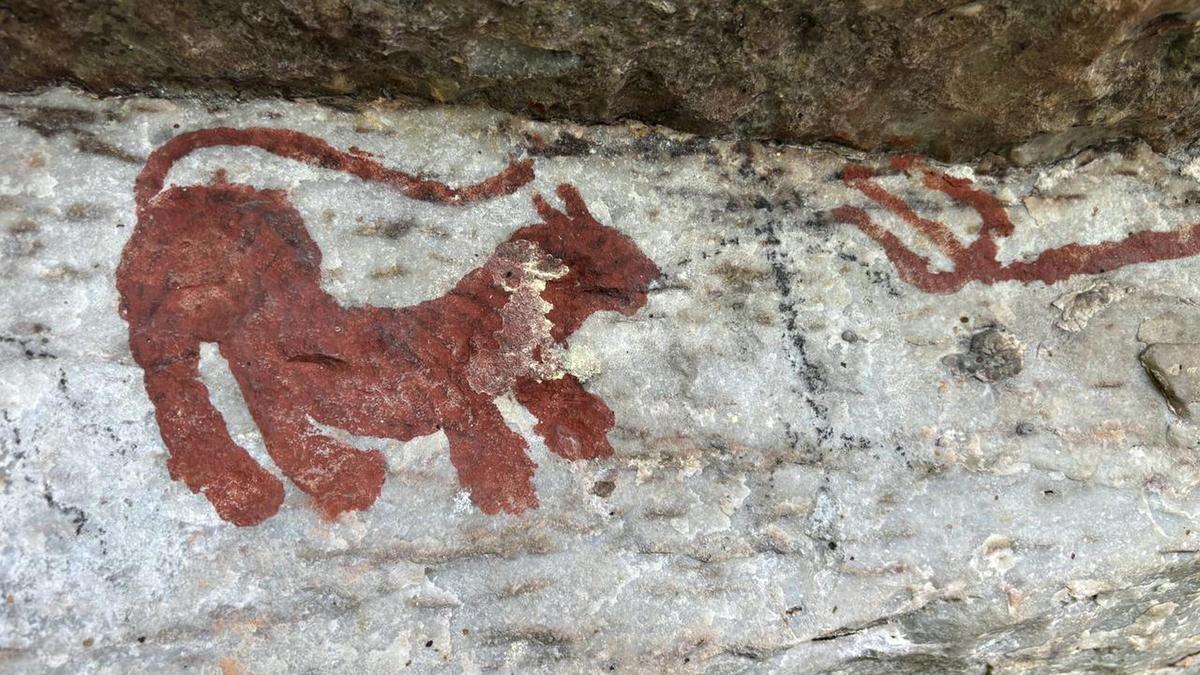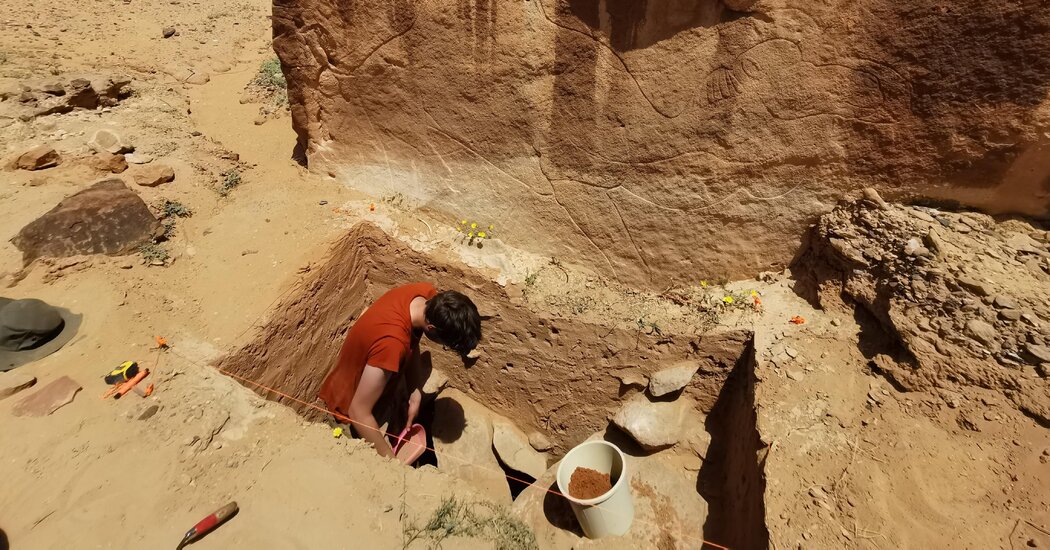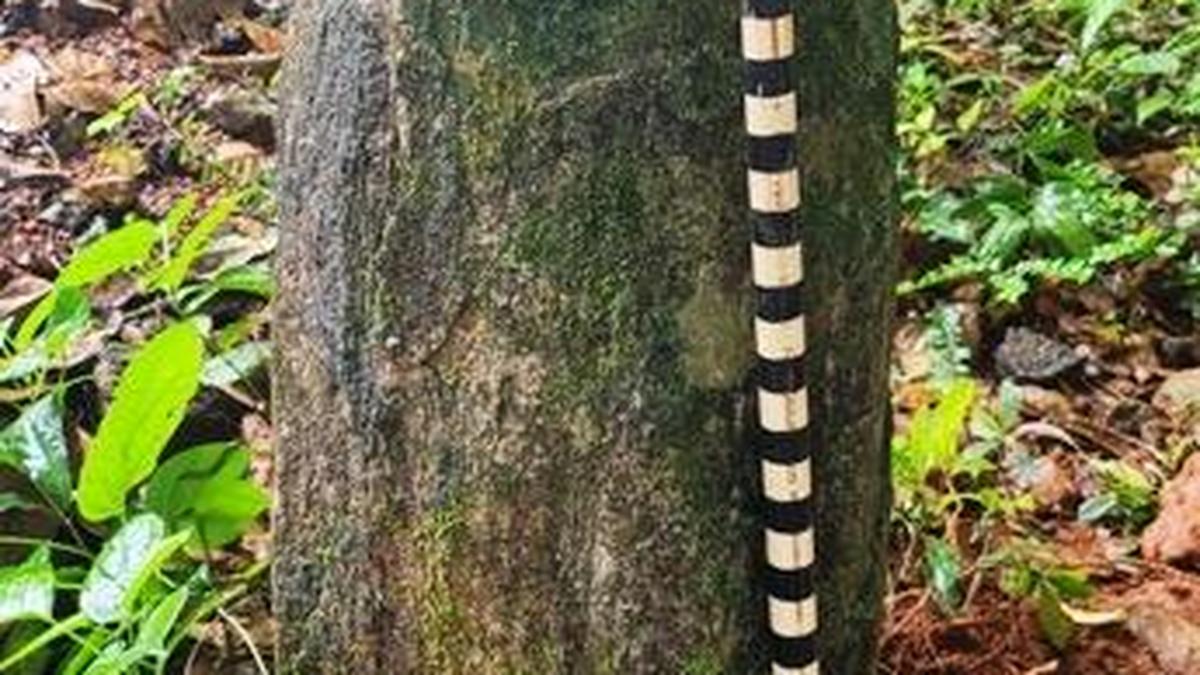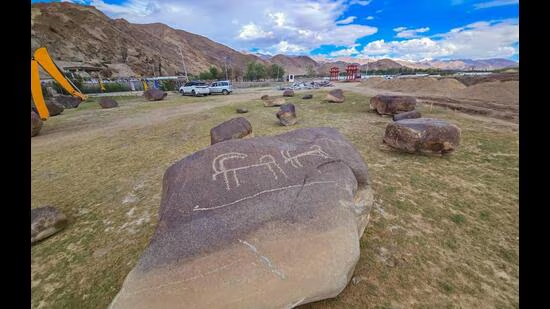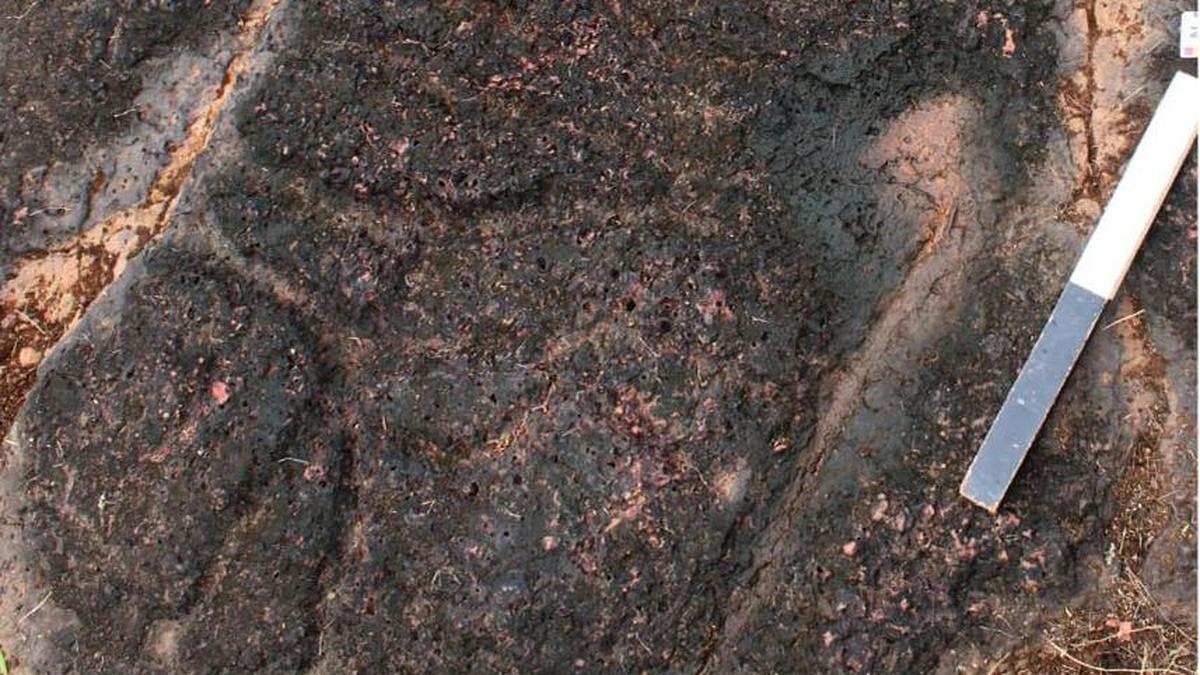
A fresh inspection by the Kerala State Archaeological department at Erikulam Valiyapara in Madikkai panchayat has confirmed that the megalithic-period rock engravings discovered here depict the figures of a cow and a deer carved on a 20-square-metre hard laterite rock. The engravings, oriented towards the South, bear close resemblance to engravings earlier recorded at Ettukudukka and Ariyittapara.
The latest finding builds on discoveries made a month ago by historical researcher Nandakumar Koroth, Satheesan Kaliyanam, and University of Baroda students Asna Jiji and Anagha Sivaramakrishnan, who had reported carvings resembling a falcon and a snake. However, officials now say that the earlier interpretations were incorrect and that the engravings are actually those of a cow and probably a deer.
The inspection was carried out by a team led by K. Krishnaraj, Officer of the Pazhassi Raja Museum, Kozhikode, along with Archaeology department Excavation Assistant V.A. Vimalkumar, museum staffer T.P. Nibin and local archaeologist Satheesan Kaliyanam.
Mr. Krishnaraj says the discoveries add weight to evidence that Valiyapara was a significant site in the centuries-old tradition of rock art carved with sharp tool across red laterite formations stretching from Ratnagiri in Maharashtra to Wayanad in Kerala. The engraving indicates a shared artistic and cultural practice that spanned the western coast and its hinterland. The team documented various sections of the site and said photographs from different portions of the rock would undergo detailed analysis.