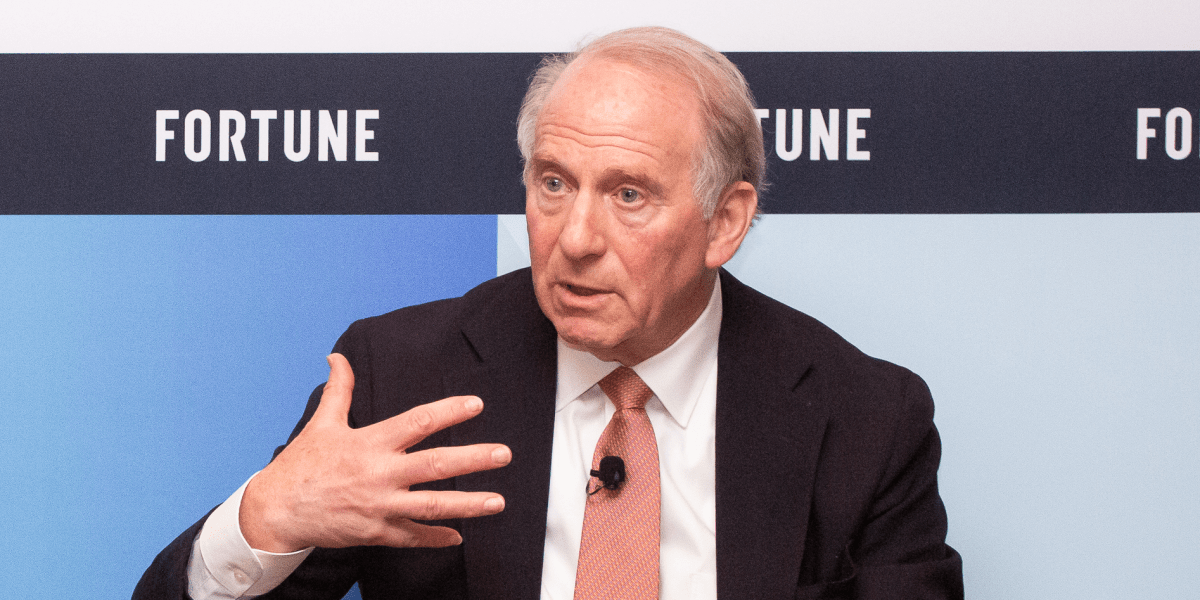
The United States national debt crossed $39 trillion for the first time this week, arriving at the grim milestone less than five months after it hit $38 trillion — a pace of accumulation that budget watchdogs are now calling, with unusual unanimity, “unsustainable.” At Fortune‘s CEO Initiative dinner in New York on Wednesday night, one of America’s most respected foreign policy voices put the moment in stark terms: the debt isn’t just a balance sheet problem. It’s a threat to American power itself.
Richard Haass, president emeritus of the Council on Foreign Relations after leading the organization for 20 years, and a senior State Department official under multiple administrations, pointed to his own thought leadership on the subject. Haass and Carolyn Kissane co-authored a paper for the Peter G. Peterson Foundation, warning about the national security implications of the ever-expanding debt. At the time, he told Fortune‘s Eva Roytburg that he felt “a little bit like Paul Revere,” but instead of the British coming, the crisis is coming. “It’s a slow-motion crisis.”
On Wednesday night, Haass told Fortune‘s Diane Brady that the angst over the national debt is massive but distant at the same time. “It’s one of those things that’s almost like the old law: It’s fine until the day it’s not. So I think we’re living on borrowed time.”