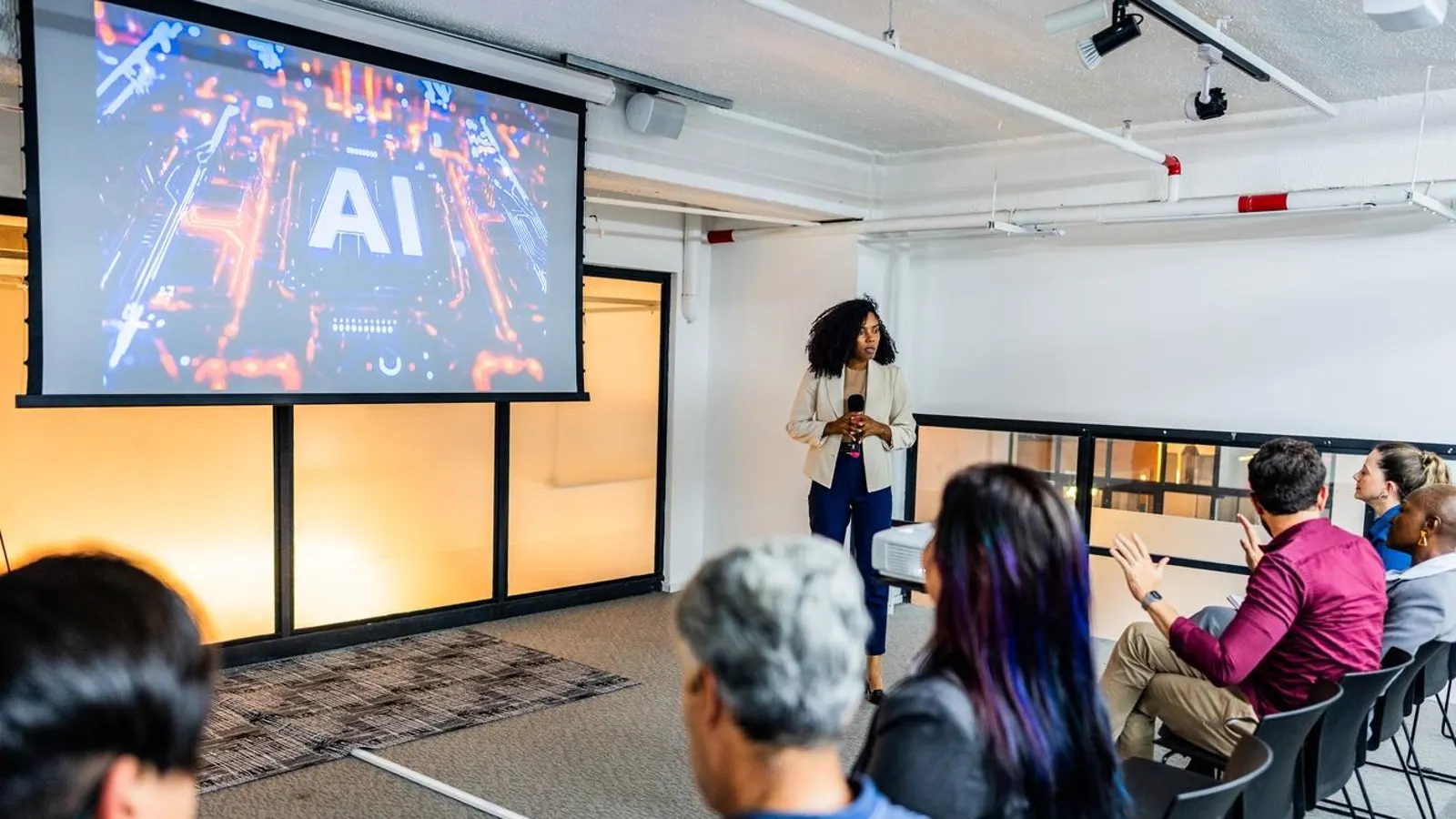
As CEO of ComPsych — the world’s largest provider of employee mental health services — I spend a lot of time thinking about what’s making workers anxious. Right now, AI is at the top of that list.
According to a 2025 Pew Research Center report, workers are more worried than hopeful about AI in the workplace. And the consequences of that anxiety go well beyond morale: research shows that when employees believe they are likely to lose their job, the risk of serious psychological distress rises considerably — along with the likelihood of mental health leave, disengagement, and burnout. Leaders are rolling out AI tools at speed. Most are treating this as a technology challenge. It isn’t. It’s a people challenge — and getting it wrong has a measurable cost.
The anxiety your employees aren’t telling you about
Job insecurity driven by AI fear manifests in two damaging patterns. The first is disengagement — distracted, uncollaborative workers doing the minimum to get by. The second is its opposite: workers who over-compensate by becoming hypersensitive and over-extended, eventually burning out. Both patterns hurt team performance. Both are symptoms of the same underlying failure: leaders who haven’t addressed what their employees are actually afraid of.