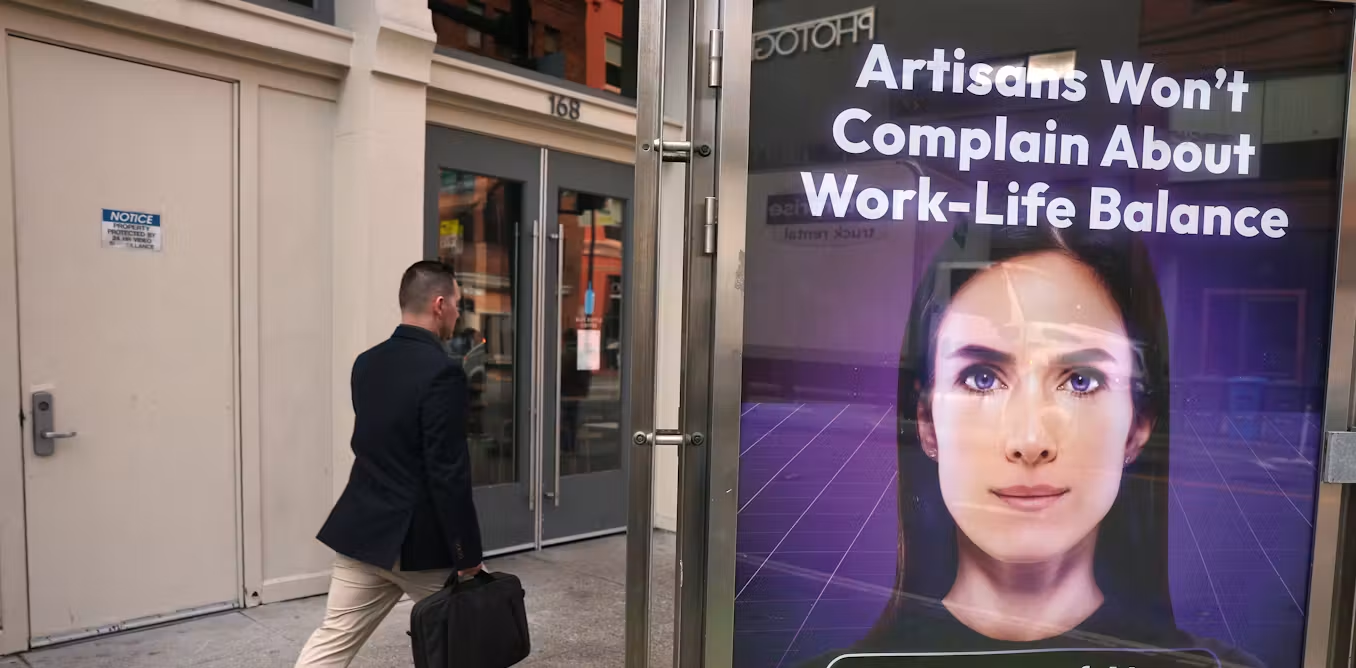
Businesses are pouring billions into AI to boost productivity and cut costs—and to fund it, they’re slashing hiring, training, and employee support. Headcount isn’t safe either: as Jack Dorsey’s Block recently demonstrated, a growing number of executives are citing AI as justification for substantial layoffs.
That approach may lift short-term margins. But it is a dangerous long-term strategy—and the data makes clear why.
As president of SHRM Foundation—the philanthropic arm of the largest HR association in the world— I’ve seen firsthand how organizations thrive when they invest in human potential alongside AI. Technology can accelerate work. Competitive advantage comes from the judgment, adaptability, and trust that only people provide.
The gap is glaring. Nearly three-quarters of knowledge workers globally now use AI at work, yet 60% say they have not received formal training to use it effectively. AI spending is projected to rise 44% in 2026—while training budgets are expected to grow just 5%, and average learning time is actually falling—from 47 to 40 hours per employee. Companies are deploying powerful tools while quietly disinvesting in the humans required to use them.
At the same time, employees are navigating rising pressures inside and outside the workplace. Burnout and stress remain widespread, the specter of AI-driven layoffs is increasing workers’ sense of precariousness, and millions of Americans balance their jobs with responsibilities like caregiving outside of the workplace. Without support, these pressures carry real costs: Gallup estimates disengaged and stressed workers cost the global economy nearly $9 trillion annually. Unaddressed stress drives absenteeism, presenteeism, and turnover — hidden costs that can exceed an employee’s annual salary. Against this backdrop, it’s no surprise that ADP’s employee motivation index just reported its sixth straight month of decline.