https://arab.news/mzxq4
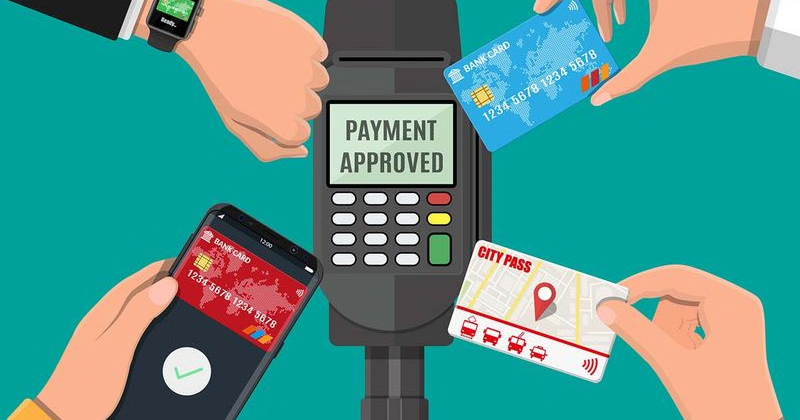
The Gulf region is undergoing a quiet but significant transformation in the way money changes hands. Across the Gulf Cooperation Council, governments are steadily pushing their economies toward a cashless future in which most transactions are digital, instant and transparent. This shift is turning out to be a strategic economic decision that could strengthen the region’s long-term competitiveness.
In common with many other countries, Saudi Arabia, the UAE and other Gulf states are embracing new payment technologies for convenience. In the process, they are building a digital financial infrastructure that could drive the next phase of economic growth. For countries seeking to diversify beyond hydrocarbons, the cashless transition is proving to be a smart bet.
Saudi Arabia offers the clearest example of how quickly this transformation is taking place. Under Vision 2030, the Kingdom set a target of increasing noncash retail transactions to 70 percent. This was achieved in 2023, with digital or cashless transactions in retail rising to 79 percent in 2024.
As recently as 2014, most transactions in the Kingdom were still conducted in cash. Today, contactless cards, digital wallets and mobile payment platforms dominate everyday purchases, from groceries and taxi fares to electricity and telephone bills.