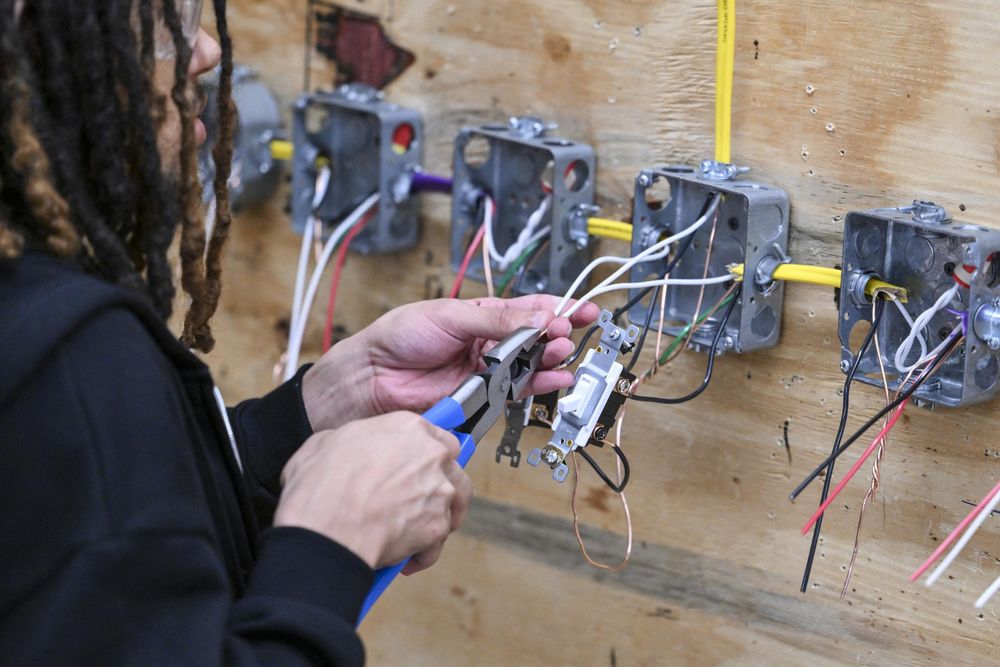
Mounting evidence points to opportunities in the skilled trades. And yet, these jobs remain largely a man’s world.
Despite higher salaries and increasingly valuable long-term employment prospects in the face of an artificial intelligence-driven white-collar jobs revolution, women remain significantly underrepresented in the skilled trades, research shows.
They make up just a fraction of the workforce in industries such as automotive technology, diesel mechanics, plumbing and carpentry. For example, women represented 3.1% each of carpenters and plumbers and 3.5% of electricians employed in the U.S. in 2025, according to the most recent occupational data from the U.S. Bureau of Labor Statistics.
“We are not where we want to be with a diversified workforce, but we are seeing that number grow,” said Ian Andrews, vice president of labor relations at the National Electrical Contractors Association, a trade group representing the electrical contracting industry. Two decades ago, only 1.9% of electricians in the U.S were women, government data shows.
Overall, younger workers are increasingly pursuing careers in the skilled trades — with good reason. A shortage of skilled tradespeople has led to more job openings and higher pay among these career-driven pathways.