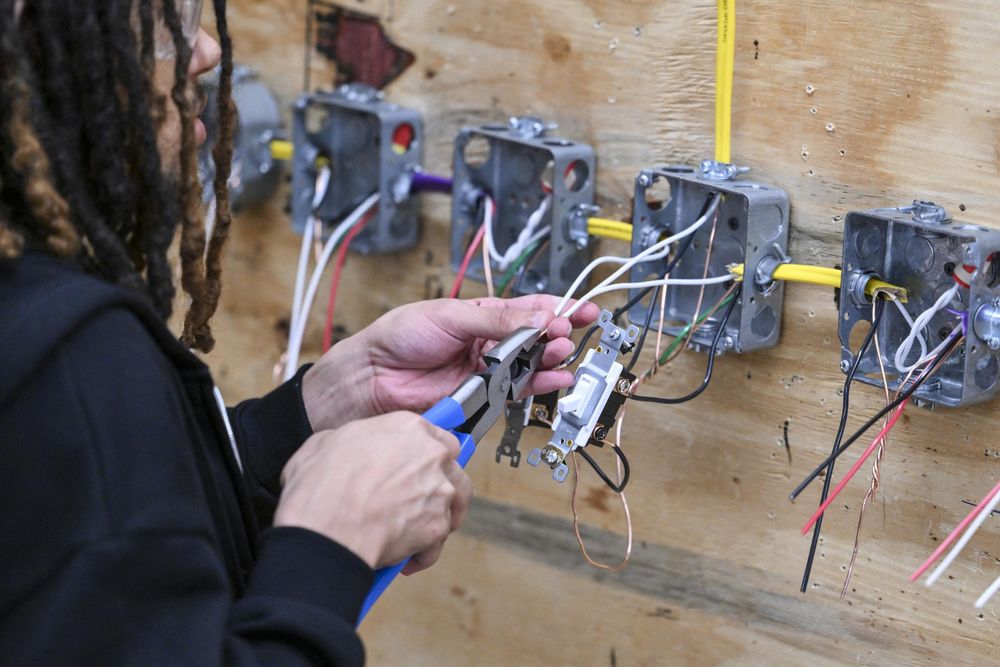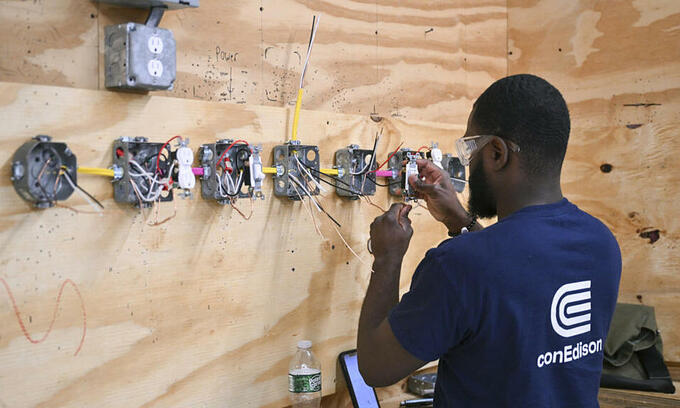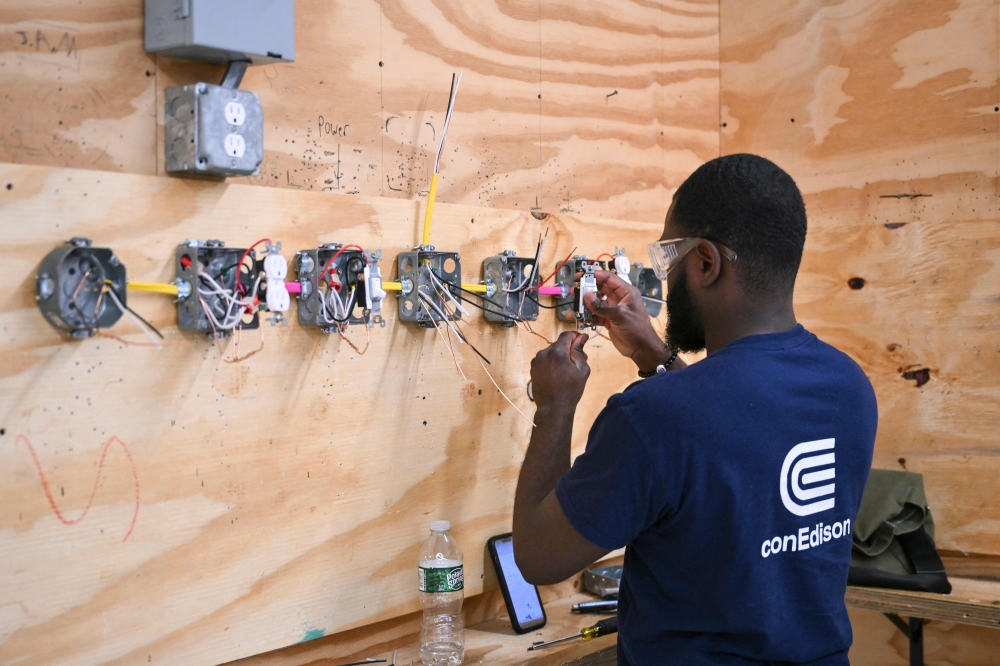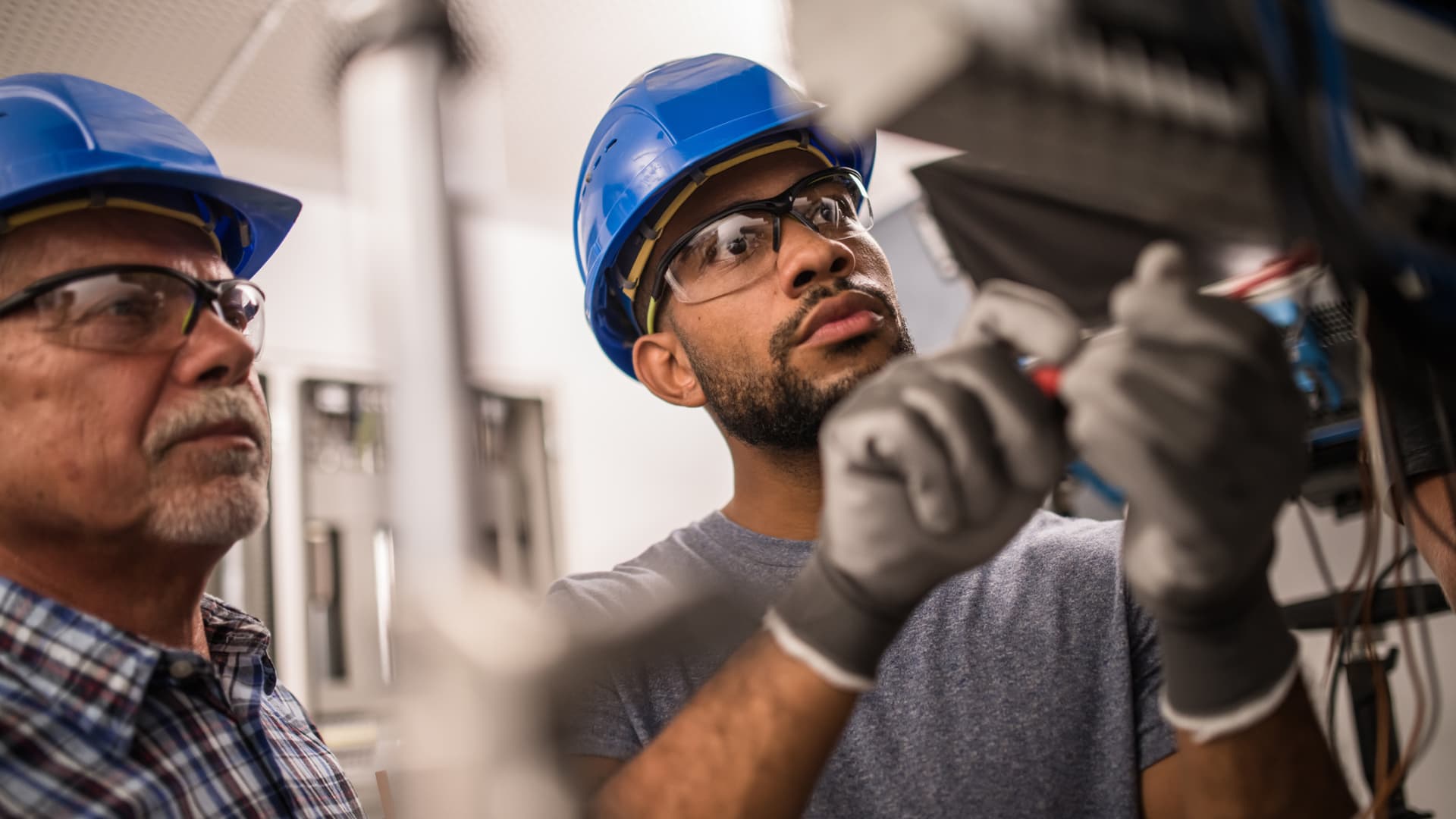
James Vandall, 25, said his interest in becoming an electrician first sparked, so to say, when workers were recently redoing the wiring on the third floor of his home. “I asked them how I could go about getting into that trade,” he said.
Part of the appeal, he said, was working with his hands. “Initially, I really didn’t know what I wanted to do. I went to college and then left,” he said. “I sort of bounced around from job to job throughout the years until I eventually landed on trades.”
Vandall is now enrolled in Rosedale Technical College in Pittsburgh. After the 16-month program, the school’s job placement program typically puts students directly into a position in the field — an increasingly rare feat in today’s job market.
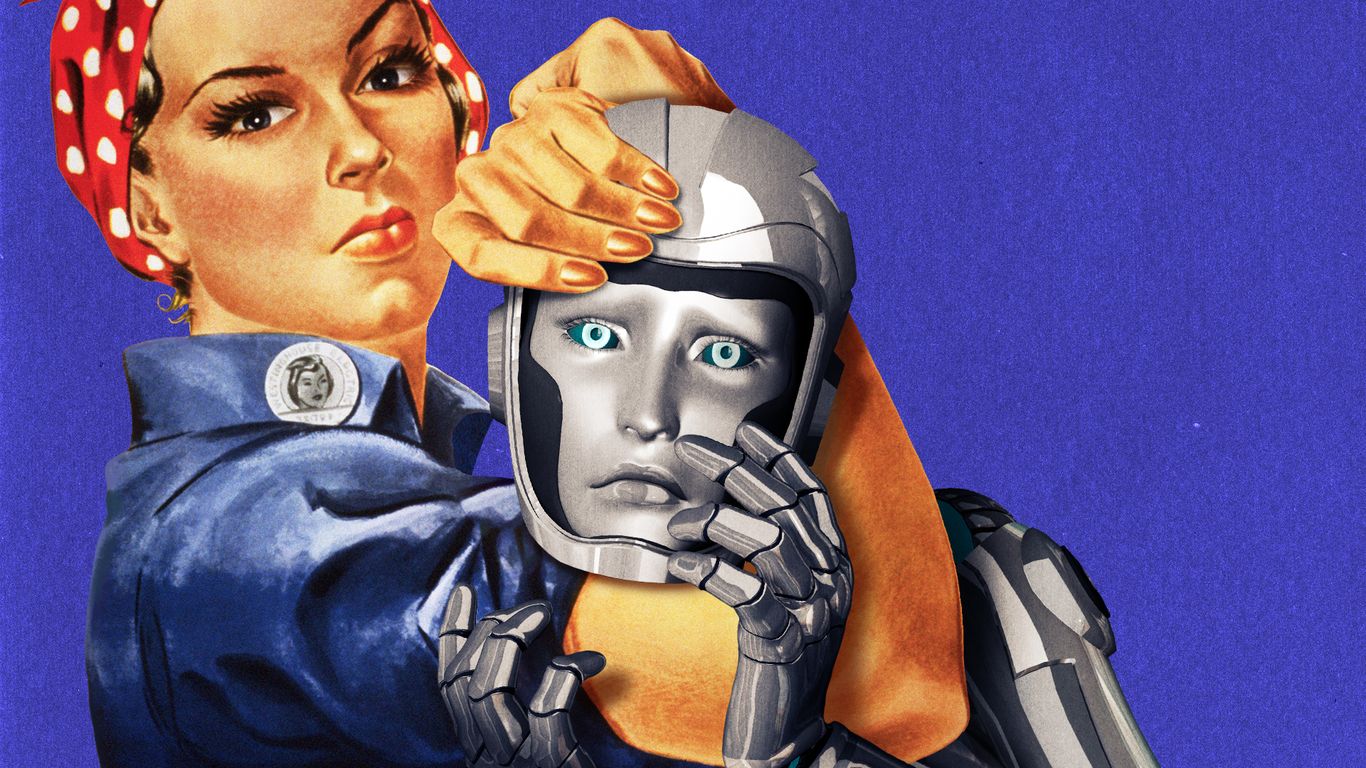
As advances in artificial intelligence reshape the workforce, fewer entry-level positions are available for college graduates. More large employers have announced massive job cuts, and some experts say this is the start of an AI-driven, white-collar recession or even a jobs apocalypse.
The fear is that as AI capabilities improve, companies will need fewer workers and white-collar layoffs will increase, creating a “negative feedback loop with no natural brake,” according to Citrini Research’s recent report.