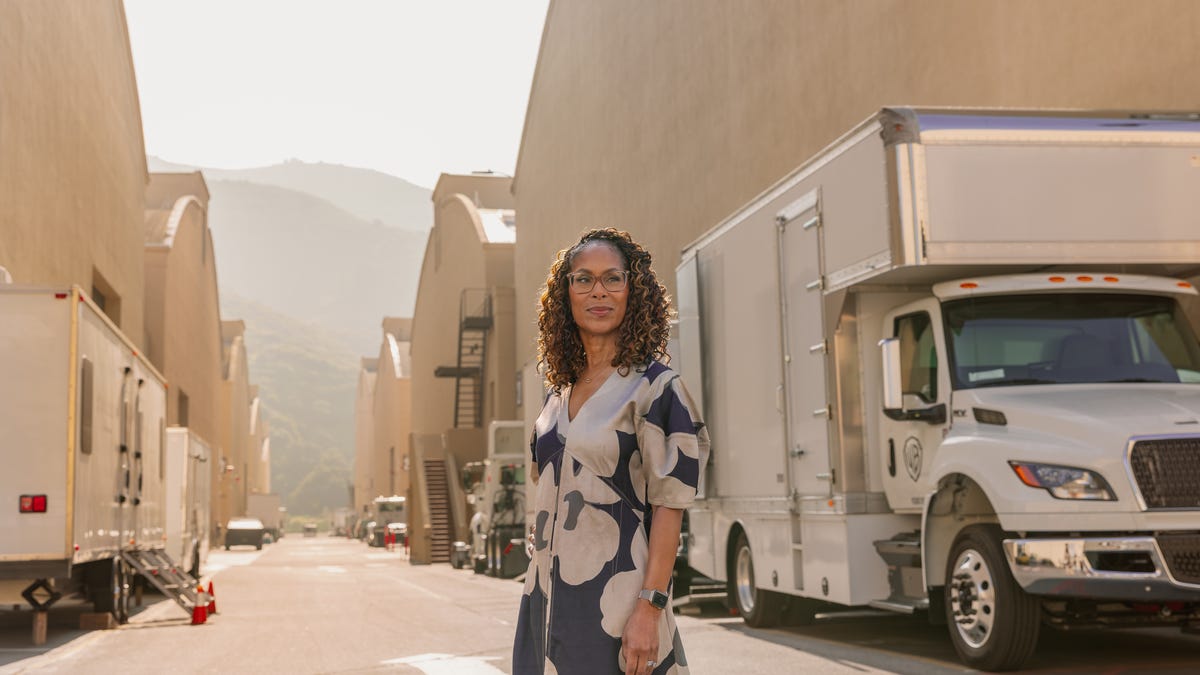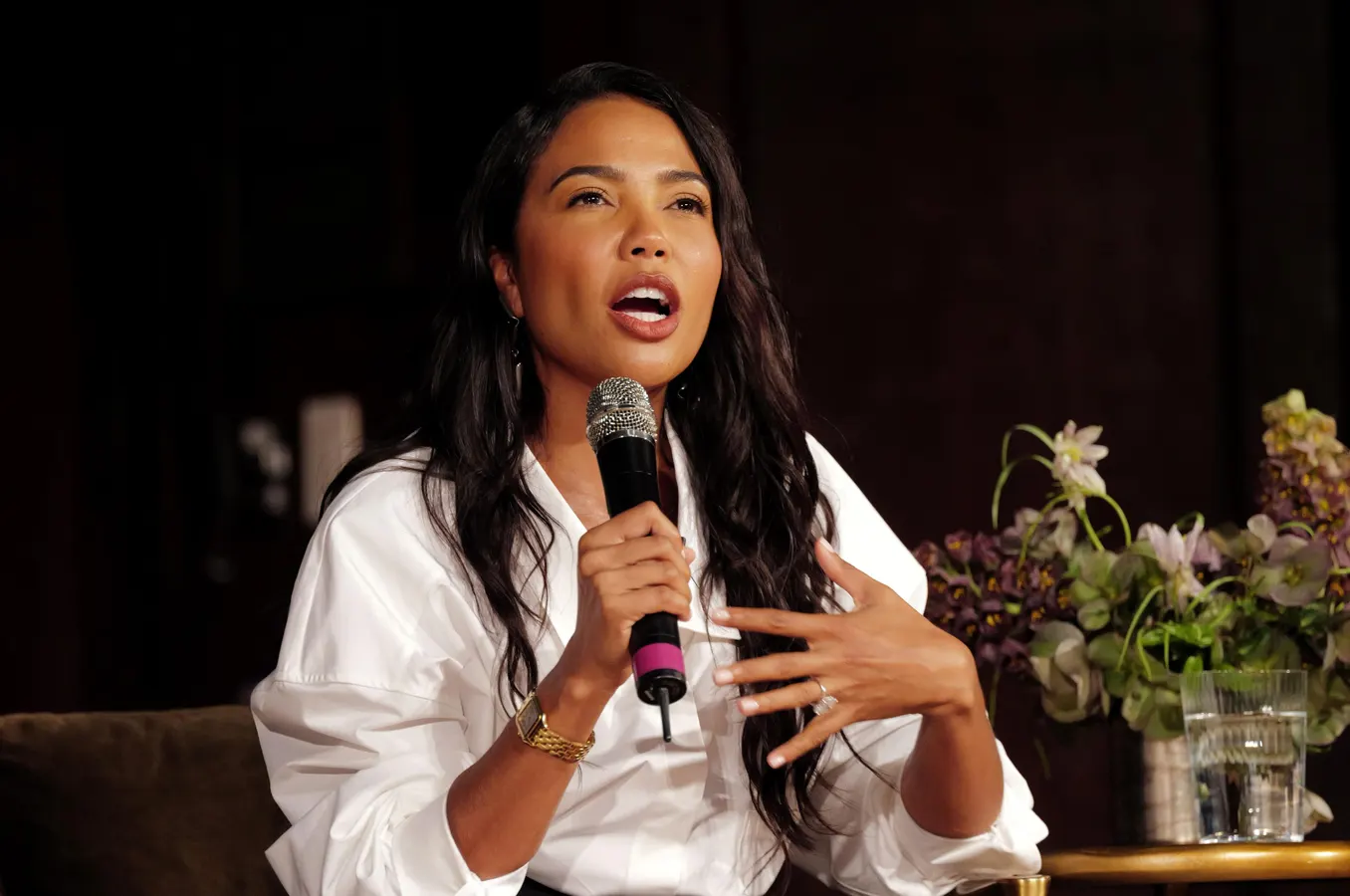
The founder and CEO believes the secret to changing democracy is starting small and having the right tools. Show Caption
Emma Bloomberg is one of USA TODAY’s 2026 Women of the Year, a recognition of women who have made a significant impact in their communities and beyond. Meet this year's honorees here. Every Fourth of July, Emma Bloomberg had a tradition when she was growing up. She and her little sister, Georgina, would stand before their father and recite the Declaration of Independence. The document's ornate, English Roundhand script wasn’t easy for a young reader. “I remember it really being a slog,” she says. It got more manageable with time; as she got older she’d roll her eyes at the exercise like any teenager would. Now she realizes how much it shaped her worldview. Her parents divorced in 1993. Her mother, Susan Bloomberg, is British. Her father is American businessman and former New York City Mayor Michael R. Bloomberg. The couple remains close, but Emma’s civic allegiance is clear, sometimes to the chagrin of her mother. “I’m a patriot,” says Bloomberg, 46. “When I look back fondly on my childhood, when I think about every opportunity I've ever had, there is this line: ‘Only in America.’ I believe ‘Only in America.’ And I want that to be possible for so many people.” That same ideal fuels her work as CEO of Murmuration, a nonprofit she founded to make sure small, local organizations have the same data, technology, tools and insights as major companies or lobbying firms. If that mission sounds a bit like that of a tech company − exciting and powerful but a bit amorphous − here’s an example of how it works in the real world. LEE, a nonpartisan leadership development organization, is a longtime partner of Murmuration's that, among many things, trains people to run for local office. For any effective campaign, candidates need access to voter information − data that can help them knock on doors of registered voters, find people who are interested in particular issues, and solicit those inclined to make campaign donations. “Typically, political bosses control that info. New candidates aren’t in those power circles – they may be young people who have an idea and just want to make a difference on the school board,” says Michael Buman, LEE’s executive director. “The political establishment often isn’t very welcoming to them and will say, ‘No, you can’t have this information,’ or they’ll charge exorbitant fees.” Murmuration makes it possible for anyone to access that information and have the same shot, regardless of political party or connections. If it's David versus Goliath, Buman says, “this is the biggest slingshot you can get.” The reluctant CEOBloomberg's idea for Murmuration didn’t come in an “aha” moment. At Princeton she majored in medieval literature, which led her parents to question her employment opportunities “a number of times,” she says with a laugh. Then came master’s degrees in public administration and business from Harvard, and a stint for the city of New York as a junior planning officer during her father’s administration. She relished the work: “I love a civil engineering problem. I like thinking about, for example, how trash moves from your kitchen to where it ultimately ends up and all of the steps in between. Fun, thorny problems like that.” Next she spent six years at the Robin Hood Foundation, a charity that fights poverty in New York City, often through education. The mission pulled at her head and her heart. “If you think about how to break the generational cycle of poverty, making sure kids have a high-quality public K through 12 education is certainly one of the greatest levers for that kind of change.” It has shaped her family’s trajectory. “For me growing up, my father talked a lot about the American dream and how a poor kid from Medford, Massachusetts, could go to a public school, get an incredible education and be able to launch a career such as his.” In each role, she kept seeing a recurring problem: Community groups were consistently outgunned. These were parents organizing out of survival for their kids and families. They’d knock on doors, taking notes on legal pads and mapping networks by memory. They were scrappy and committed but going up against entrenched, well-resourced systems. “I was just blown away,” Bloomberg says. “They didn’t have access to technology and data … and they were competing against a status quo that did.” Still, she hesitated. She didn’t want to rock the boat of her happy life with her two kids, Zelda and Tobias. “And I had a little bit of imposter syndrome: Who am I to go and start something? It took me a couple of years to feel comfortable taking that plunge.” In 2014 she launched Murmuration, the name inspired by starlings in flight. “Each bird influences the seven around it,” she explains. She wanted a similar network for community organizations − each could maintain its own identity and values, and all would be able move forward and learn together. Murmuration now works with 269 groups in 26 states, as varied as Rank the Vote, which aims to increase support for ranked-choice voting across the country, to Memphis Lift, which works to improve failing schools in its city. When Murmuration first began working with Memphis Lift, for example, its volunteers could fit in a small conference room. Everything was done on paper. Now, supported by Murmuration’s tools and training, more than 14,000 parents have gotten involved.“They are moving the needle on outcomes for kids when it comes to education,” Bloomberg says. “But I think what I love most is that every person who is touched by Memphis Lift knows that there is someone there who has their back.” This is the kind of transformation Bloomberg finds most meaningful − not high‑profile, but deeply embedded in community belonging. The solution to politics? Act localWork at the local level is also where she sees heated politics dissipate and real progress being made. National politics let people hide behind a screen and shout, but at the community level things have to be more civil, she says. “Our kids go to the same school or walk down the same street. I’m going to see you at pickup,” she says. “We’re not going to agree on everything, but it allows for more bridge-building.” She is acutely aware that many people have lost faith in the American dream she was raised on. She has seen the data indicating that only 39% of Gen Zers believe hard work leads to advancement − Murmuration did the research. And yet she’s optimistic.“They seem not to lose hope that they can make a difference in their own communities,” she says. “You see them showing up, you see them volunteering, you see them participating civically.” At the local level, democracy feels real and personal − and possible − when you can lower the barrier for entry. Bloomberg’s bright outlook and calm demeanor belie her intensity. She’s focused and determined, something reflected not only in her work but in her golf handicap of 11.6. She wants more women to play, not just to see them on the links but because the sport has taught her so much. Humility. Business acumen. Life skills. “You can get super-technical about your swing or you can just walk up and rip it,” she says. “In life in general, whenever you're faced with any kind of a problem, you can go one of those two paths. It’s important to be able to flex both muscles.” Asked for advice she hopes to pass on to her kids, she doesn’t hesitate: You don’t need a life plan. You don’t need to know the destination.“Life is not linear,” she says. “When you are presented with opportunities, take them. And when you aren’t, go find them.” It's a very modern way of talking about life, liberty and the pursuit of happiness.