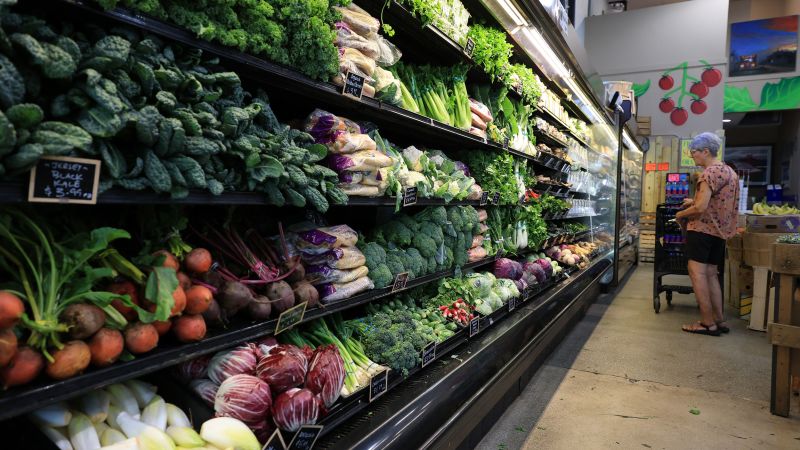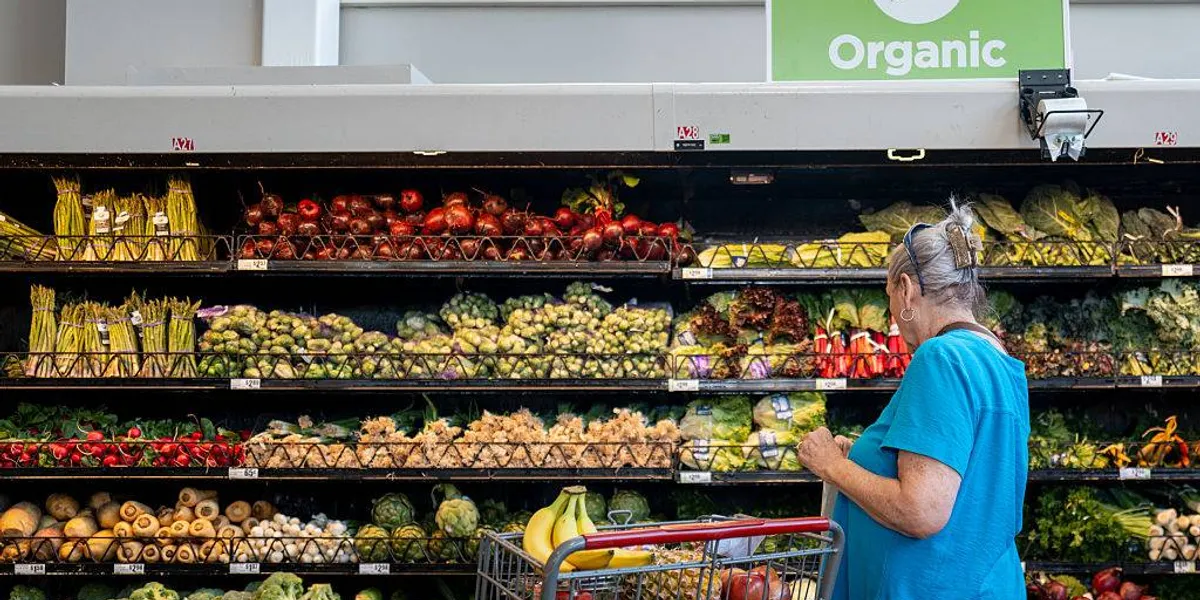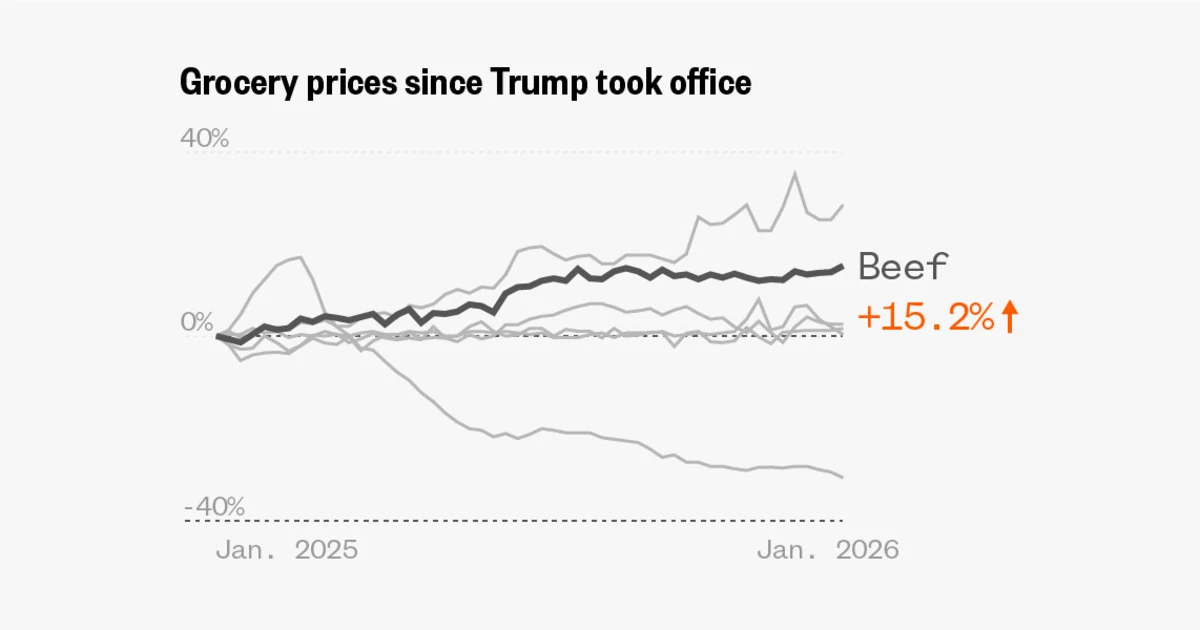
Between tariffs, a fresh war with Iran, immigration and the weather, consumers have been experiencing a fluctuation in grocery prices over the past few years.For example: In January 2026, inflation decreased to 2.4% from the previous year’s high of 2.7%. But food prices in December 2025 were 3.1% higher than in December 2024.First, the good news. Because the avian flu has subsided, the price for a dozen eggs has decreased 59% since a year ago. Katina Holliday is a family nurse practitioner, founder of Holliday’s Helping Hands and owner of the grocery store Freshly’s Market in Aberdeen, Mississippi, which is located in a food desert. She told HuffPost the average price for a dozen eggs at her store is less than $2. “The profit margins in the grocery store before were 3 to 5%. Now, the profit margins are 1 to 3% for us.”- Katina Holliday, grocery store owner in MississippiBut now, the bad news. “On the other hand, one of the things I’ve noticed is our cereal is more expensive than it used to be,” she said. “Remember, we could buy off-brand cereal for a dollar. Our off-brand is still affordable, but regular Kellogg’s cereal is $5 for a small box.” Last summer, she said, customers paid an extreme $15-$20 per watermelon. “I’m an independent grocer,” she said. “For me, the cost is higher because I purchase it. The profit margins in the grocery store before were 3 to 5%. Now, the profit margins are 1 to 3% for us.”For a family to make a spaghetti dinner, she said her customers are paying a whopping $35 to $40. “It’s a tug-of-war because people can’t afford it,” she said. “Minimum wage in Mississippi is $7.25 an hour, and you sell meat for $7.99 a pound. Does that make sense? You have to make it make sense. Those prices have to fall on somebody, and it’s fallen on all of us. It’s not just one of us being affected. It’s everybody.” GettyHow responsible is Donald Trump for the rising cost of beef?Who (and what) is to blame?Many factors can be blamed for the high food prices. COVID strangled supply chains. The 2022 start of the Russia-Ukraine war raised energy prices, and weather-related incidents ruined crops. “Food prices are driven more by biology and weather than by politics,” Stephen Henn, adjunct professor of economics at Sacred Heart University, told HuffPost. For instance, greening disease and cold weather affect a commodity like oranges; in the past year, the price of orange juice has increased 28%.“Price inflation, outside of supply and demand factors, is the result of increases in the money supply,” he said. “Changes in the money supply cause structural increase in prices. Starting in July 2021, the U.S experienced the largest bout of inflation in over 40 years. The rate of inflation started coming down in 2024, but those increases are now baked into today’s prices. That is, prices have not come down. Only the rate of price increase has come down.” “Presidents alone do not set grocery prices, but their policies can impact what consumers pay at the store and what farmers have to charge to keep their operations afloat.- Jessica RiceDuring Trump’s State of the Union address, he made false claims that the cost of chicken is lower “by a lot” since he took office. “And even beef, which was very high, is starting to come down significantly,” he lied. In fact, average prices for chicken are up about 1% over the past year. In January 2026, ground beef cost $6.75 per pound, which, according to the U.S. Bureau of Labor Statistics, is the highest on record.Despite Trump’s tariffs — which have helped drive up the cost of coffee 20% — Americans can’t totally blame him for the increases. “In the short term, tariffs are unlikely to be the primary driver of overall food inflation, though they can raise prices in specific categories that rely heavily on imports,” Henn said. How much of this is actually Trump’s fault?All of this may seem like it’s mostly Trump’s fault, but prices started going up during his first presidency and into Joe Biden’s presidency. According to the Federal Reserve of St. Louis Consumer Price Index for All Urban Consumers, during Trump’s first presidency (January 2017 to January 2020), “food price increases averaged about 1.8% per year,” Henn said. “From January 2025 to January 2026 (Trump’s current term), food price increases averaged about 2.9% per year for an average of 2.1% over the five years of Trump 1 and 2.”ANDREW CABALLERO-REYNOLDS via Getty ImagesChris Stem, 40, a cattle farmer, looks at beef for sale last month in a general store he owns in Ashland, Virginia.If you want to look at the Biden years, Henn said, “From January 2021 to January 2025 (Biden’s presidency), food price increases averaged 5.9% per year, with the largest jump occurring in the high inflation period from July 2021 through December 2022. I would note for information purposes that the peak COVID year 2020 saw a 3.8% rise in food prices.”“Presidents alone do not set grocery prices, but their policies can impact what consumers pay at the store and what farmers have to charge to keep their operations afloat,” Jessica Rice, recipe development manager for Budget Bytes, told HuffPost. The war with Iran is already increasing oil prices, which in turn will place the burden on the consumer, who is already struggling to make ends meet. “Food production requires a lot of energy from oil and natural gas,” Rice said. “Fertilizer, running equipment, processing procedures, refrigeration, transportation, and exporting are all affected by natural gas and oil prices.” Another issue Americans must contend with is that grocery stores aren’t necessarily returning prices to standard levels. “Retailers may be reluctant to lower the cost of items in certain categories in the grocery store because the market is unstable and prices could shoot back up, or because they see the market can handle the price hike and there’s an opportunity to profit more,” Rice said. “Either way you slice it, the customer seems to lose. In my experience as a chef, grocery stores seem more likely to lower prices of staples like eggs, meat and milk when the market allows it.”In both the short term and long term, what can people do to afford groceries? “The way to reduce food spending is to order out less and prepare more meals at home,” Henn said. “Use more staples such as rice, dry pasta, potatoes, and beans, and buy nonperishable food in bulk, especially for larger families.” Holliday has noticed her customers are buying less food but tend to purchase unhealthy foods because it’s cheaper. She’s also noticed a trend of people substituting beans for meat. “Families don’t experience inflation as statistics,” she said. “They’re experiencing it with fewer groceries in their cart. It’s important to make sure that we talk about how people are just going without because they can’t afford it. And in America, I don’t think any citizen should be without food because of prices. As a community-oriented person, she wants everyone to have equal access to food. “When we come together, we can make things happen,” Holliday said. “We go to D.C. and talk about the different laws and things that change among the grocery store industry to try to keep the cost down. It’s important that we as a whole fight for that because we all eat. There’s not one person in the United States who does not need to eat, including our president.”
Trump Says He's Not Responsible For Grocery Prices (Unless They Drop) — Experts Have Thoughts
There's good news and there's bad news. This will help you make some sense of it.
1,255 words~6 min read