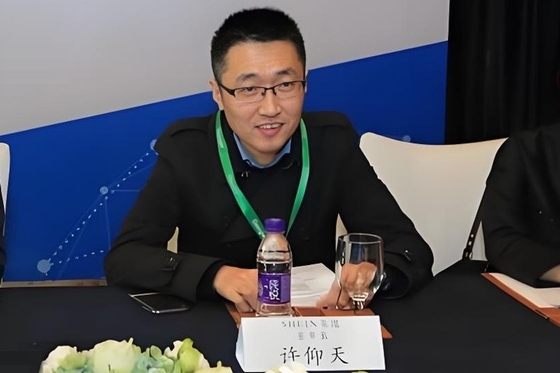
Fast-fashion giant Shein recently made headlines after its elusive founder made a rare public appearance in a live-streamed speech which reaffirmed the company’s Chinese roots.
“Guangdong’s complete industrial ecosystem and first-class business environment have made Shein’s fast growth possible,” founder Chris Xu told the crowd on Feb. 24, at a forum hosted by the Guangdong provincial government. He boasted that Shein currently supports over 600,000 jobs in the Chinese province, and pledged to invest over 10 billion yuan ($1.5 billion) to fortify its local supply chain.
For years, Shein tried to present itself as a Singapore-based multinational to reassure regulators and investors worried about its ties to China. Experts think Xu’s move shows that Shein is trying to reconcile with Beijing, as the Nanjing-founded firm eyes a Hong Kong IPO following failed attempts to list in New York and London.
“Given Shein’s setbacks in the U.S. and Europe in recent years, it appears to be strengthening its ties to China and repositioning itself in the global market,” says Qu Feng, an associate professor of economics at Singapore’s Nanyang Technological University.
Yet Shein was just one Chinese firm that moved parts of the company, if not the whole business outright, to Singapore over the past decade. The group includes ByteDance-owned TikTok and AI startup Manus, as companies sought to distance themselves from China and get greater access to global capital.