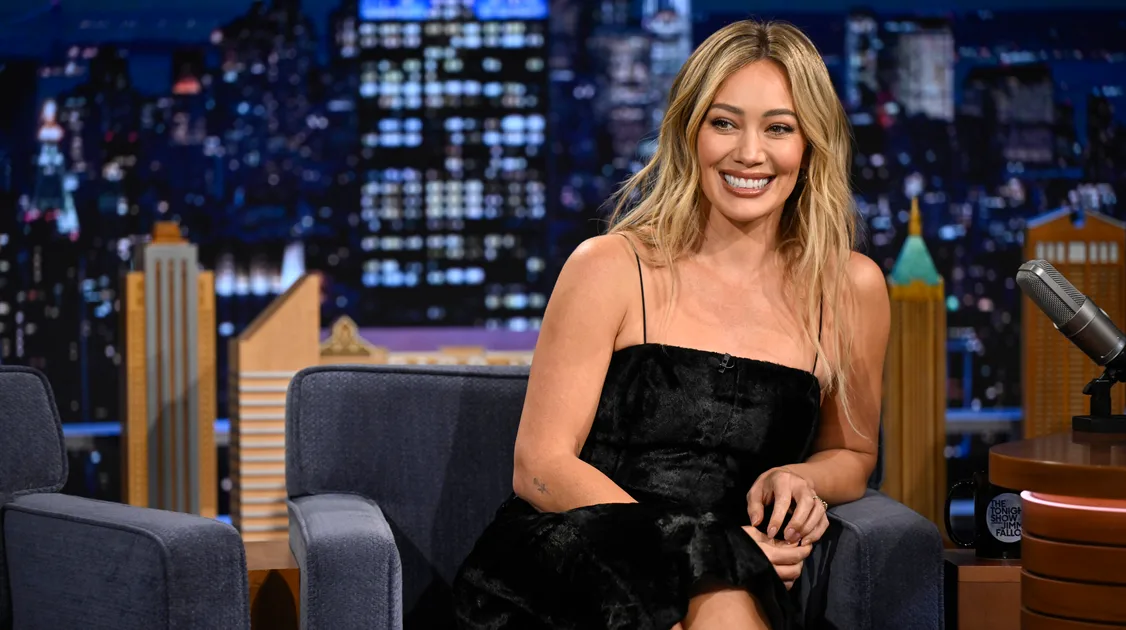
In case you missed it, Hilary Duff’s first album in more than a decade, ” Luck… or Something,” dropped last month. If it’s been in full rotation for you during the last few weeks, I’m going to go out on a limb and say there’s a good chance you’re a gay man.If you’re confused about why Duff, a straight white Disney alum who hadn’t dropped music in a decade, became such a huge queer icon, I must alert you to a legendary 2008 public service announcement from the Gay, Lesbian and Straight Education Network (GLSEN). In it, Duff is at a store when she comes across two women shopping, and one of them says that a top the other girl is trying on is “so gay” (meant to convey, “ugly,” I suppose?). A righteous Duff then chimes in and says, “You shouldn’t say that something’s gay when you mean it’s bad. It’s insulting.” The PSA ends with a sassy Duff asserting, “When you say ‘that’s so gay,’ do you realize what you say? Knock it off.” Right then and there, Duff created gay history without even realizing.Last year, the clip resurfaced on TikTok, and Gen-Zers recreated and remixed the iconic PSA ad nauseum. In a recent interview with the Gay Times, Duff reminisces on the ad and says that homophobia still makes her “really angry.” “[The PSA] still means so much to so many people,” said Duff in a clip of the interview. “It’s 2026, who cares how anybody wants to be?”Part of why that PSA made a comeback in pop culture is, of course, a product of how earnest it seems in retrospect. At a time when queerness has become so ingrained in Gen-Z and Gen Alpha culture, they love to unearth and analyze these archeological gems of cringe.But for queer people, the appreciation for Duff and that particular PSA is totally unironic: Duff was speaking out about casual homophobia at a time when homophobic language was simply a part of how young people spoke. For 2008, we have to give her her flowers for being way ahead of her time.The support that gay people gave to her album is an example of how loyal gay fanbases truly can be. If you stood up for us when no one else did — and when it wasn’t yet cool — then we’re going to have your back, whether we actually enjoy your art or not. There’s a deep, built-in loyalty when someone’s allyship is genuine, especially at a time when we’ve endured so performative allyships crumbling. Last year, we saw this in the inglorious action when corporations like Target capitulated to the Trump administration and completely defunded their support for Pride. But what’s even more interesting to me is how having a loyal gay fanbase actually impacts the music artists make. Duff’s new album, at least to me, is very queer-coded. One particular song, “We Don’t Talk,” Duff confirmed is about her estranged sister. But to a queer ear, it sounds like a frustrated individual yearning for the person who no longer feels a sexual attraction toward them. And what’s more queer than yearning for someone you can’t have?Duff likely had no idea that a cheesy PSA from nearly 20 years ago would buy her this much goodwill nearly two decades later. Online, fans joke that pop stars stuck in a “flop era” are trapped in the “Khia asylum,” only to be rescued when the internet, often led by gay fans, decides it’s time for a comeback. Singers like Charli XCX and Zara Larsson have recently benefited from that kind of revival, both having built genuine relationships with queer audiences long before it was a marketing strategy. The thing about queer fandom is that we pay attention and keep receipts. If you stand up for us when it actually matters, we’ll return the favor years later, streaming the comeback album, decoding the lyrics, and doing our best to make sure you never flop again.
How One Cheesy PSA Gave This Pop Singer Queer Longevity
We had to give her her flowers for being way ahead of her time.
664 words~3 min read