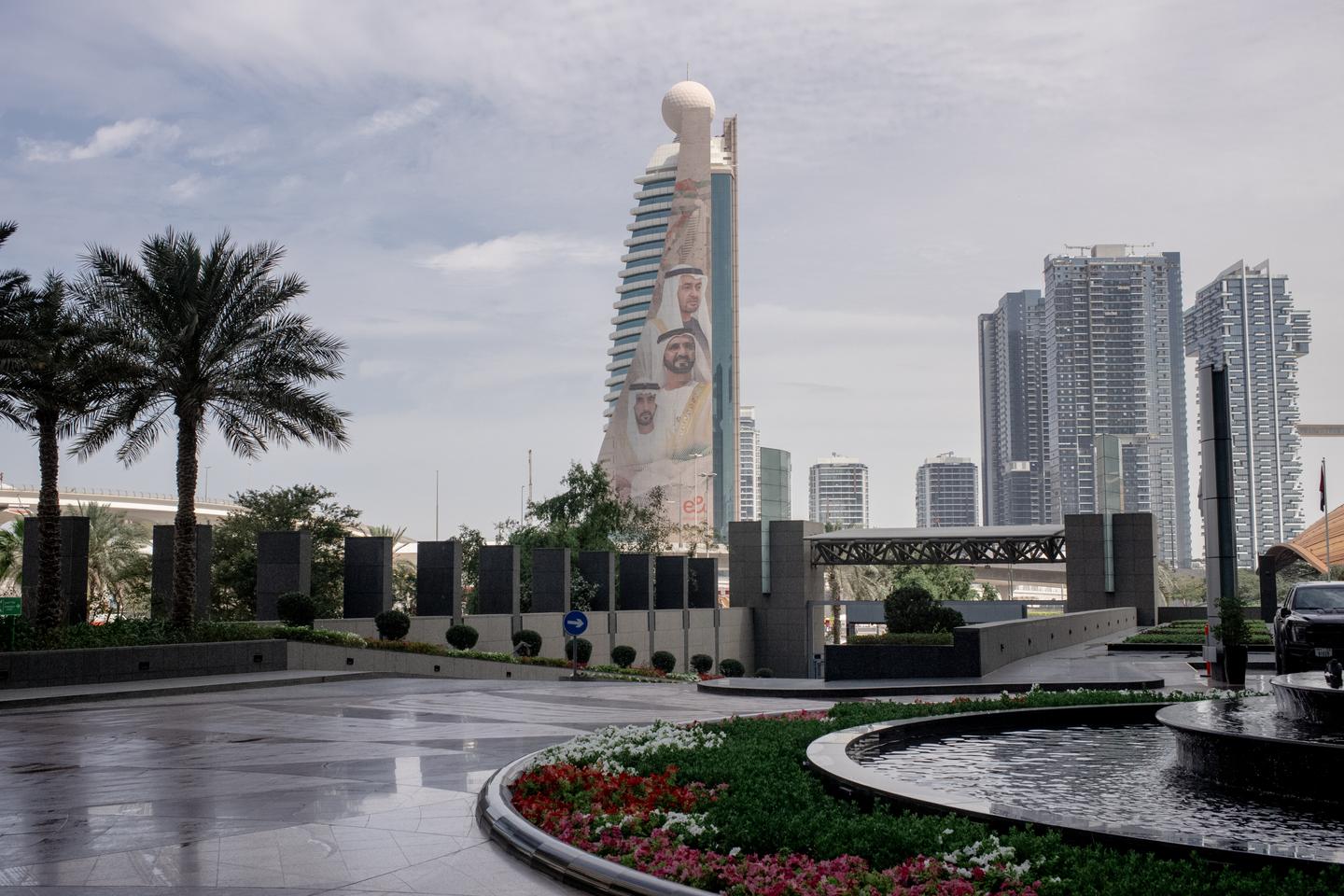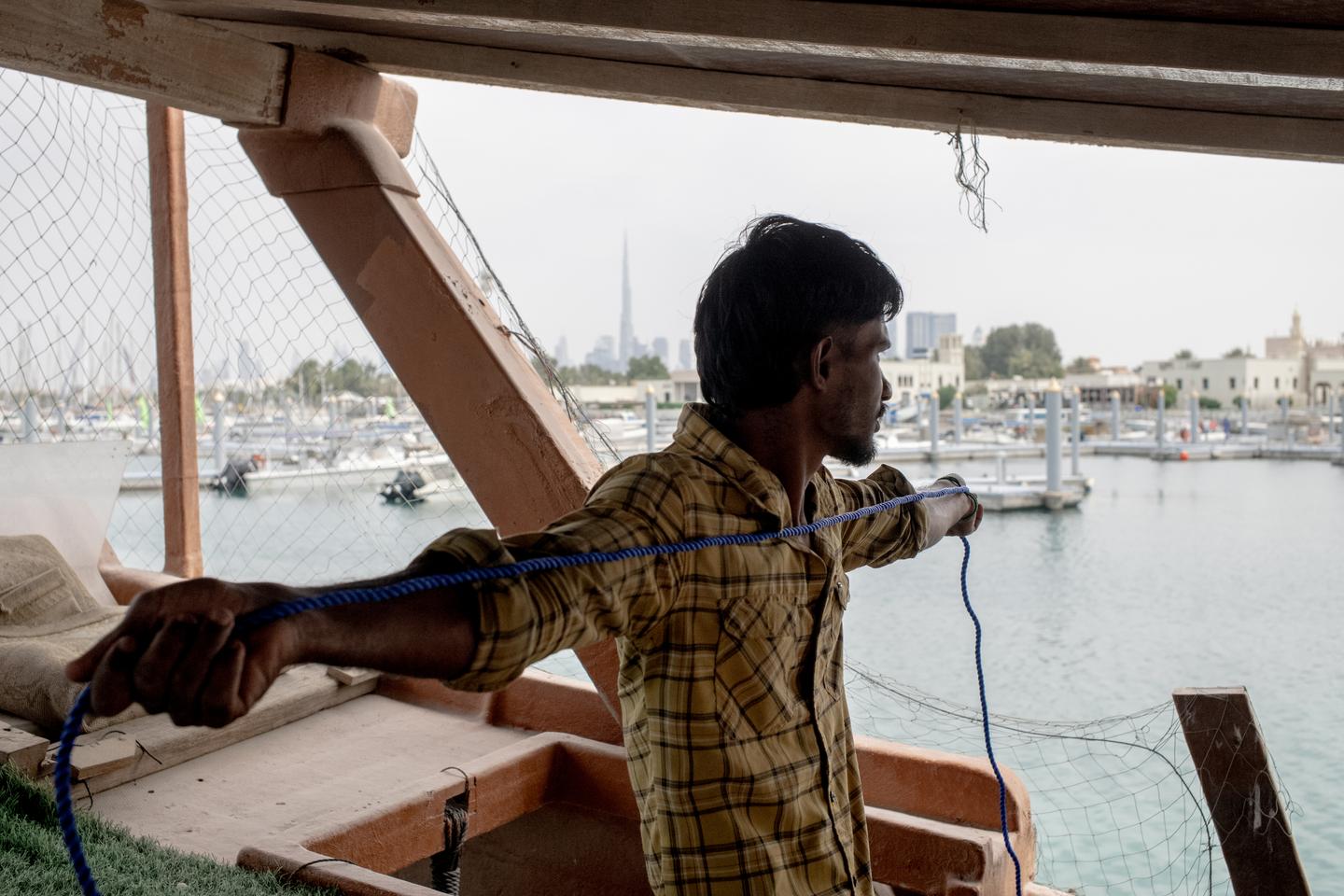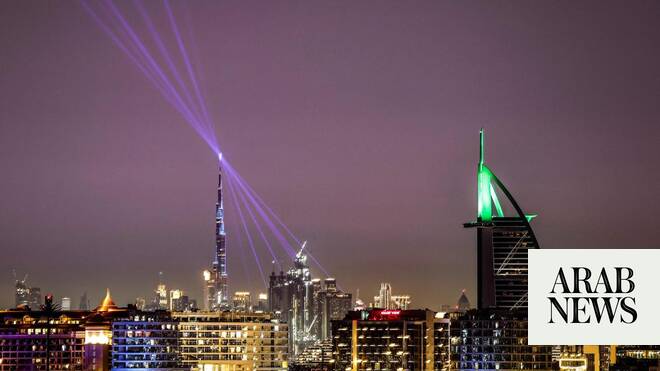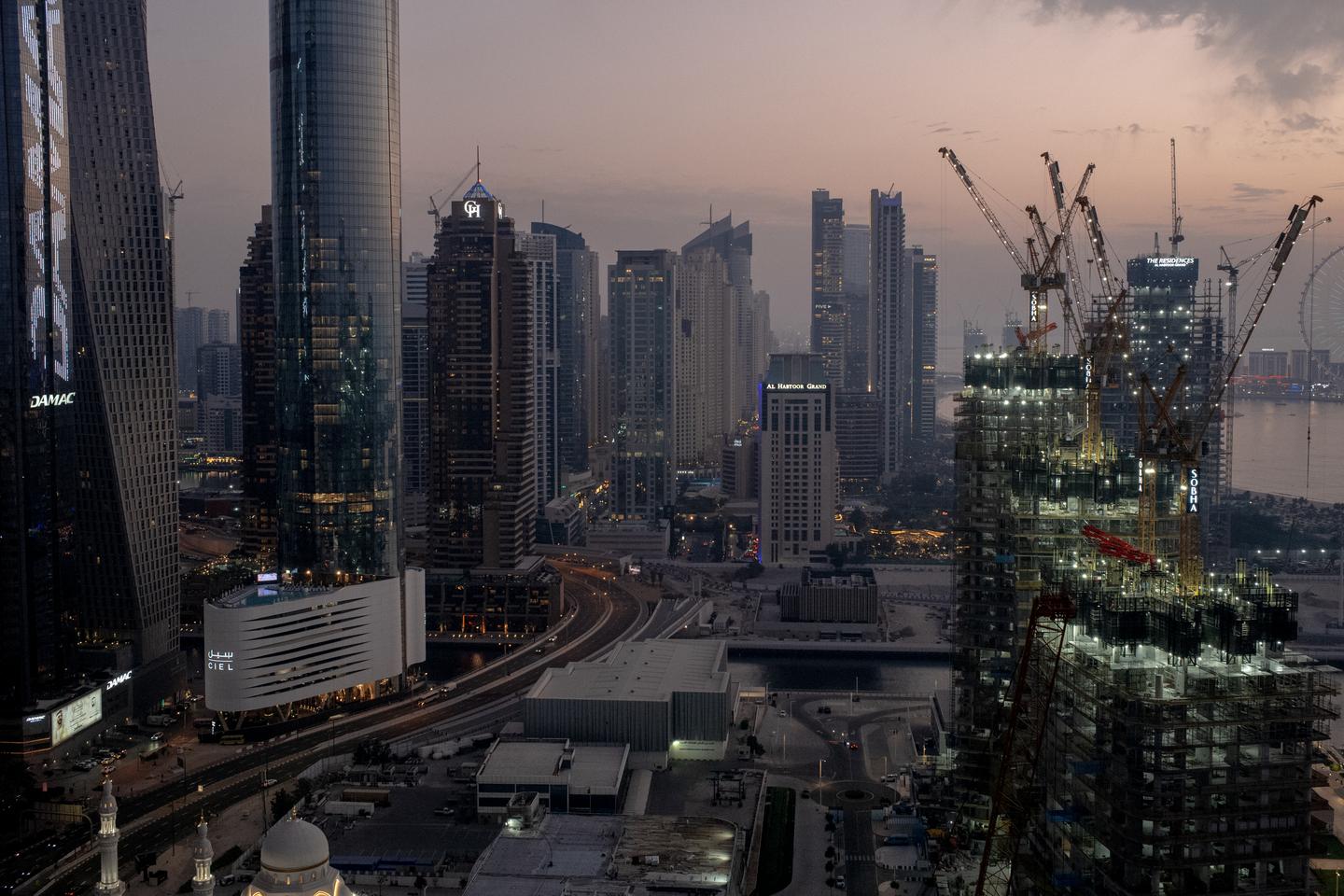
In the Marina neighborhood in Dubai, United Arab Emirates, on March 7, 2026. PHILÉMON BARBIER/HORS FORMAT FOR LE MONDE
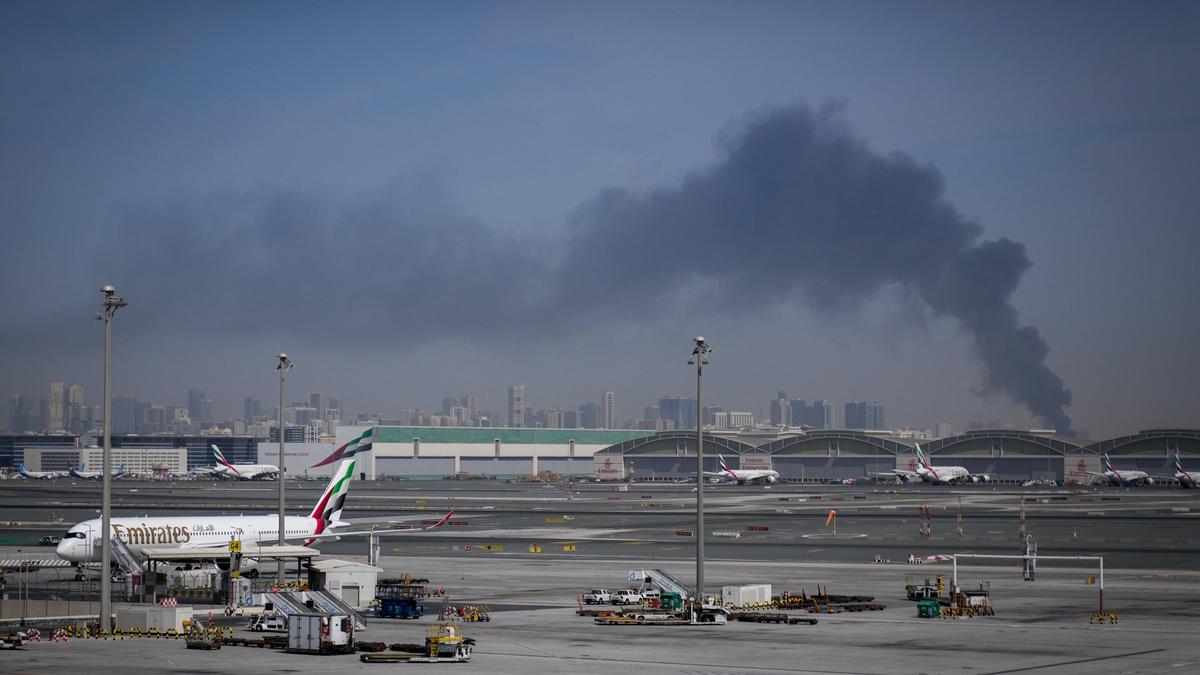
At the foot of the Marina 23 skyscraper, in an upscale neighborhood of Dubai, shards of glass littered the ground for dozens of meters on the evening of Saturday, March 7. Surrounded by police vehicles, the 90-story residential building had just been struck by debris from an intercepted Iranian drone. Not far away, another piece of debris that fell onto a vehicle caused the death of its driver. A few hours earlier, the city's airport – the second largest in the world – had also come under attack, temporarily halting repatriation flights for thousands of tourists. In a rare televised address, Mohammed bin Zayed Al Nahyan, president of the United Arab Emirates (UAE), spoke that same evening: "We are now in a time of war," he said, while praising the work of the air defense forces for averting an even greater disaster. The following day, Sunday, warning sirens sounded again.
Since February 28, when the United States and Israel began their military operation against Iran, more than 230 ballistic missiles, around 10 cruise missiles and over 1,400 Iranian Shahed drones have targeted the UAE in retaliation. Most were intercepted before reaching their targets. The fierce battle in the skies remains, for now, in their favor, but one question continues to haunt the UAE: Why have they been hit harder by Iranian strikes than all the other neighboring monarchies, and even twice as much as Israel when it comes to drone attacks?