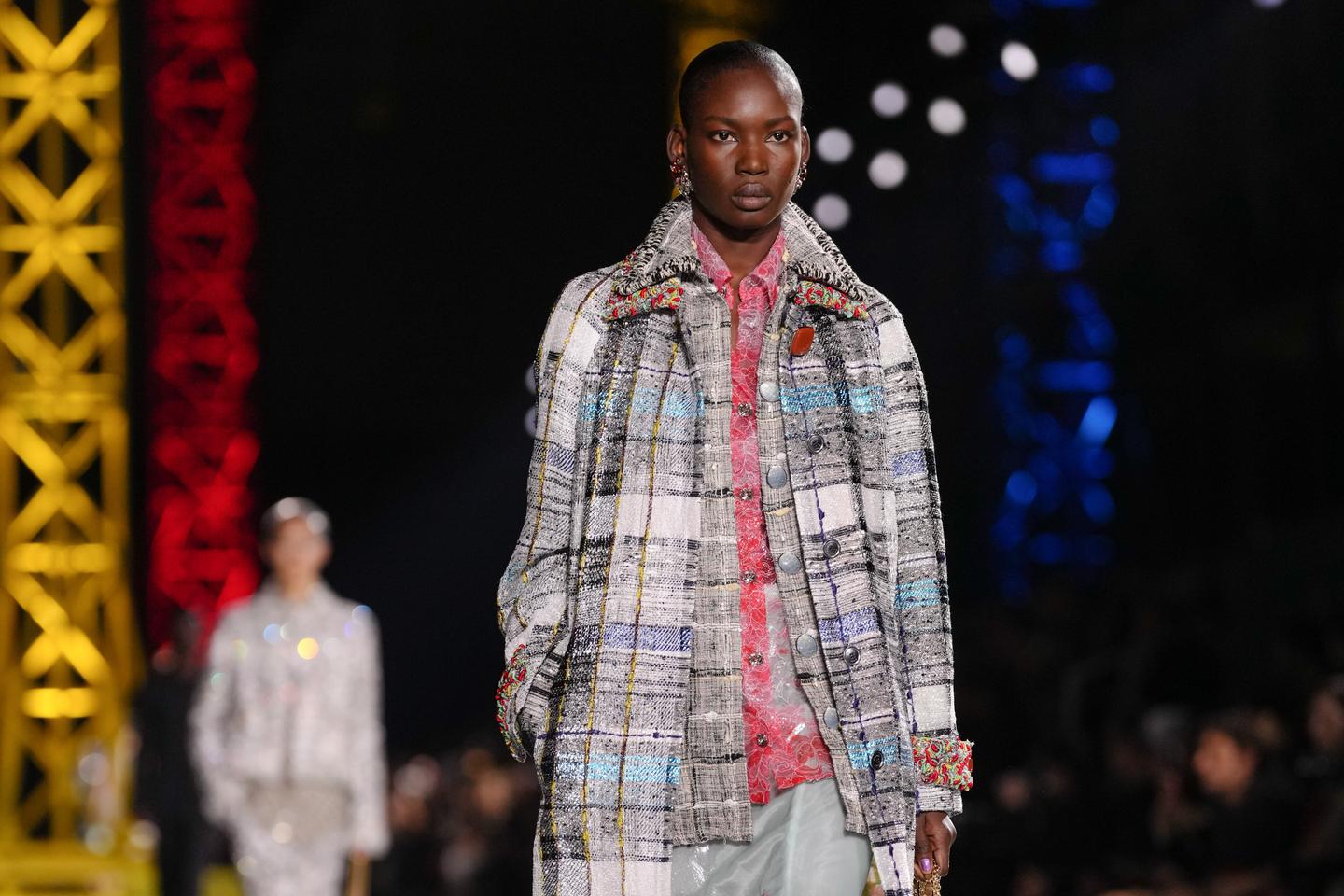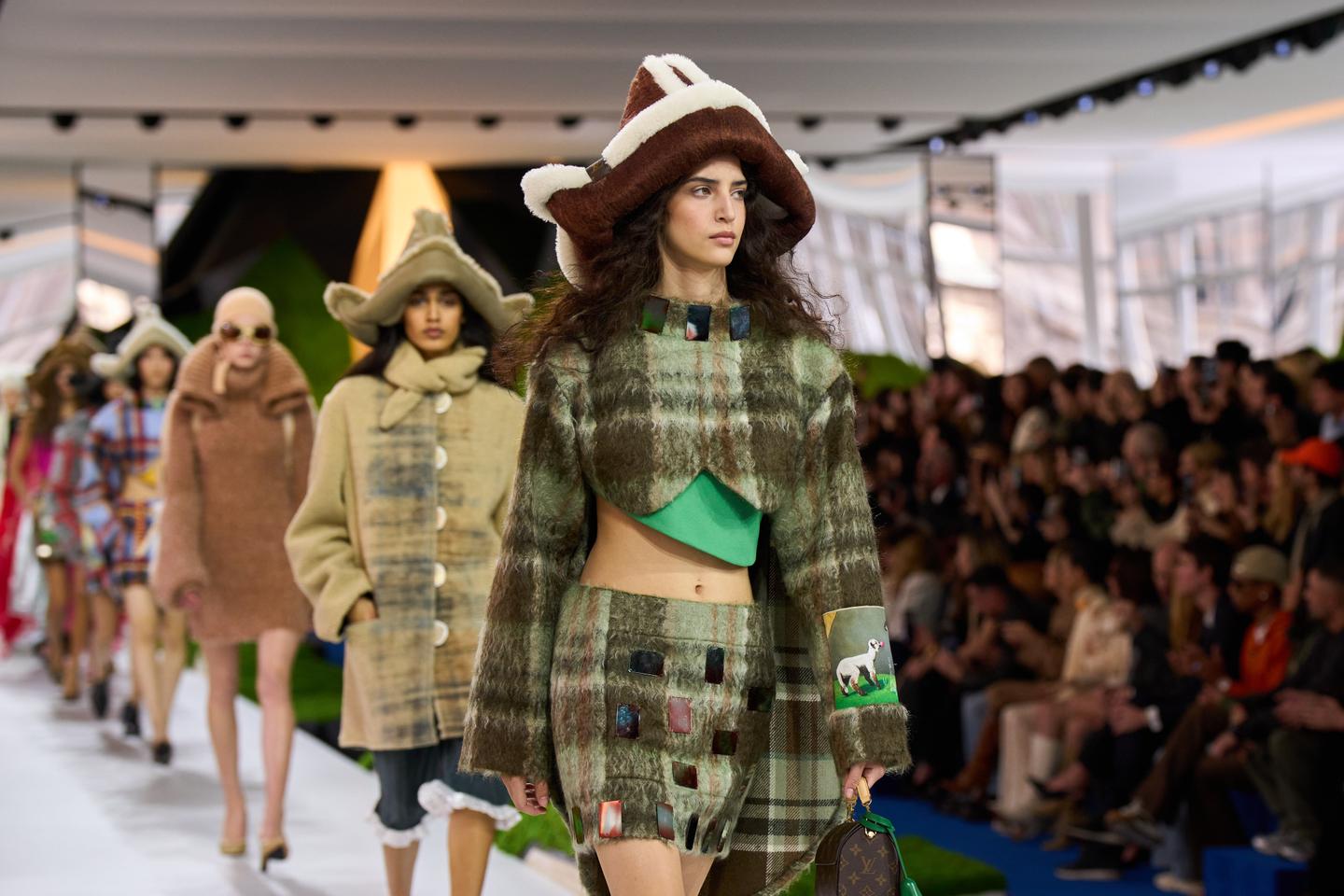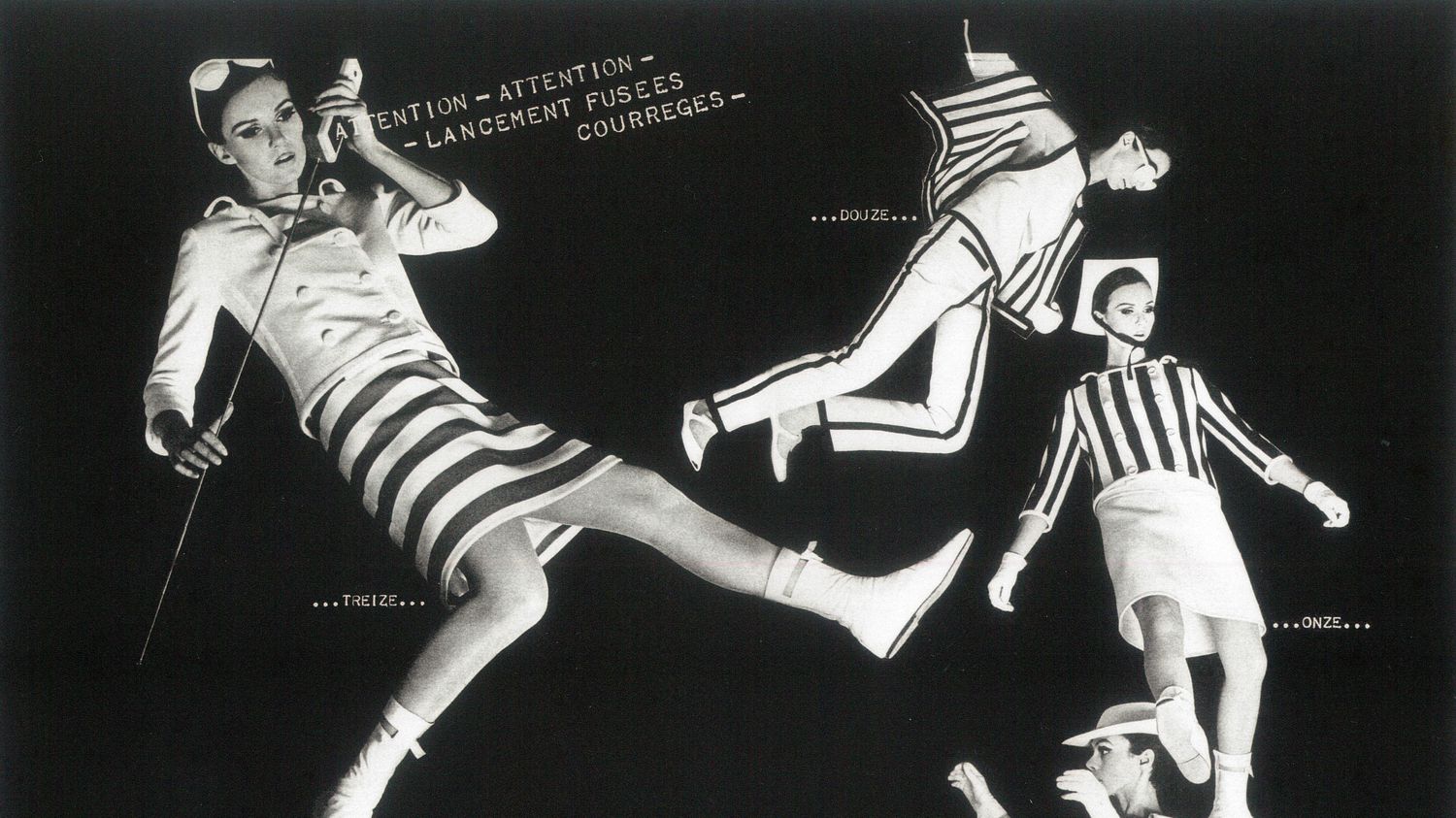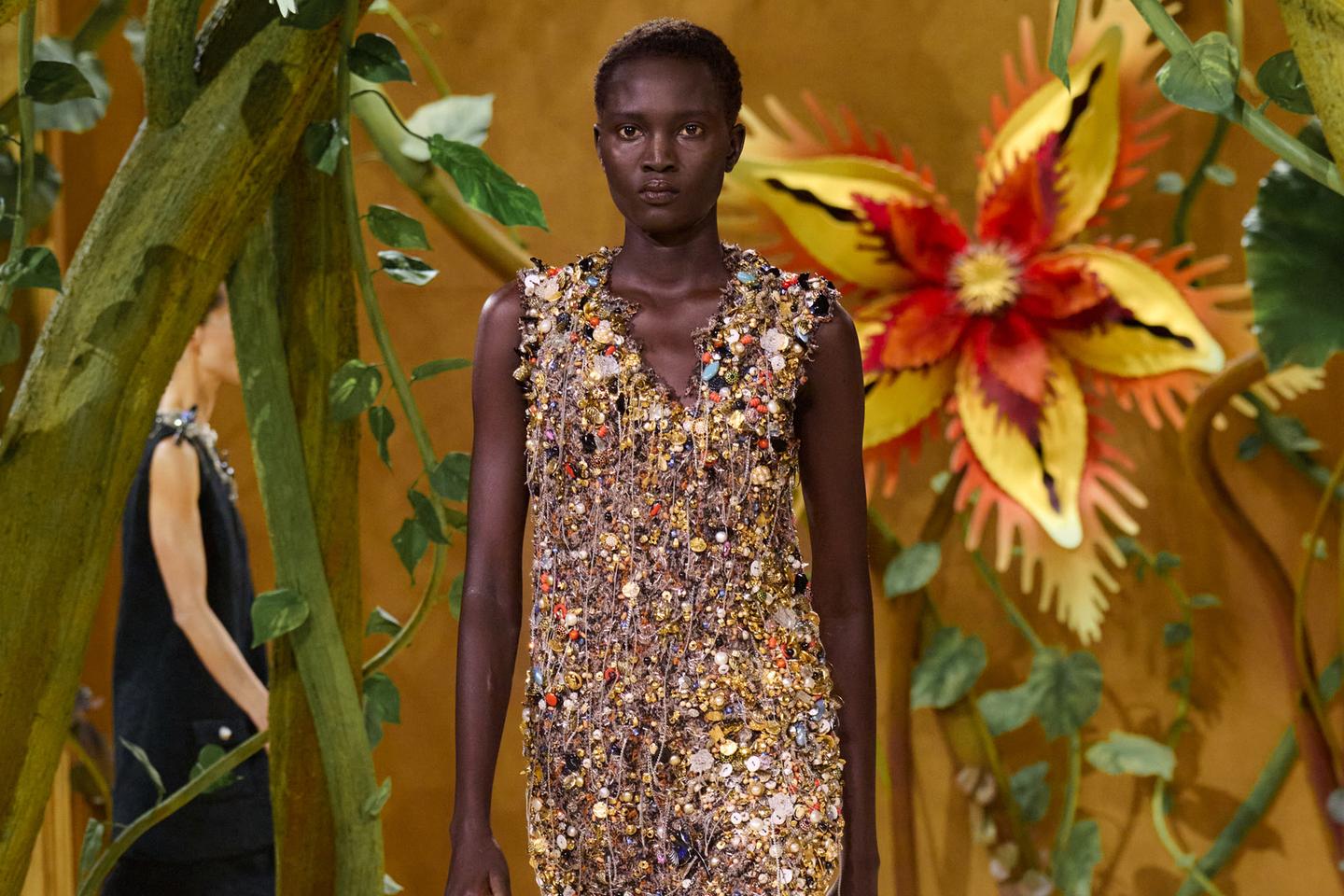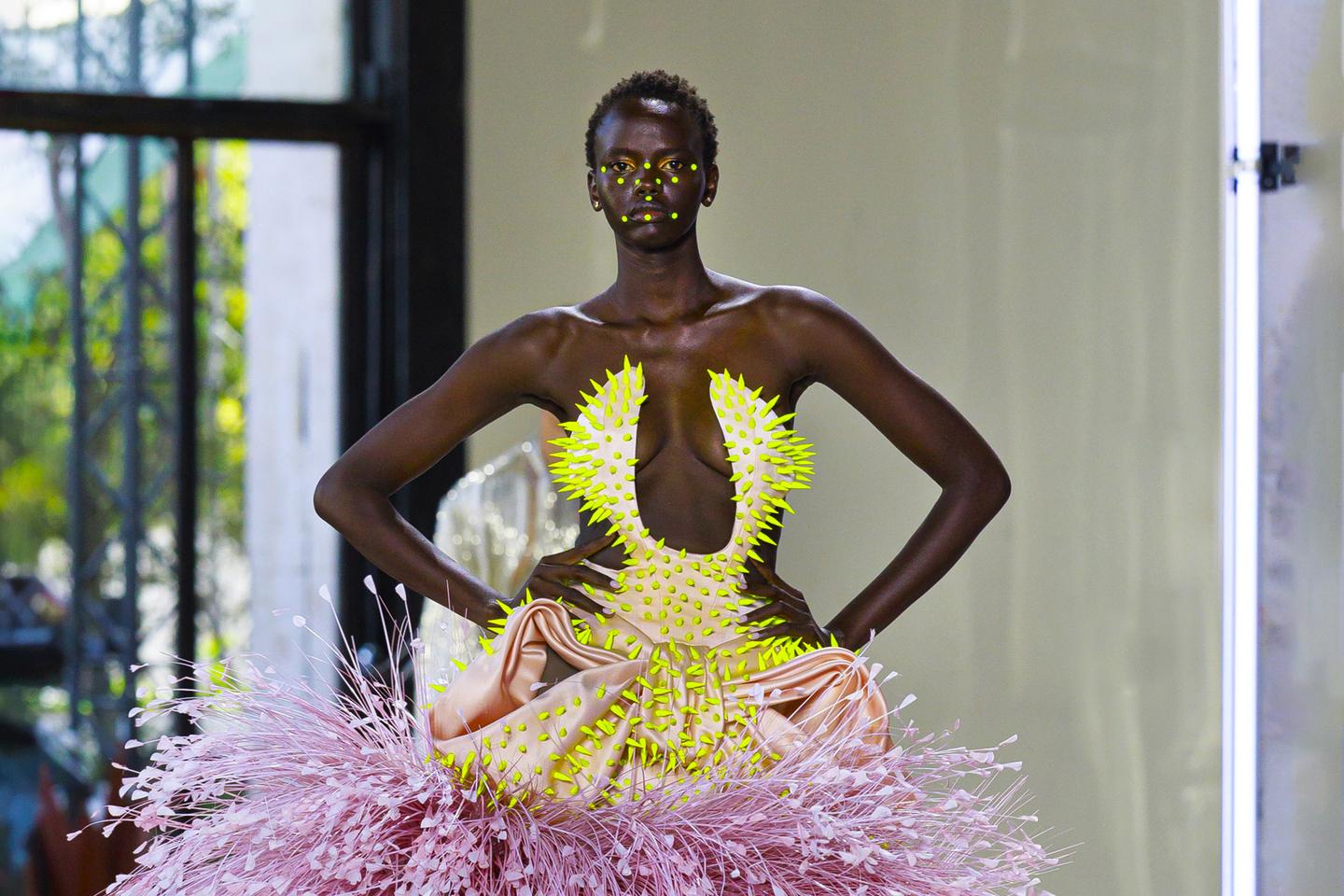
Courrèges's autumn-winter 2026-2027 collection, presented in Paris on March 4. ALAIN JOCARD/AFP
The 1960s were a fertile era for French ready-to-wear fashion. During this decade, Paco Rabanne (1934-2023) and André Courrèges (1923-2016) launched their labels, and Carven, founded in the postwar years, reached its peak. At the autumn-winter 2026-2027 Paris Fashion Week, running through March 10, these three houses have managed to successfully harken back to this era, all the while keeping their styles relevant and contemporary.
At Courrèges, Nicolas Di Felice said: "You can't sum up André Courrèges' work with just a little trapeze dress." To showcase the house founder's radical vision, especially his approach to revealing bodies, the Belgian designer recreated T-shirts from 1970, but with a twist: Two black pockets, sewn at the chest on a nude mesh top, appear to float on a naked torso. Beyond this bold nod to the past, Di Felice offered a wearable wardrobe, after five years spent exploring the geometric possibilities of Courrèges' legacy.
Courrèges's 1970s-inspired mesh t-shirt. COURRÈGES
"The collection is called '24 Hours in the Life of a Woman,'" said Di Felice, envisioning a range of desirable pieces: a high-collared leather jacket, a long backless dress, a button-up skirt that reveals a glimpse of skin and a relaxed vinyl trench coat. The monochrome palette and pared-back shapes did not exclude more whimsical ideas, such as hundreds of (fake) metro tickets made of silk organza, sewn in neat rows onto a bustier dress or a midi skirt – a touch that's both decorative and playful at once.