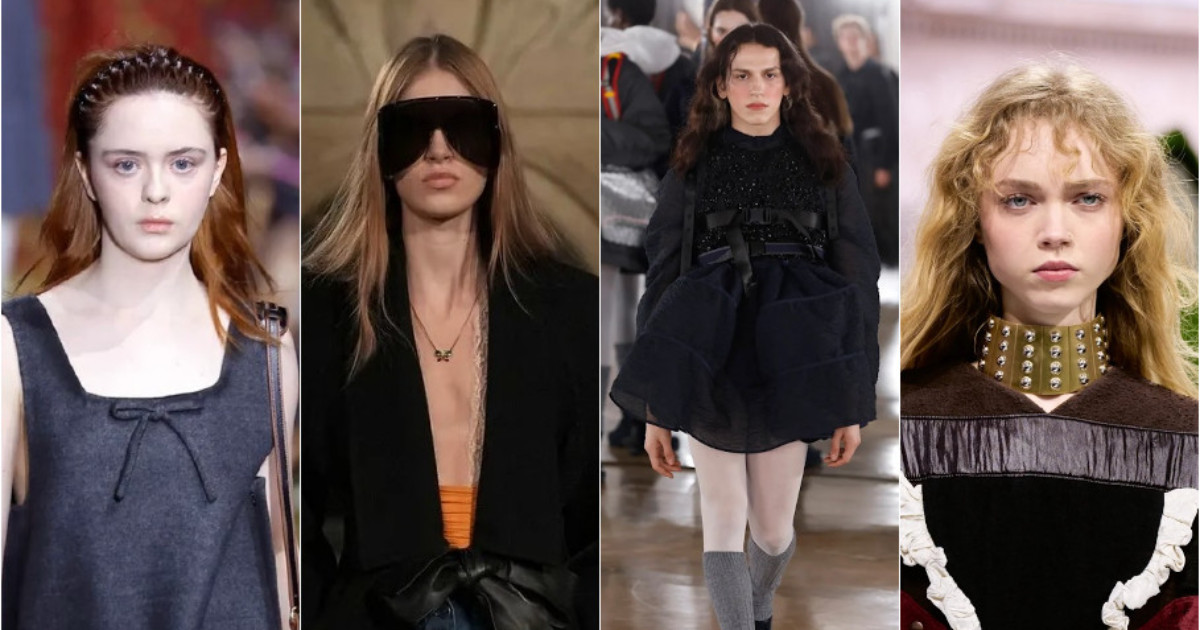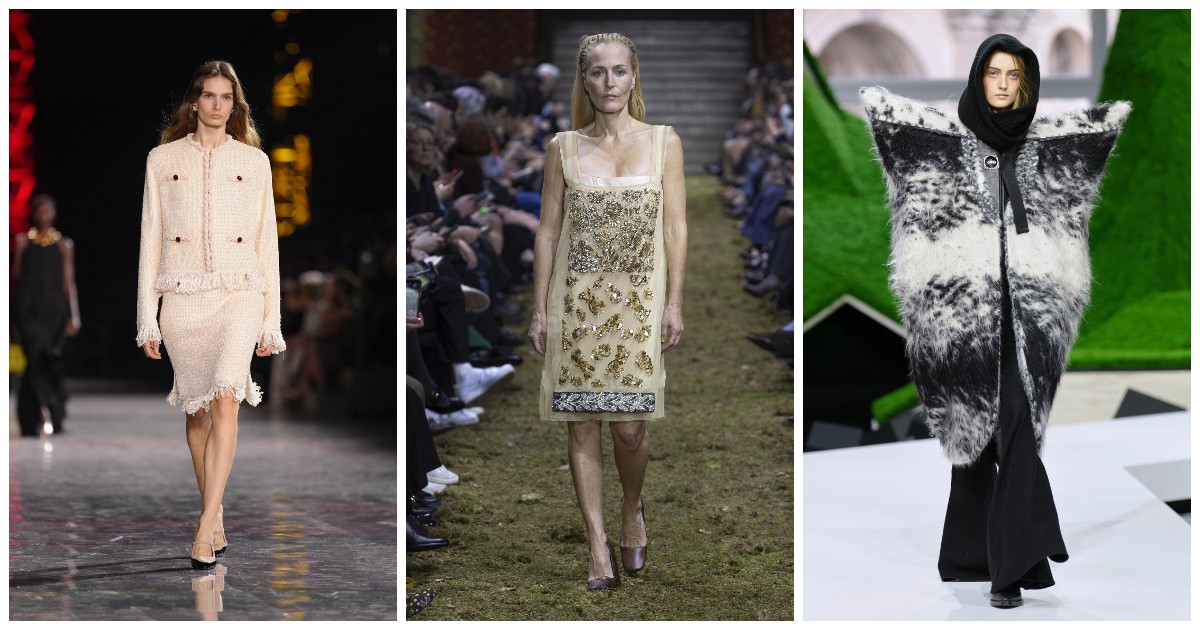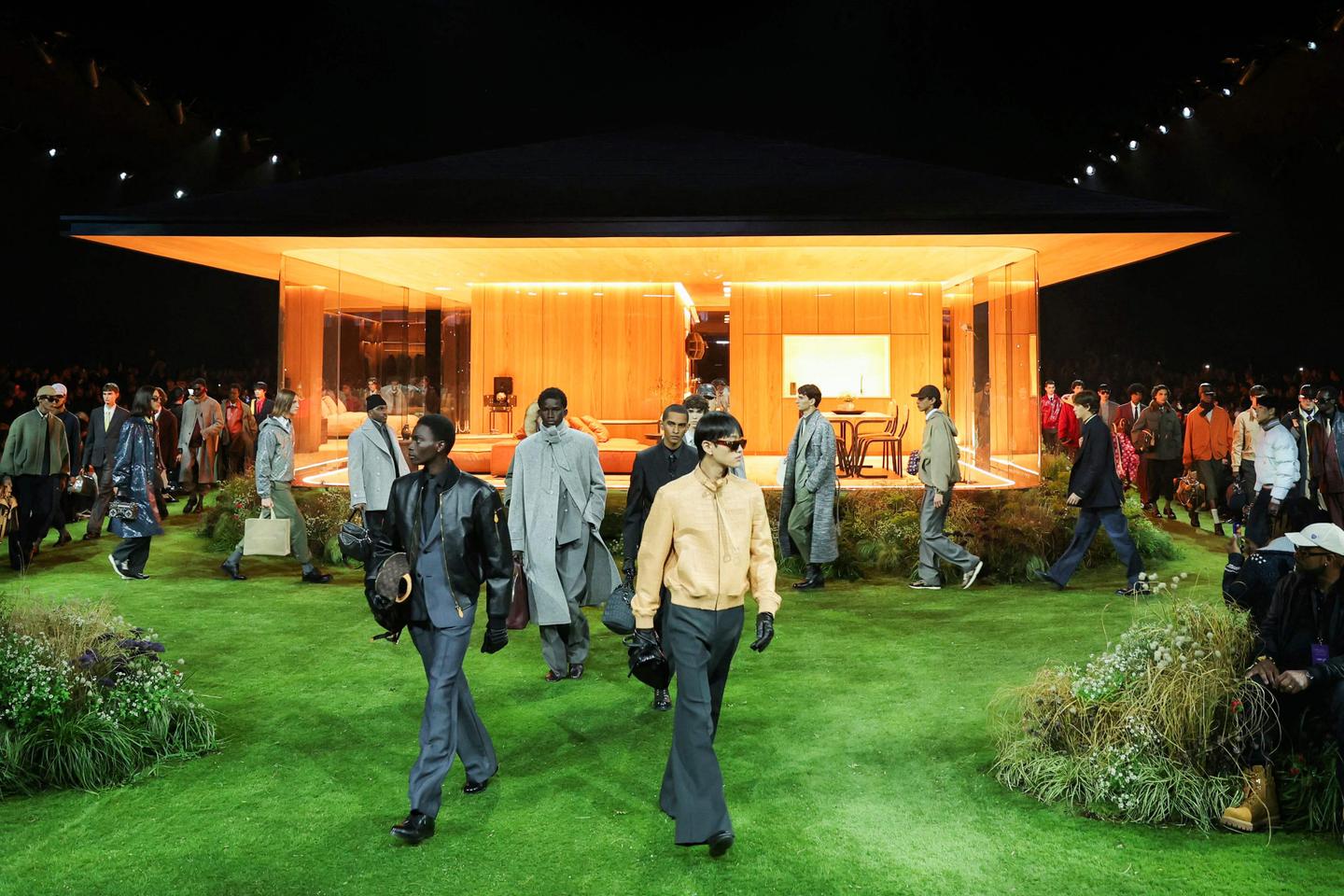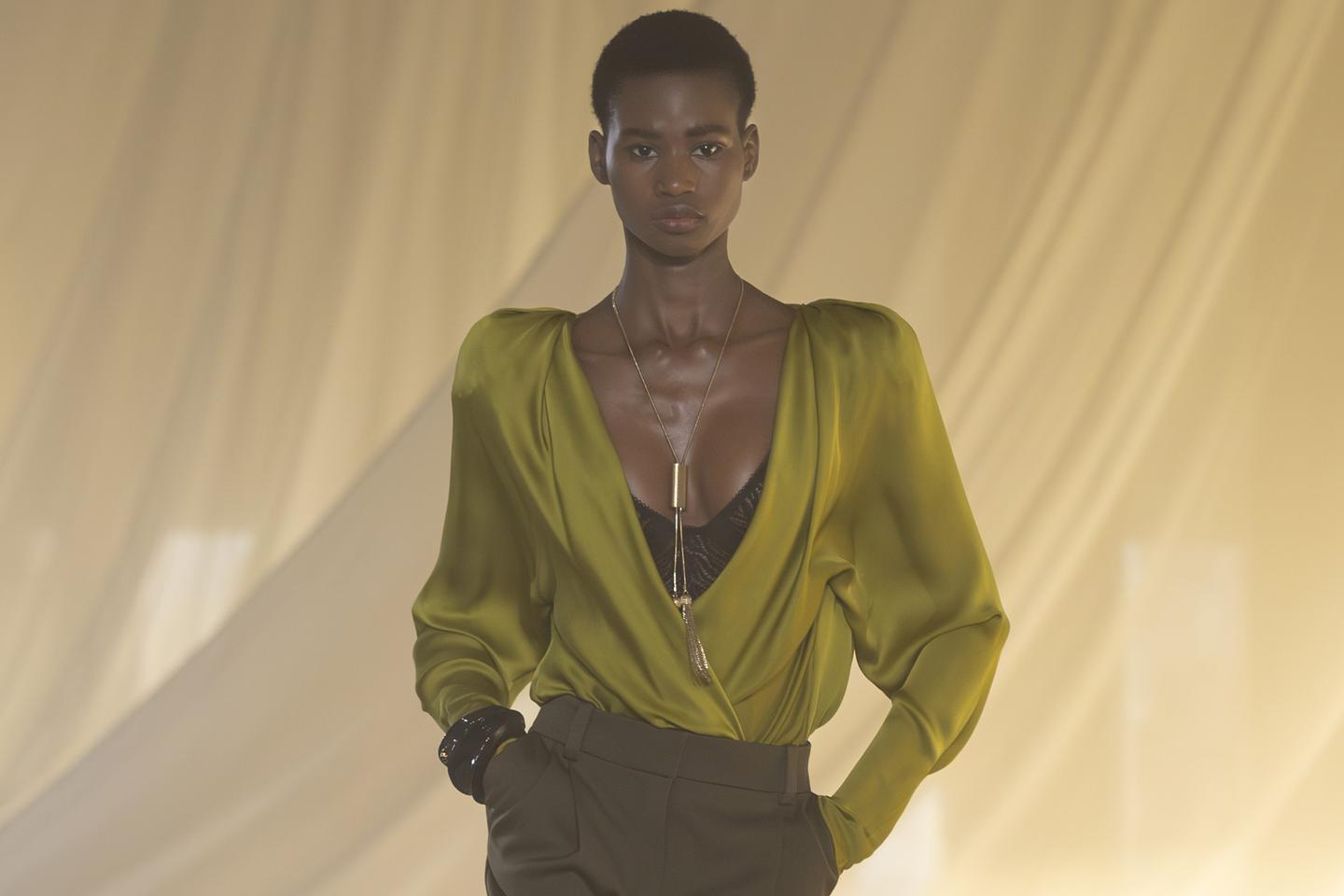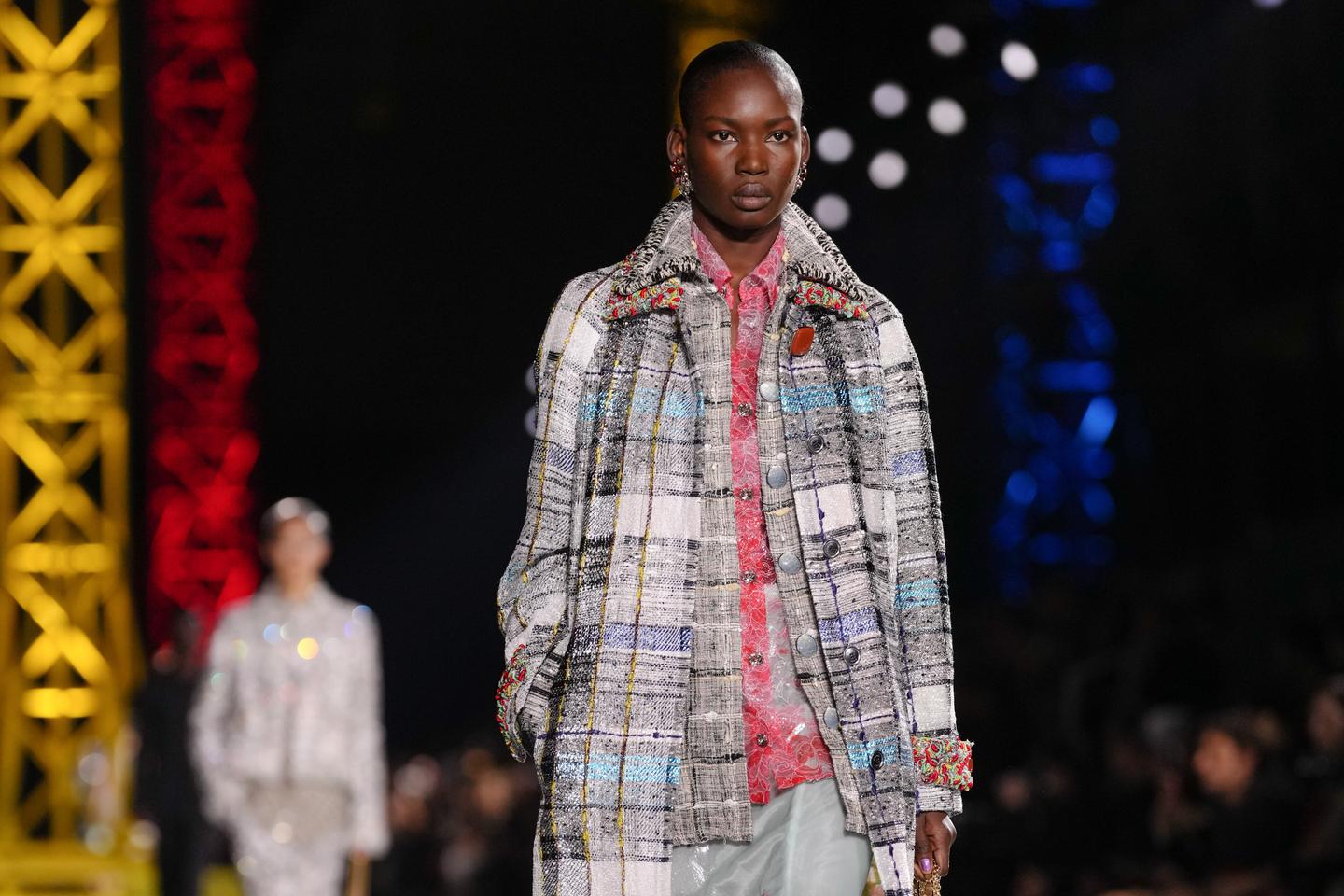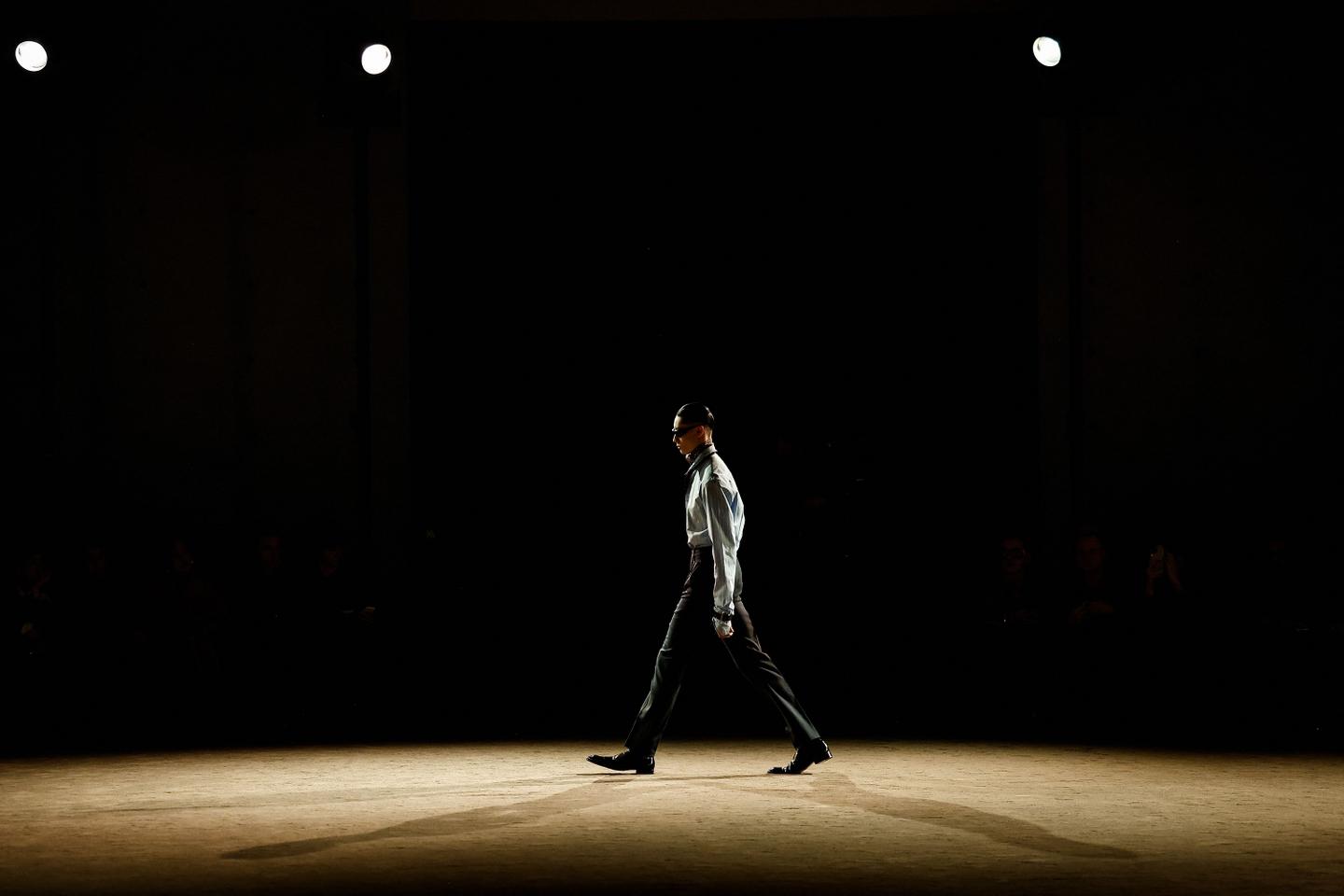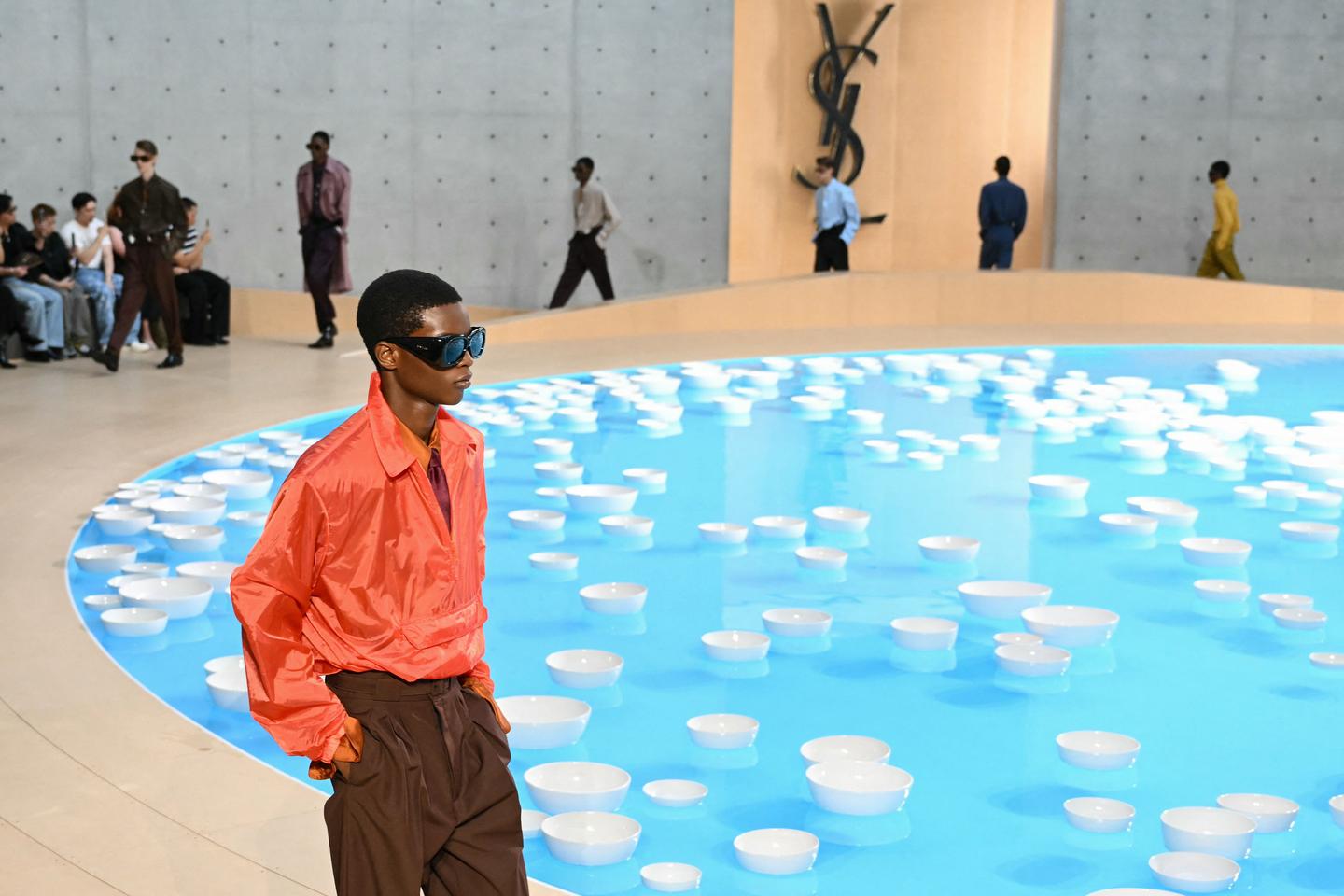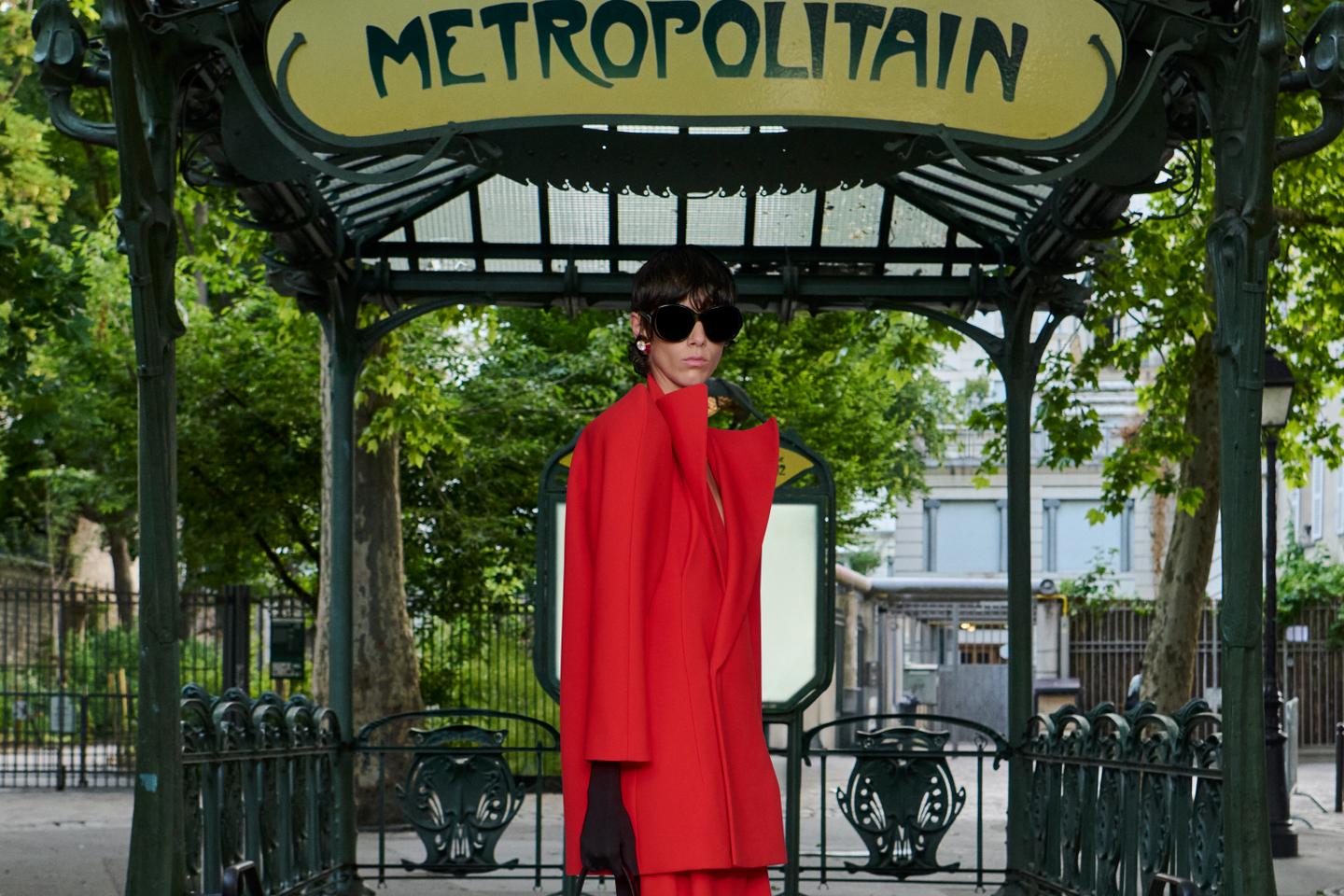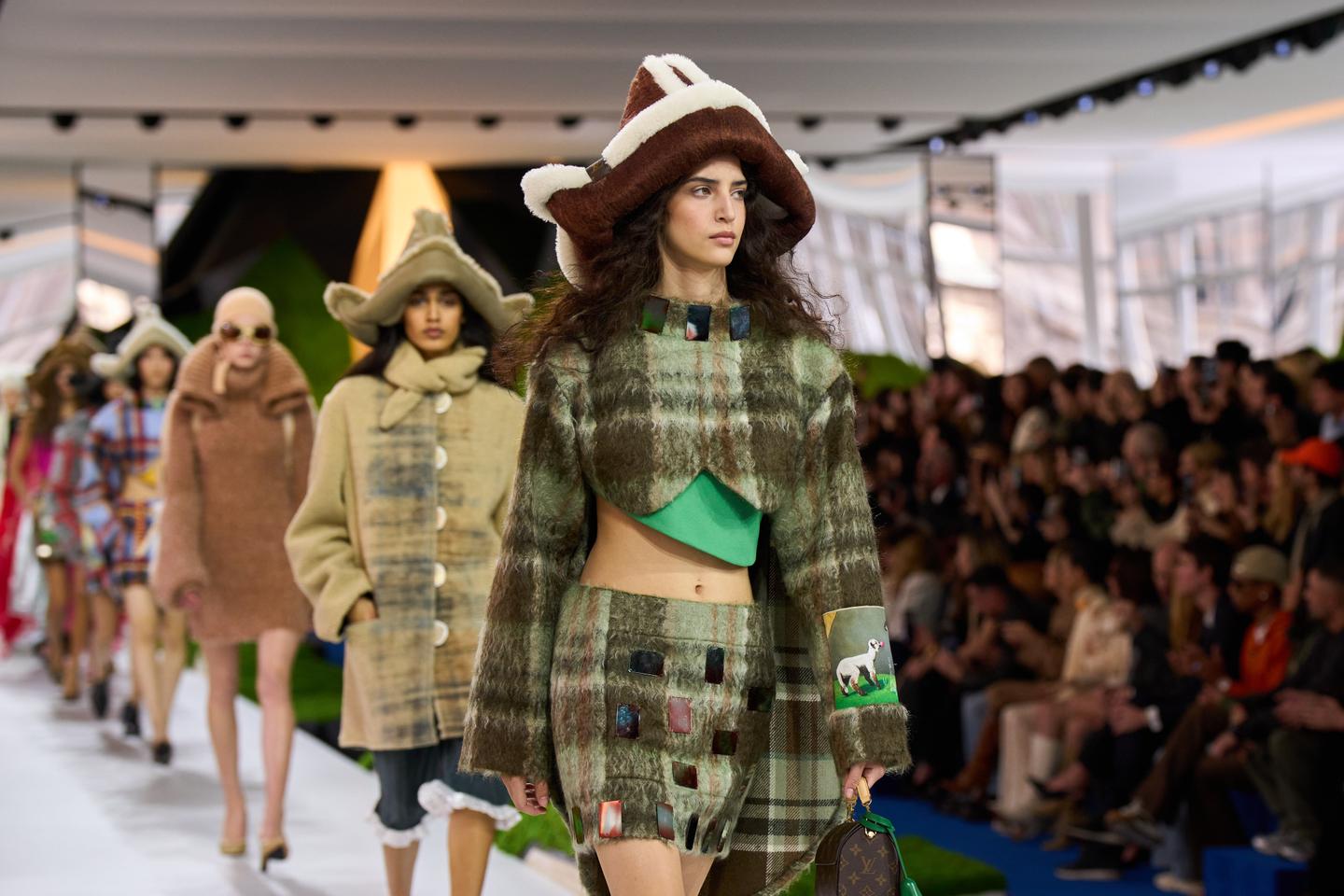
Louis Vuitton, Autumn-Winter 2026-2027 collection, presented in Paris on March 10, 2026. SALVATORE DRAGONE/GORUNWAY.COM
The Paris Fall/Winter 2026-2027 Fashion Week wrapped up without any dominant trend emerging. Beginning on March 2 with a lineup that leaned toward chic and sexy (Saint Laurent, Tom Ford, Balmain), the week then offered pared-back collections (Carven), vintage touches (Chloé), vibrant colors (Loewe), equestrian styles (Hermès), before ending on a more conceptual note on Tuesday, March 10.
Since he joined Louis Vuitton in 2013, Nicolas Ghesquière has treated the runway as a fashion laboratory. In the Louvre's Cour Carrée, he had a structure built to house a landscape that was part playground, part forest. The catwalk wound through jagged, uneven mounds covered in moss, imagined together with production designer Jeremy Hindle, known for his work on the TV show Severance. This abstract landscape was meant to symbolize the journey of Louis Vuitton (1821-1892), from his childhood in the Jura region to his arrival in Paris, where he founded his namesake brand in 1854.
"I actually wanted to highlight that nature is the greatest designer. It was not about an imitation, it was more about a sublimation of nature," said Ghesquière. There was no risk of a literal interpretation with either the set or the clothing, which generally moved within a palette ranging from black to white. The models wore shaggy capes with oversized shoulders, wide and fluid overalls adorned with furry pompoms, plush turtleneck sweaters with collars puffed up like travel pillows, ensembles with geometric volumes in patchworks of checks and more. The few more colorful looks served to showcase animal paintings by the Ukrainian artist Nazar Strelyaev-Nazarko, reproduced on the garments.