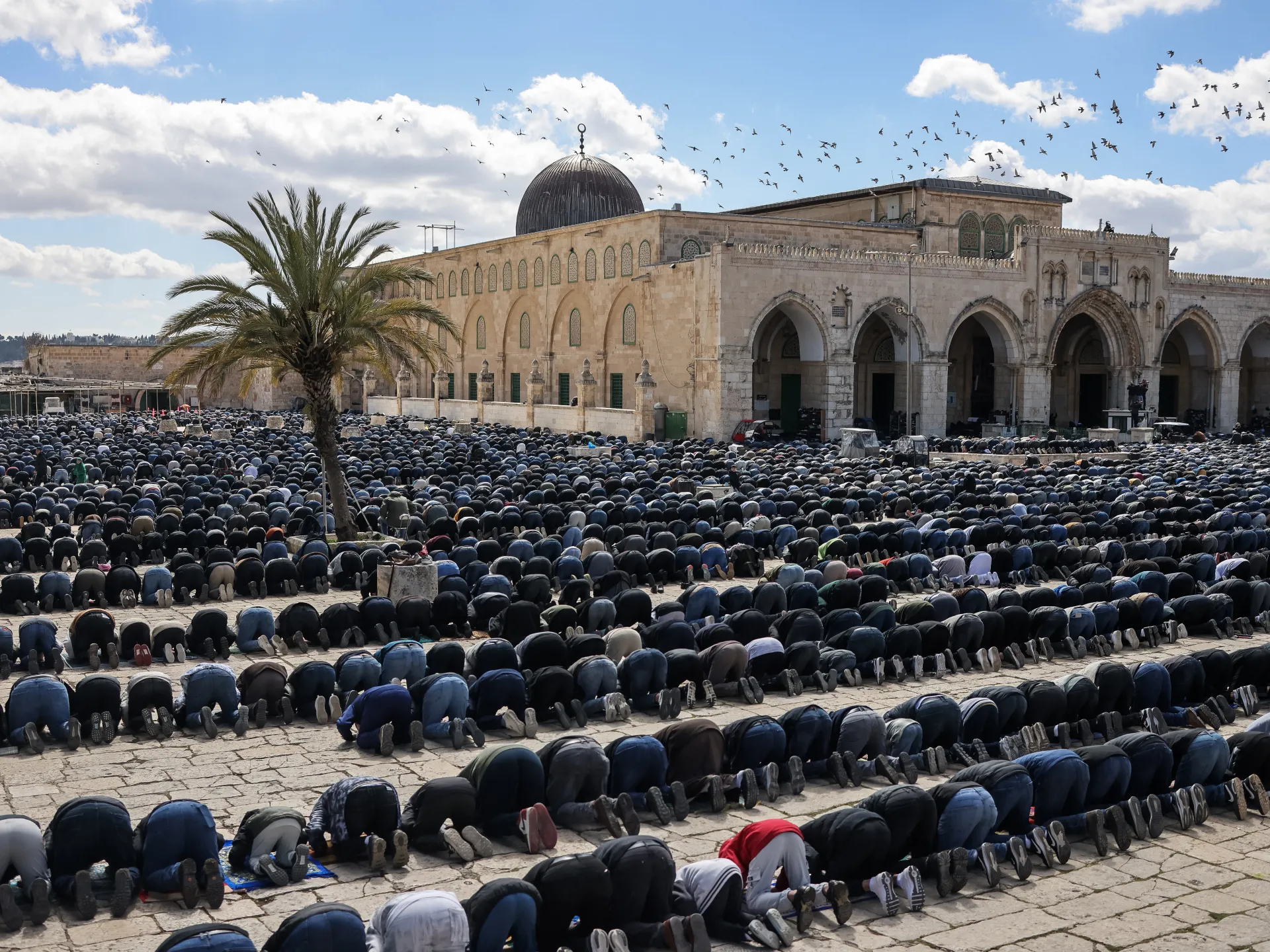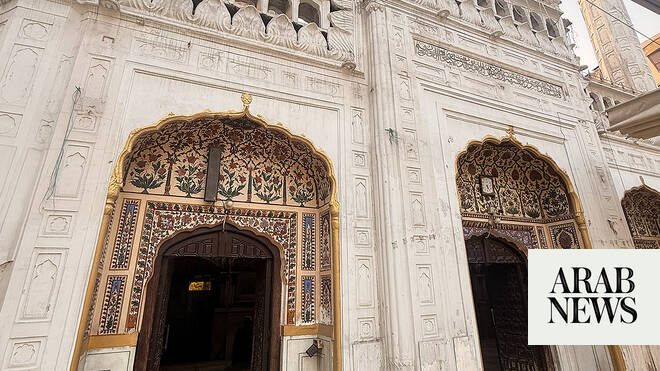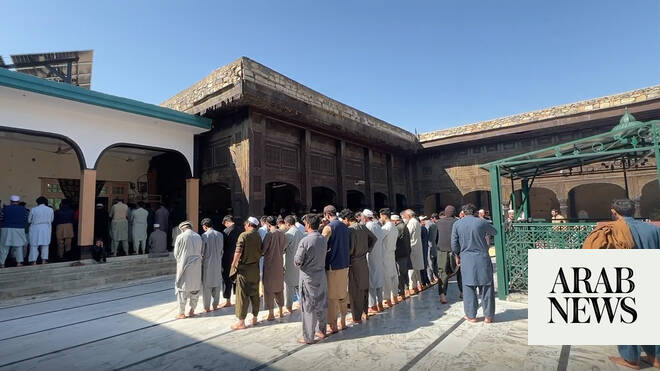
LOWER DIR, Pakistan: As dusk settles over Timergara in northwest Pakistan, worshippers stream toward the 120-year-old Baba Jee Mosque, where the holy month of Ramadan brings nightly Taraweeh prayers beneath intricately carved wooden ceilings that have stood for generations.
During Ramadan, Muslims fast from dawn to sunset and gather in the evenings for extended congregational prayers. At Baba Jee Mosque, those gatherings swell, turning the historic structure into one of the region’s spiritual focal points.
The mosque, built in the 1890s by Mian Gul Muhayuddin, a religious figure from the prominent Pashtun Yousafzai tribe known locally as Baba Jee? has long served as a central place of worship for Dir Lower and surrounding districts.
Its significance intensifies during the fasting month when the mosque traditionally holds two Khatm-ul-Qur’an, or the full recitation of the Qur’an during Taraweeh prayers.
“Ten paras would be recited every day by two reciters. The two Khatams were completed in six days, three days each, and the mosque used to be full of worshippers,” said Naqeeb Ul Abrar, 62, the mosque’s custodian.