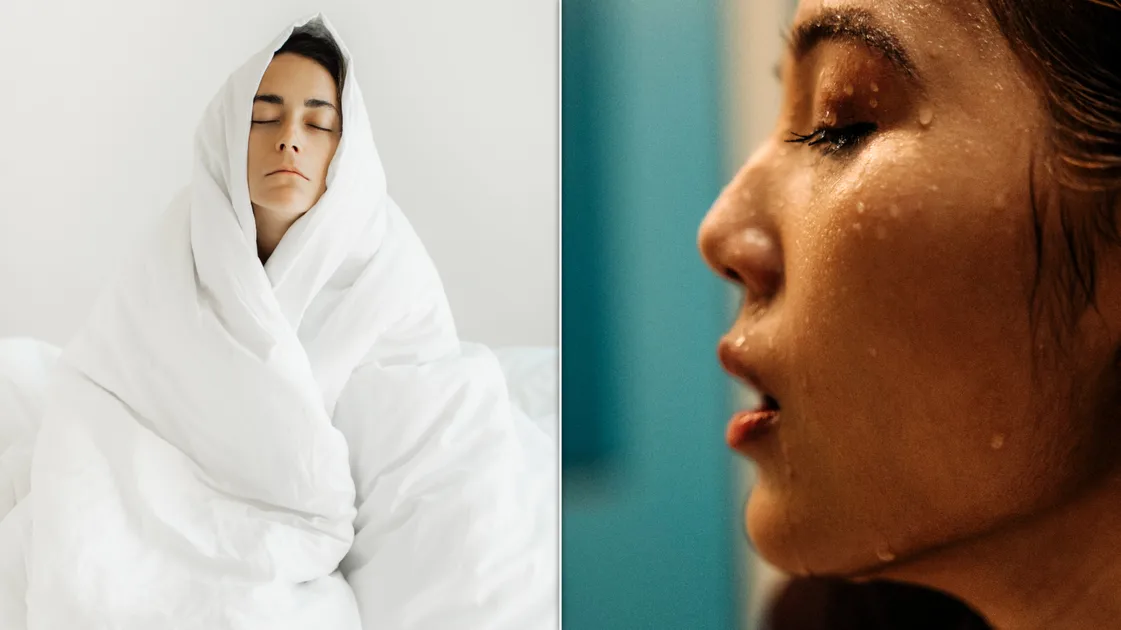
Sleep experts often recommend keeping your bedroom cool, so even in the winter, I’ve always turned down the heat, cranked up the fan and burrow under layers of blankets. The colder, the better — at least for sleep.But morning after morning, my skin told a different story. It looked dry, felt tight and somehow more congested than usual. It wasn’t until a recent chat with my dermatologist that we traced the issue back to a surprising culprit: not the temperature itself, but the dry air blowing onto my face for hours every night.“Winter is [especially] hard because of a multitude of insults to the skin: cold temperatures outside, hot, dry air from heaters indoors and lack of moisture everywhere,” explained Dr. Corey L. Hartman, a dermatologist and founder of Skin Wellness Dermatology in Birmingham, Alabama.As it turns out, how warm — or cool — you like to sleep can affect your skin, largely because of what those settings do to indoor humidity. Your skin does its repair work when you sleep, and if you’re lying in a hot, cold, dry or humid condition for eight hours straight without hydration, it can have a big impact on your skin by morning.To understand who’s most affected and what actually matters, HuffPost spoke with dermatologists about the effects of heat, A/C, fans and humidifiers.Getty ImagesWhether you sleep in hot or cold, dry or humid air, the conditions can have different effects on your skin health.Sleeping In A Room With High Heat When I visit my grandparents, they keep the thermostat set to a balmy 86 degrees Fahrenheit, which leaves me tossing off the covers like I’m having night sweats. Beyond the discomfort, all that extra warmth can also throw your skin out of balance.“Heat can cause your skin to sweat more and produce extra oil, which can clog pores and trigger breakouts,” explained Dr. Anna Chacon, a dermatologist in Miami, Florida. According to a 2026 study, researchers found that sebum production rose significantly after more than an hour in a 32-degree Celsius (about 90-degree Fahrenheit) environment. When that extra oil mixes with sweat and debris, dermatologists say it can increase the likelihood of clogged pores and breakouts.While most bedrooms aren’t quite that warm, experts say even moderately overheated indoor spaces can shift the skin’s oil balance, particularly overnight. Folks with sensitive skin or certain conditions like eczema should be especially careful, according to Chacon, who explained, “It can also worsen inflammation in conditions like eczema or rosacea. Plus, it can disrupt the skin’s natural repair process that happens overnight.” Sleeping In A Room With High A/CTurning your bedroom into an icebox isn’t any better for your skin. In this case, dermatologists say it’s less about the temperature itself and more about what air conditioning does to the air around you. “Air conditioning can have a similar effect [to sleeping with the heat on], mainly by lowering the room’s humidity,” Chacon said. “Your skin can become dehydrated, even if the airflow isn’t directly on you.”That’s because A/C doesn’t just cool the air, it also removes moisture from it. When you turn on the air conditioner — or even the heat — the air inside your home naturally loses humidity. As warm air passes over the unit’s coils, water vapor condenses and is pulled out of the room, leaving the air drier. That drop in humidity can quietly pull water from the skin overnight, especially during long hours of sleep.“Indoor air is typically dry and low in humidity — this can be due to air conditioning or heating,” said Dr. Toral Vaidya, a dermatologist with MDCS Dermatology in New York. “Consistent exposure to dry air can dehydrate your skin, worsen sensitivity, and trigger flare-ups of underlying conditions like eczema. Over time, this moisture loss can lead to premature aging and a compromised skin barrier.” The research tracks this out: low-humidity environments can alter the stratum corneum, the skin’s outermost layer, reducing water content, elasticity and smoothness while increasing surface roughness.Sleeping In A Room With A FanMy other favorite sleep habit? Cranking the ceiling fan all the way up and half-wondering whether it’s going to launch itself off the bracket in the middle of the night. The dermatologists were far less concerned about this habit for my skin, though perhaps not for my overall safety.“Overall, keeping a fan on at night should not contribute to excessive skin dryness,” Vaidya said. Corey L. Hartman agreed that fans themselves aren’t usually the main issue — humidity is. He said, “It’s not about the airflow, but more about the dryness of the air.”That said, placement matters, according to Chacon. A fan aimed directly at your face from a few inches away is going to be far more intense than one spinning across the room. “Sleeping with a fan blowing right on you can dry out your skin because it speeds up moisture loss,” she said. “Over time, this can weaken the skin barrier, making your skin more sensitive, flaky, or prone to irritation — especially if you already have dry skin, eczema or rosacea.”The takeaway: If your skin tolerates a ceiling fan, you probably don’t need to ditch it — just avoid pointing it directly at your face and pay attention to how dry the room feels overall.Sleeping In A Room With A Humidifier Over Christmas, I caught the cold that seemed to take down half the city and ran my humidifier nonstop. The silver lining? My skin was glowing — even if no one saw it because I was stuck inside. As it turns out, that wasn’t a coincidence. Of all the sleep habits we discussed, a humidifier was the only one all three dermatologists agreed could actively help your skin.“I definitely recommend using a humidifier in these winter months. This can help support the skin barrier and reduce water loss,” Vaidya explained.
If You Sleep At A Specific Room Temperature, Watch Out For This 1 Unexpected Side Effect
Dull, irritated skin could be caused by your bedroom setup — but there’s an easy fix.
975 words~4 min read