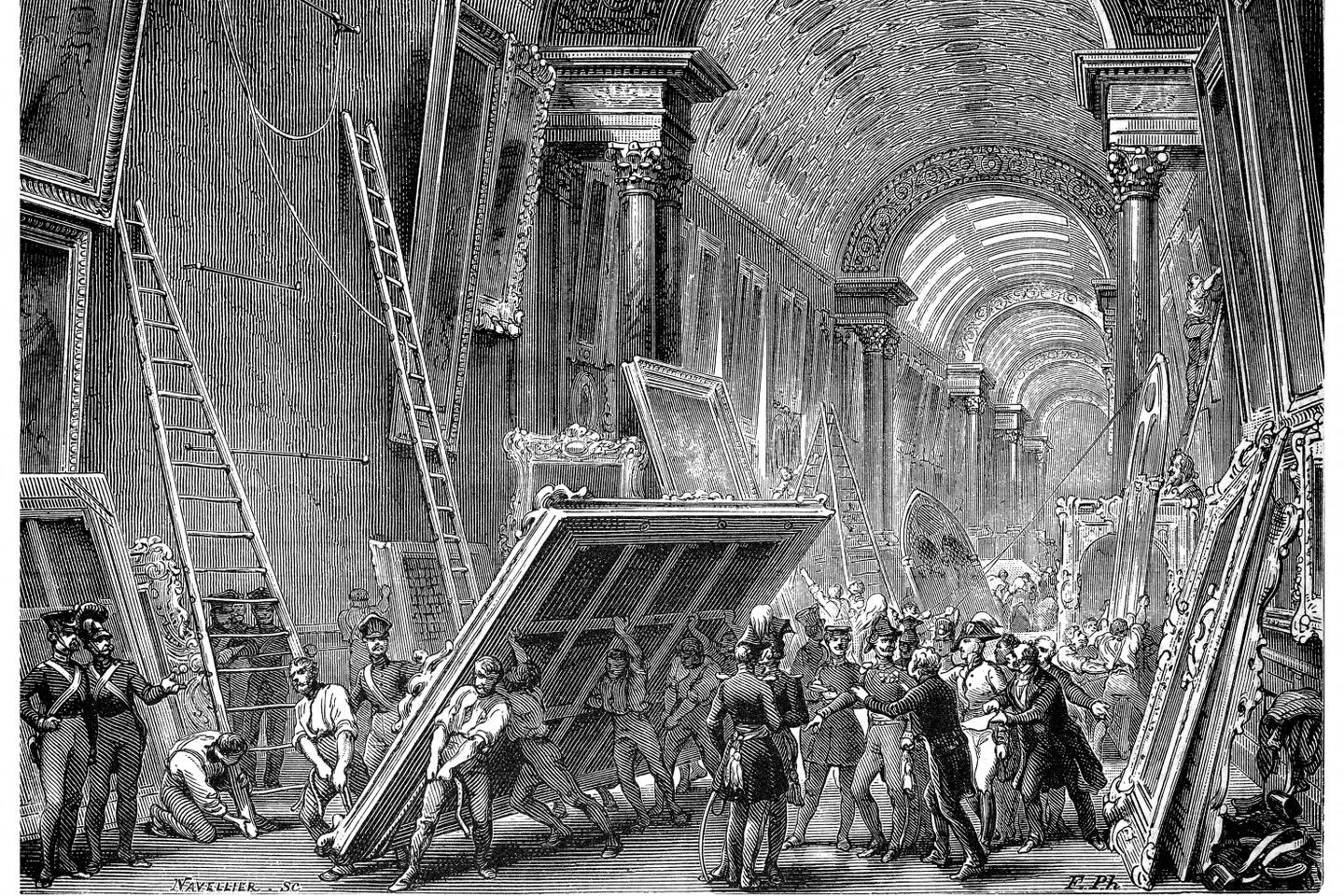
At the Louvre, July 1815. Occupying troops (British, Russian, Prussian and Austrian) reclaim works seized under the Empire (engraving from 1875). JEAN-PAUL DUMONTIER/LA COLLECTION
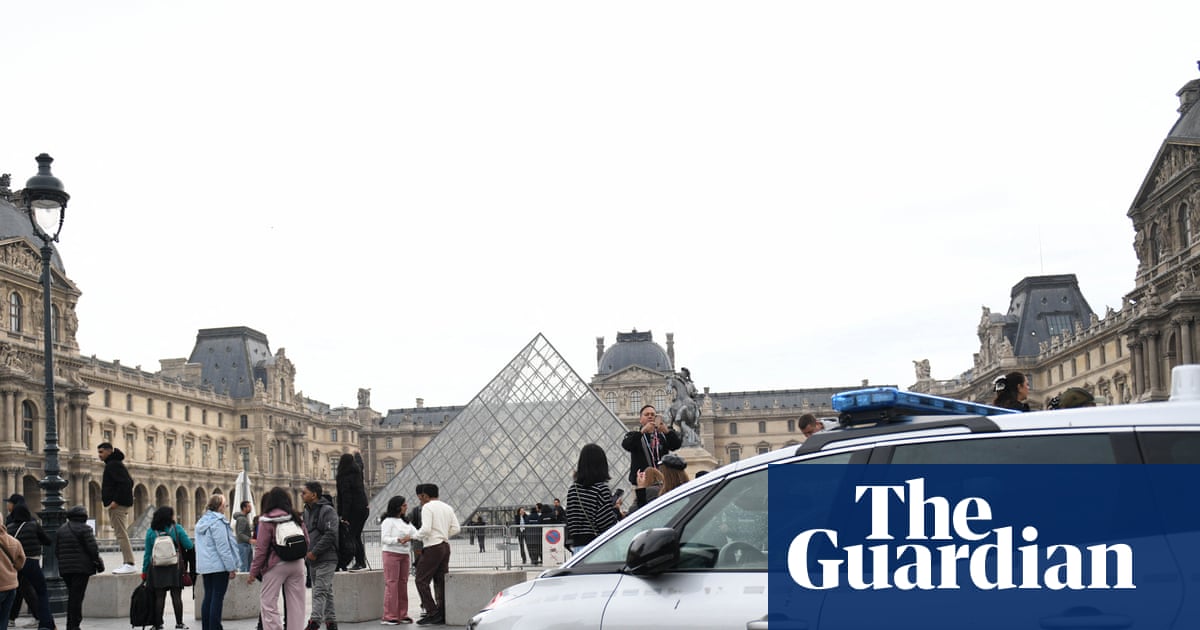
Wherever the revolutionary armies – and later Napoleon's forces – advanced, artworks of conquered territories were transported to the Louvre. Its collections, unparalleled in size and richness, won admiration throughout Europe. One particular argument was used to justify this concentration of masterpieces: the idea that the arts, as the fruits of freedom and genius, could only be liberated from tyrants by the very country of liberty – France, seen as the home of universal values. The notion of the universal, still invoked today by some who oppose the restitution of artworks acquired or seized in former colonies, is central to Bénédicte Savoy's 1815, le temps du retour ("1815, The Time of Return").
Strangely, after Napoleon's first abdication in April 1814, the Allied powers reclaimed relatively few works; only Spain and Prussia took back some major pieces. Whether due to the fierce resistance of the Louvre's curators or the Allies' reluctance to appear as looters of "the finest museum in the Universe" (in the words of its first director, Dominique Vivant Denon), the reasons were multiple. It was only after Waterloo and Napoleon's second abdication in June 1815 that restitutions accelerated, and each aggrieved nation recovered a (more or less) significant share of its artistic heritage.