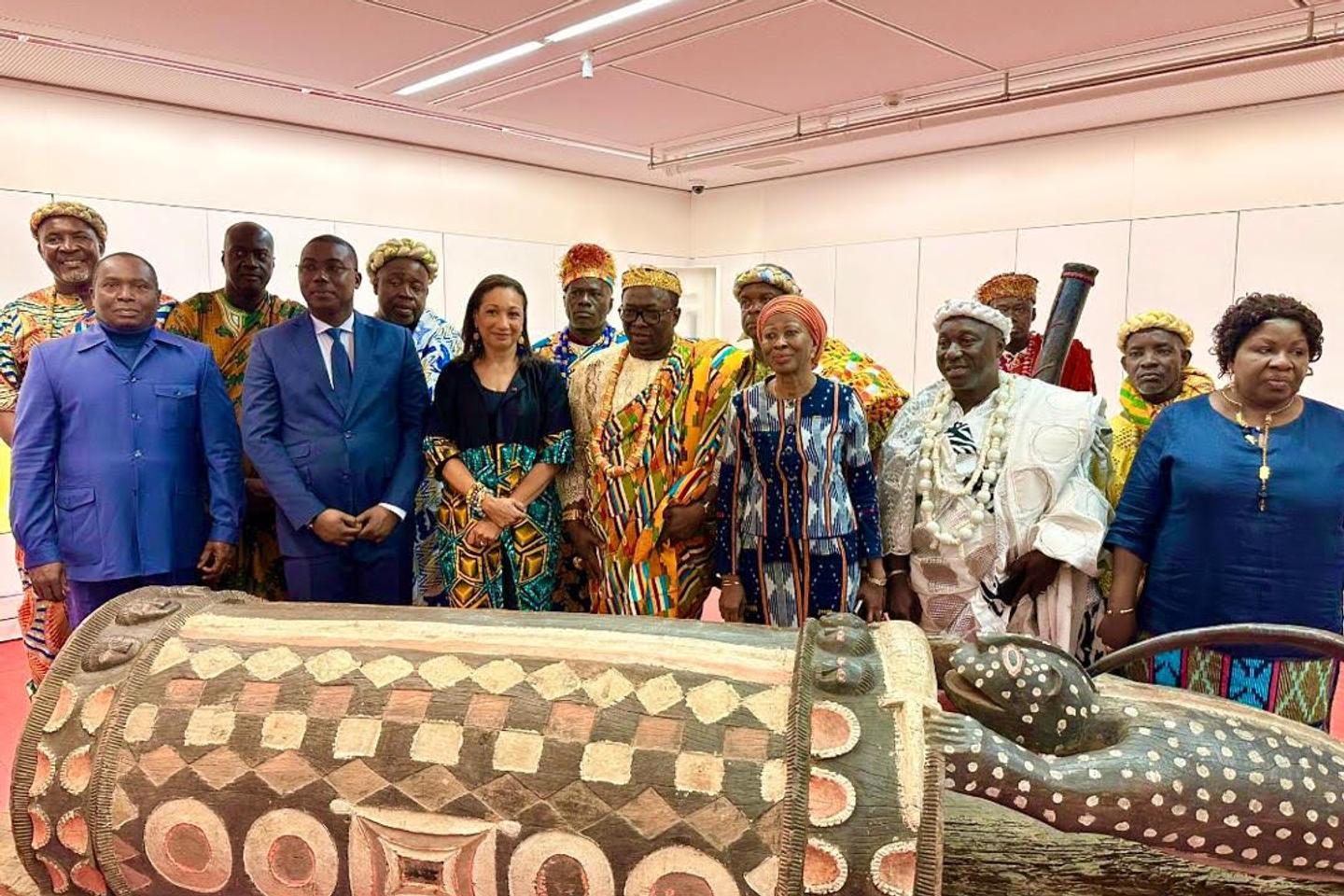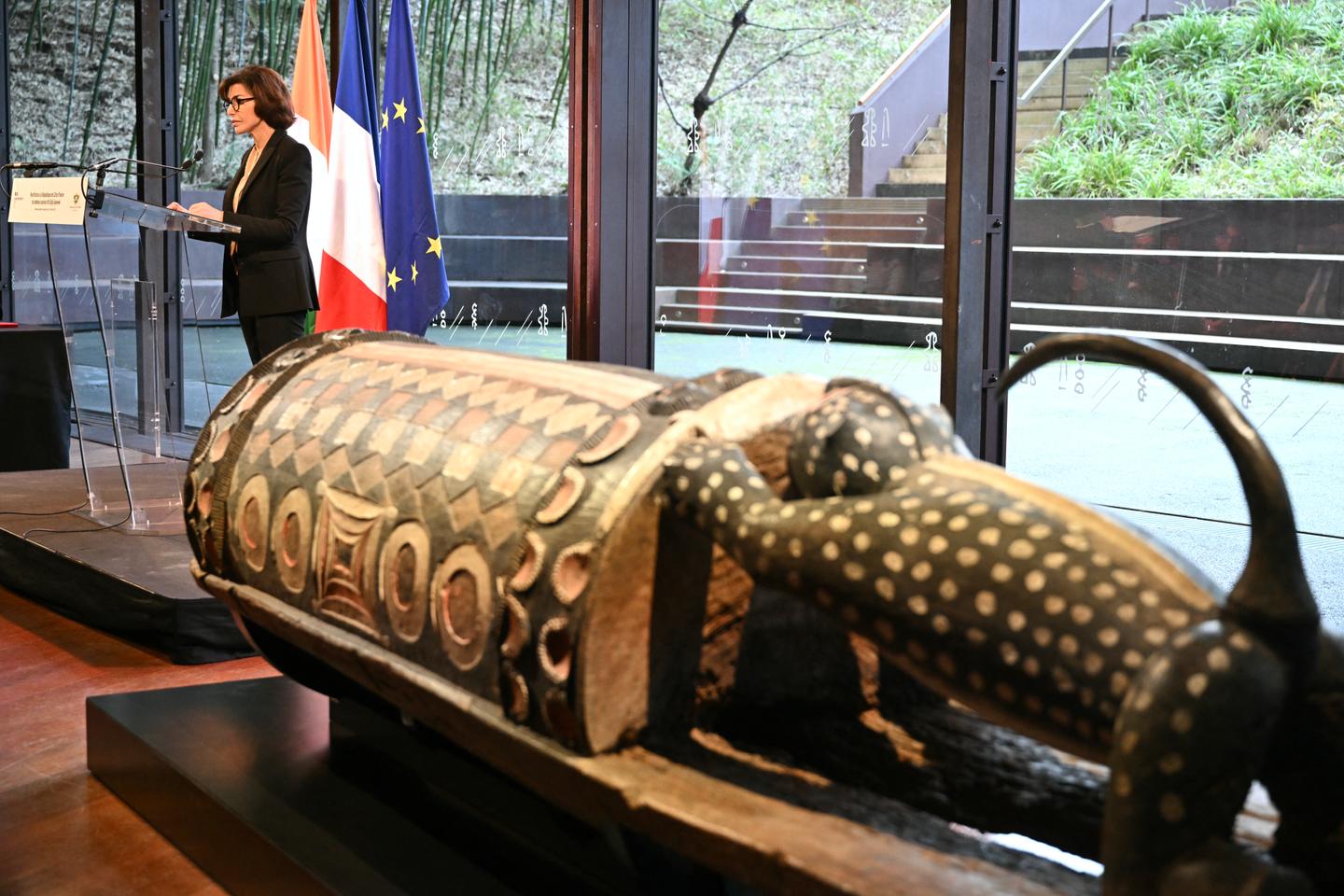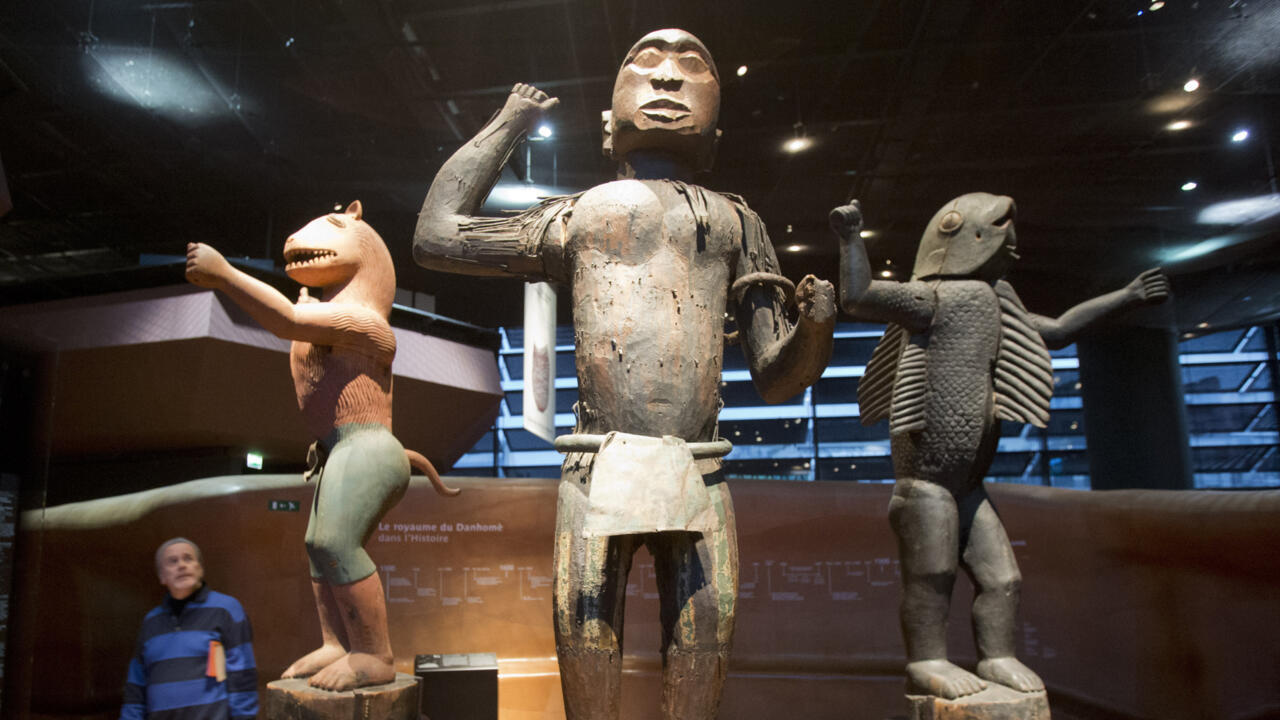
Royal wooden statues from Dahomey (now Benin), on display at the Quai Branly Museum in Paris, on November 23, 2018. MICHEL EULER/AP
The promise has been kept. A law on the restitution of cultural artifacts acquired through illicit appropriation, the fruit of a promise Emmanuel Macron made to African nations at the start of his first term in office (2017-2022), was definitively adopted on Thursday, May 7, after a unanimous vote in the Sénat on a compromise bill drafted by a joint committee of both chambers of parliament. The Assemblée had voted it through the day before.
In November 2017, speaking before students at the University of Ouagadougou in Burkina Faso, the French president pledged that "within five years, the conditions would be in place for temporary or permanent restitutions of African heritage [artifacts] to Africa." It ultimately took nearly twice as long to overcome longstanding resistance to revisiting the principle of inalienability of public collections, which is enshrined in the French law on cultural heritage.
A new chapter has now begun, with France becoming the first European country to enact a universal law amending its cultural heritage code to provide for the restitution of items that were illicitly incorporated into national collections. Belgium paved the way for this in 2022 by legislating to allow objects in its federal museums linked to its colonial past to be deaccessioned. This law specifically applies to artifacts taken from territories that are now the Democratic Republic of the Congo, Burundi and Rwanda.