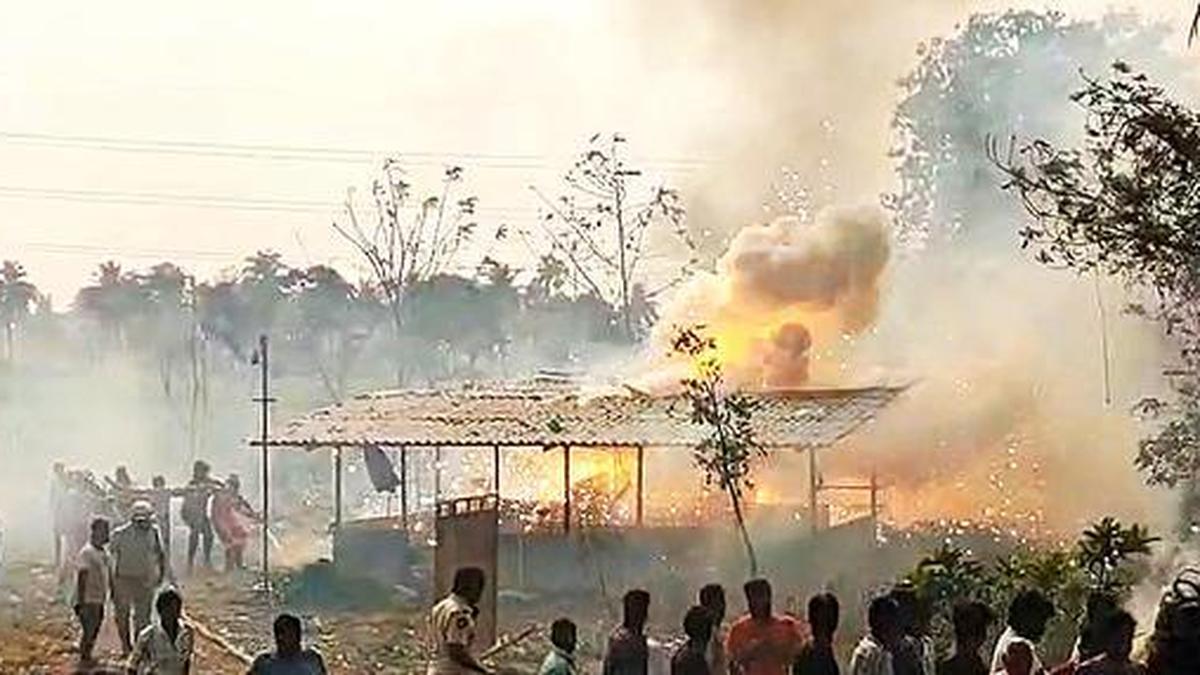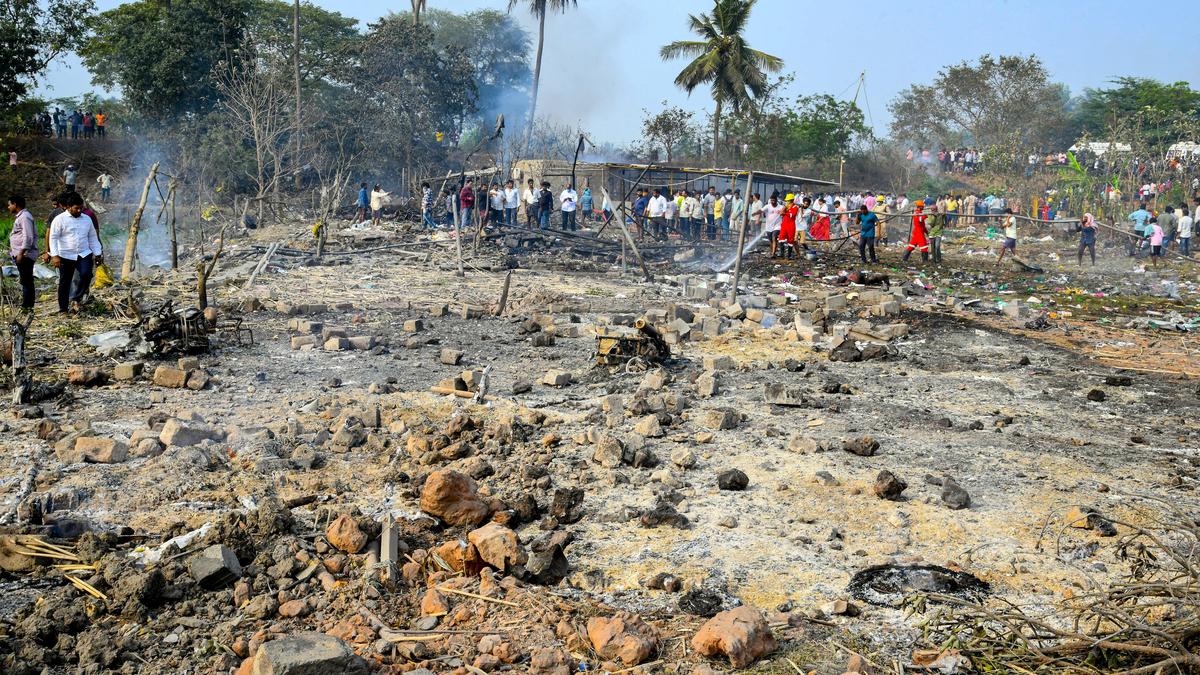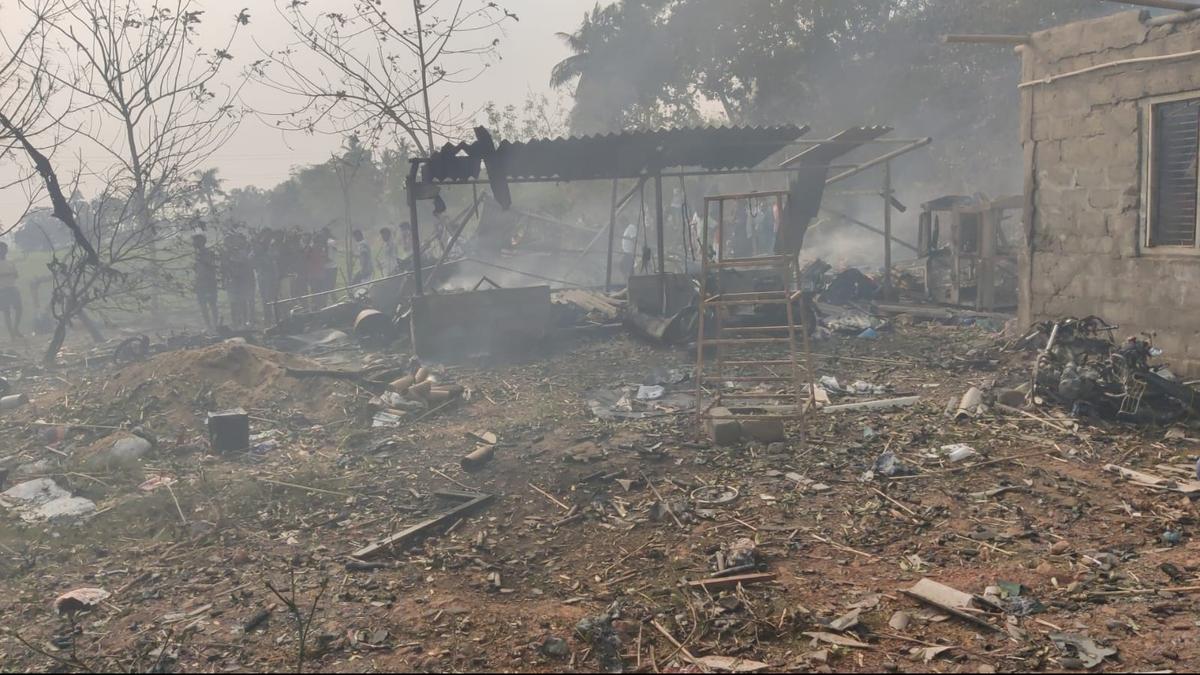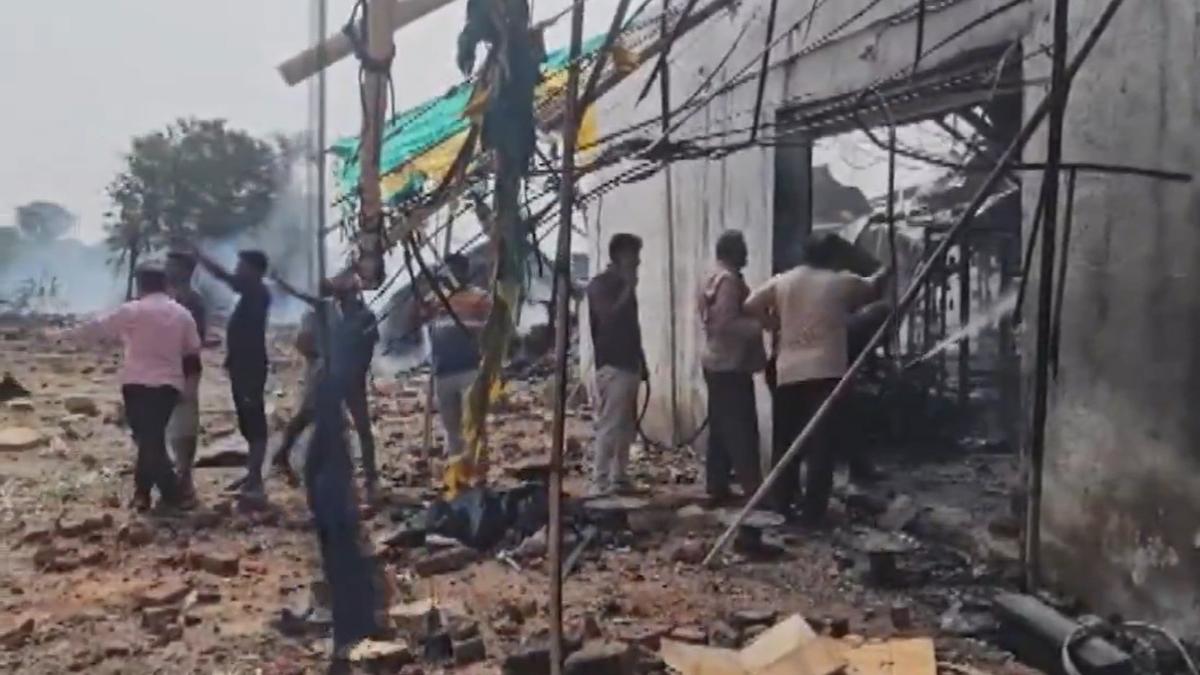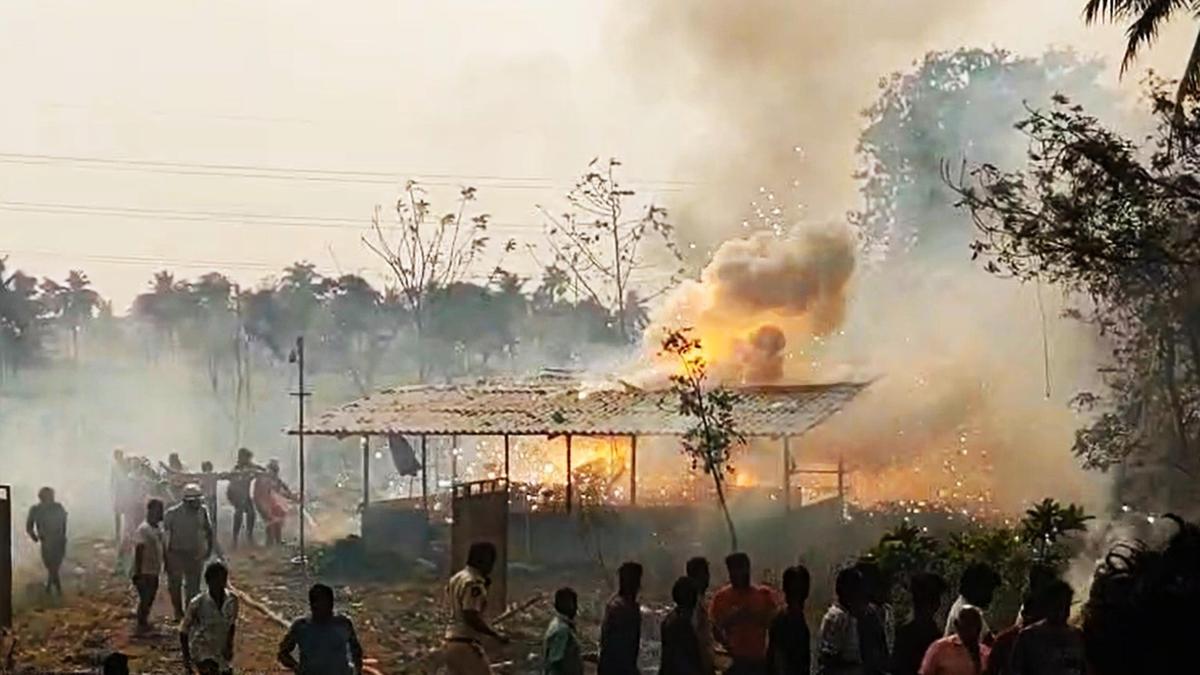
Smoke billowing from a firecracker unit at Vetlapalem village in Kakinada district on Saturday.
The explosion at a firecracker manufacturing unit at Vetlapalem village of Samarlakota mandal in Kakinada district on Saturday exposes the dangerous and unsafe conditions under which many such units operate.The accident is being described as the most severe one in over a decade in Andhra Pradesh. A similar tragedy had struck in October 2014, when an explosion at a firecracker unit at Vakatippa village, near Kakinada, claimed 16 lives. Since then, it is estimated that at least 80 persons lost their lives in firecracker-related accidents.Despite recurrence of such incidents, inadequate safety measures continue to haunt the units that operate across several districts, from Konaseema to Vizianagaram, posing a serious risk to the lives of workers.While many of these units now hold licence, questions remain regarding the skill level and training of the workforce, adherence to safety protocols, and proper storage of explosive materials.According to sources in the Anakapalli district police, firecracker manufacturing units function throughout the year, but production activity significantly increases during Deepavali and marriage season.The current wedding season, which began a month ago, is expected to continue until May, prompting both authorised and unauthorised units to ramp up output to meet the surge in demand. The pressure to meet the bulk orders can sometimes result in safety norms going for a toss.The firecracker manufacturing units are spread across several districts, including Konaseema, East Godavari, Kakinada, Anakapalli and Vizianagaram. These units are typically located on the outskirts of villages, often in agricultural fields, mostly in coconut orchards. Unit organisers either lease land or utilise their own property, level the ground and establish the units after obtaining the required licence.However, in response to the growing demand, many operators tend to expand their facilities by erecting temporary thatched sheds to accommodate additional workers and stock, says a senior police officer.The explosion in April 2025 at Kasipatnam of Kotavuratla mandal in Anakapalli district is an example. Investigation revealed that the unit was operating in confined spaces, where even a minor spark or fire could quickly trigger a massive explosion. Eight persons had died in that explosion.The police also point out that many of these units recruit locals, especially women, and engage them as labourers after providing only a few days of basic training, which, they say, is inadequate for handling such explosive materials.These workers are paid a daily wage ranging from ₹500 to ₹1,000. In several instances, labourers are said to work in extended shifts of 10 to 12 hours, especially during peak demand periods, in order to meet production target.“Temporary structures, congested spaces, long working hours, limited training and exposure to hazardous materials, increase the risk of accidents,” says an officer on condition of anonymity. Published - February 28, 2026 07:10 pm IST