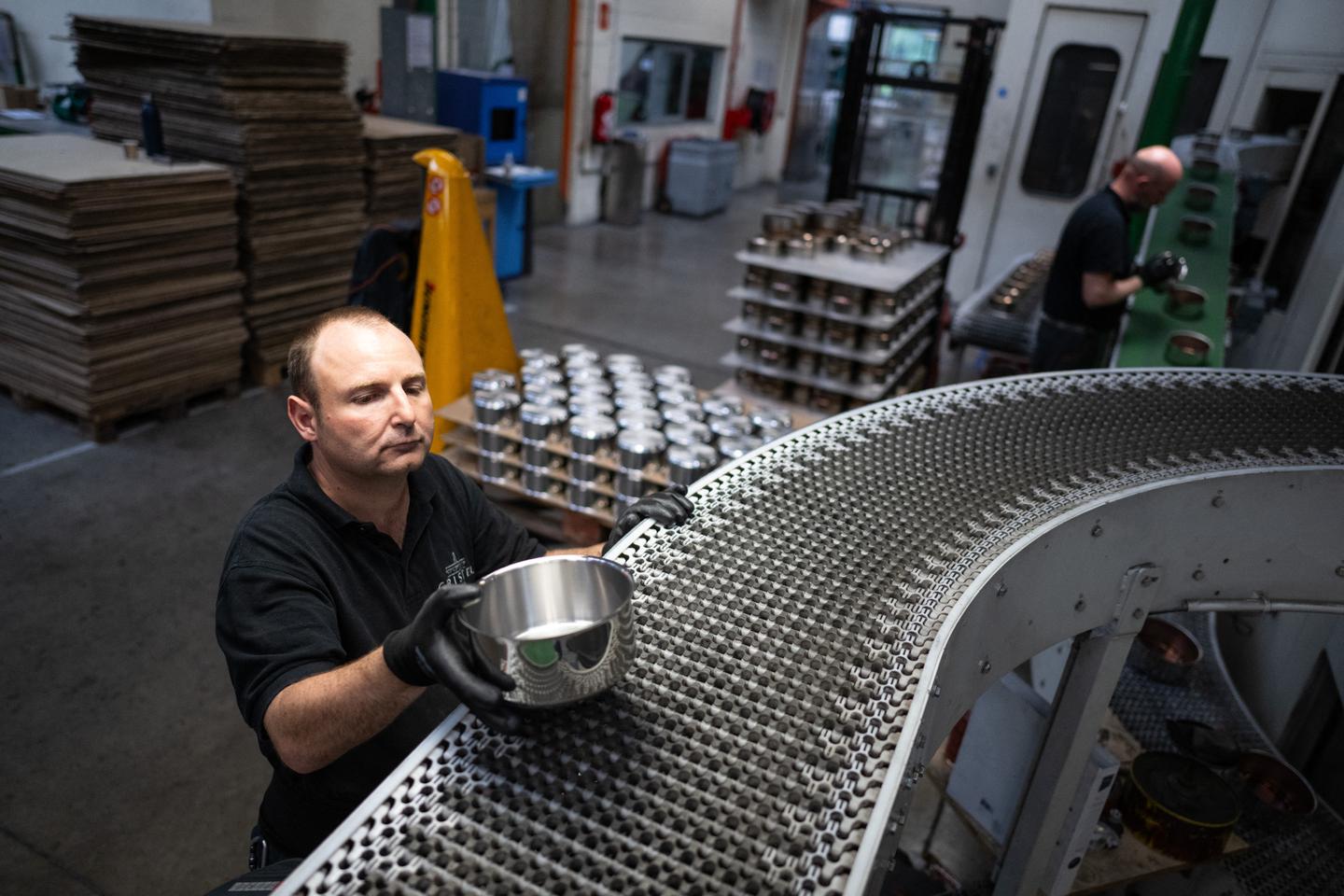
Inside the Cristel factory, Fesches-le-Châtel, France, May 23, 2024. SEBASTIEN BOZON/AFP
Along the forest-lined road leading to the village of Fesches-le-Châtel, in the northeastern Doubs region of France, two abandoned brick and stone buildings will soon be coming back to life. Typical of 19th-century factory architecture, this industrial brownfield site is set to be taken over by Cristel, which is located just a few hundred meters away. The sale is expected to be finalized on Thursday, February 26. Cristel plans to install a second production line across the 3,700 square-meters f space, a move that has been made necessary by surging demand for high-end stainless steel saucepans, frying pans and stockpots. This is also a nod to history: The site once hosted one of the factories belonging to the Japy manufacturing firm, which was the second-largest company in France under the Second Empire as well as Cristel's ancestor. It was here, in 1826 – two centuries ago – that the first industrially stamped saucepans were produced.
The acquisition of this brownfield marks a major comeback for Cristel and its 133 employees. The company has overcome hefty challenges; Japy closed in 1979 and was relaunched three years later by former employees as a worker cooperative. But the Société coopérative et participative (SCOP, a French worker cooperative) faced setbacks such as the sale of the brand and the loss of the customer database, then entered court-ordered restructuring in 1987. Determined not to let the business fail, an accountant, Bernadette Dodane, and her husband, Paul – who invented the removable handle for pots and pans – took over the company that same year, mortgaging both their homes to secure funding. Today, Cristel remains family-owned, with three generations working at the company. A few individual partners also hold shares.