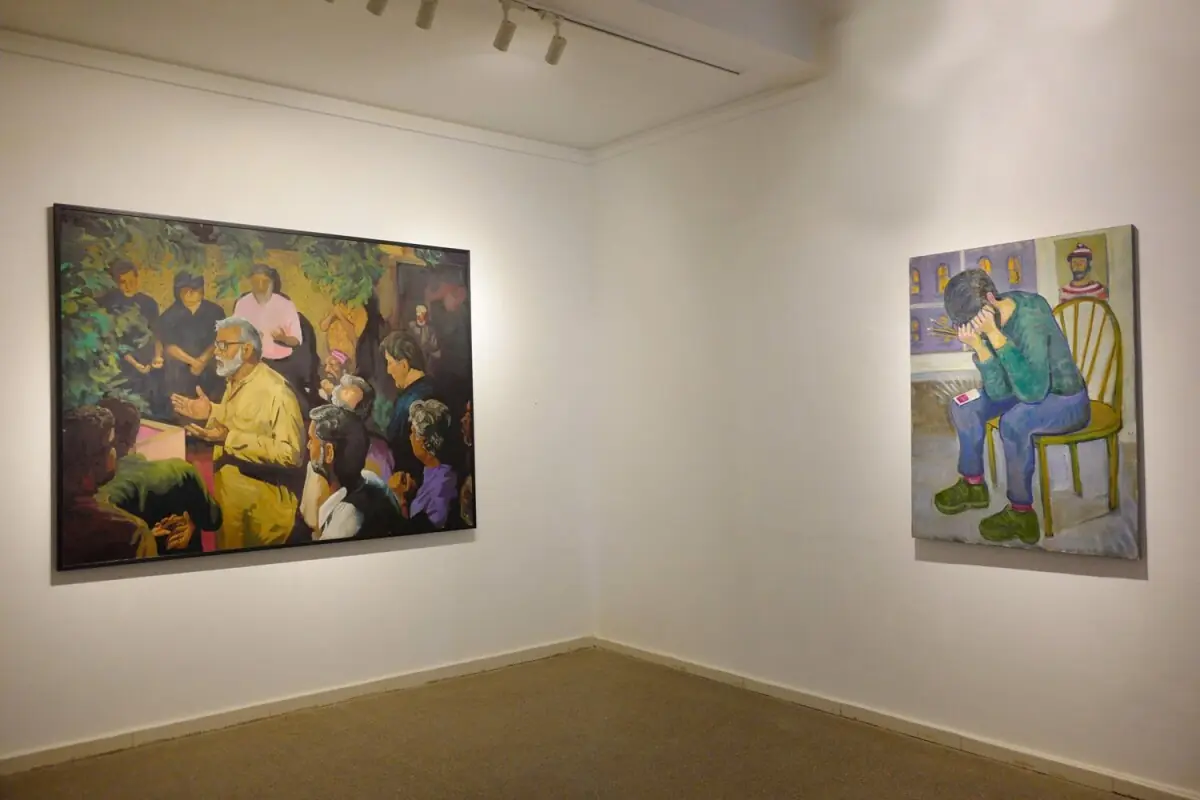
"One Thousand Individuals" (2022), by Latifa Zafar Attaii. LATIFA ZAFAR ATTAII/MATTEO LOSURDO
The Hazara people live in Afghanistan, Pakistan – primarily in the province of Balochistan – and Iran. The origins of the Hazara are a matter of debate. Their Asian features have led to speculation that they are descendants of Genghis Khan's Mongol armies, though this theory seems more fanciful than factual. What is, by contrast, painfully certain is that the Hazara have long been and remain victims of systematic persecution in all three countries.
Because they are overwhelmingly Shiite Muslims, the Hazara have been targets of attacks and massacres in Taliban-controlled Afghanistan and in Pakistan, where Sunni extremists hold sway. In Shiite-majority Iran, their status as non-Persian, foreign migrants, often viewed with contempt, puts them at risk. Their history is "a continuum of religious and racial persecution," said Emile Drousie, a specialist in Central Asian cultural scenes and curator of this first exhibition in France dedicated to Hazara artists, at Galerie Eric Mouchet in Paris.
You have 79.08% of this article left to read. The rest is for subscribers only.