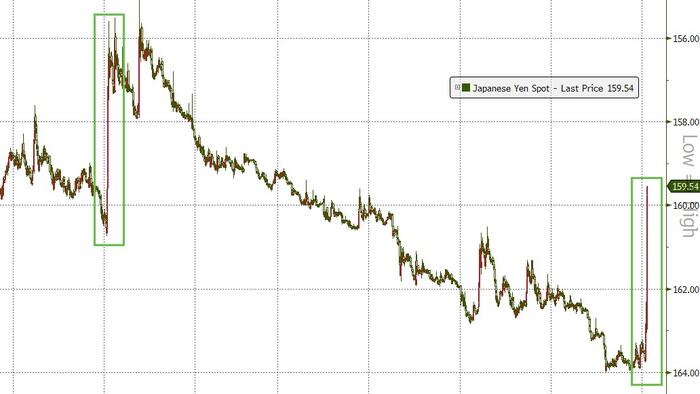
The U.S. Federal Reserve confirmed yesterday that its trading desk did conduct a rare “rate check” on the exchange rate between the U.S. dollar and the Japanese yen on behalf of the U.S. Treasury earlier this year. The move is often regarded as a precursor to actively intervening in currency markets. In this case, the implication would be that the White House wanted to strengthen the yen versus the dollar (or vice versa, weaken the dollar versus the yen).Indeed, that is exactly what happened on the foreign exchange markets on Jan. 23 of this year. The dollar had been trading at ¥158.50 but then collapsed suddenly to ¥152.45 by Jan. 27—a relatively sharp move for such large international currencies.In the minutes of its last meeting, the Fed said that private markets had expected the dollar to continue weakening this year, but the U.S. economy had done so well that those expectations had “moderated quite a bit.” The dollar was slowly gaining strength versus the yen, approaching ¥160.
But then, the Fed said, U.S. Treasury officials asked the Fed’s trading desk to get a quote for a significant purchase of yen—a move that would weaken the dollar again and bid up the Japanese currency. As a result, “the dollar … depreciated markedly after reports that the desk had made requests for indicative quotes, known as ‘rate checks,’ on the dollar-yen exchange rate. The manager noted that the desk had requested those quotes solely on behalf of the U.S. Treasury in the Federal Reserve Bank of New York’s role as the fiscal agent for the U.S.”