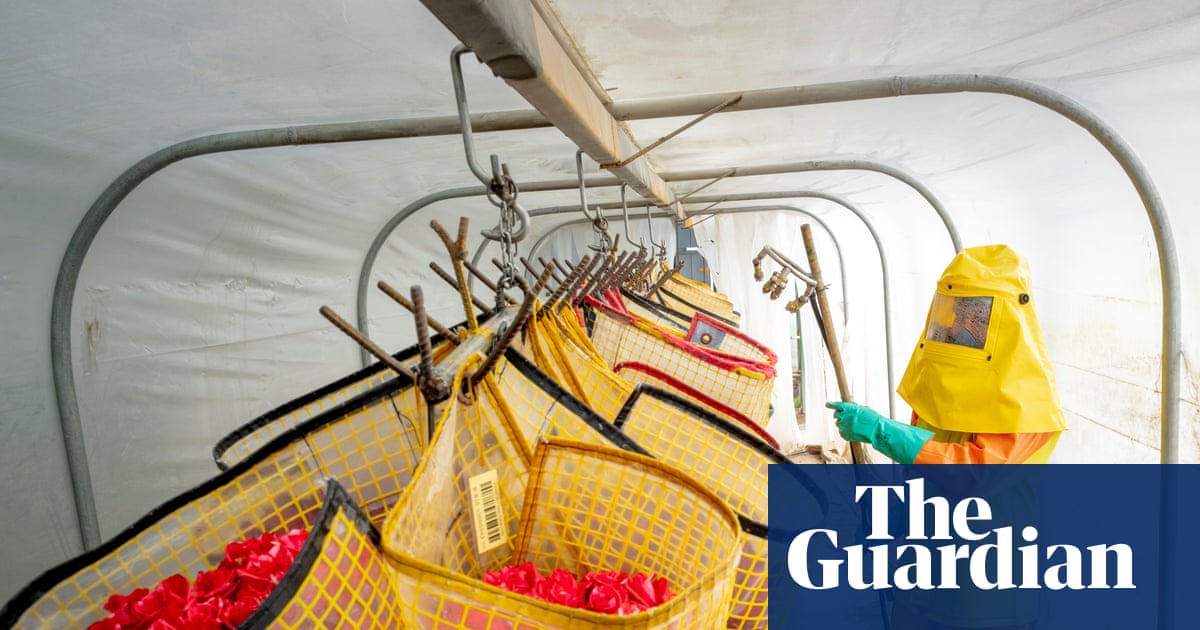
Many farmers in the Andes rely on growing blooms for export, but high water usage and risky pesticides threaten Indigenous communities
T
he fertile high valley near La Chimba trembles with sounds. The rhythms of brass bands and cumbia music clash like weather fronts, each playing its own beats in the Andean rain. A rainbow spans the slopes and white plastic greenhouses, protecting the region’s treasure: roses bred for beauty, shipped abroad, blooming far from home.
Amid the drizzle, Patricia Catucuamba and her husband, Milton Navas, share a jug of chicha, a maize brew vital to their harvest celebrations. Since 2000, they have worked as dairy farmers, but sustaining a milk business requires expanses of land beyond the reach of most smallholders.
Like many in Cayambe, they started a new venture five years ago: a cut-flower business specialising in roses, which offer higher profits on less land.